終於有機會面對面請教出家人|若慧法師解答我各種大迷思和小問題(下集)-《Go潮生活》第241期(國語)
終於有機會面對面請教出家人|若慧法師解答我各種大迷思和小問題(下集)-《Go潮生活》第241期(國語)
歡迎訂閱此頻道~ https://www.youtube.com/channel/UCqD8…
歡迎繼續收看 :終於有機會面對面請教出家人|若慧法師解答我各種大迷思和小問題(上集)-《Go潮生活》第235期(國語)/By Radio Host 曉偉——採訪舊金山華藏寺住持釋若慧法師
終於有機會面對面請教出家人|若慧法師解答我各種大迷思和小問題(下集)-《Go潮生活》第241期(國語)
歡迎訂閱此頻道~ https://www.youtube.com/channel/UCqD8…
歡迎繼續收看 :終於有機會面對面請教出家人|若慧法師解答我各種大迷思和小問題(上集)-《Go潮生活》第235期(國語)/By Radio Host 曉偉——採訪舊金山華藏寺住持釋若慧法師
終於有機會面對面請教出家人|若慧法師解答我各種大迷思和小問題(上集)-《Go潮生活》第235期(國語)/By Radio Host 曉偉——採訪舊金山華藏寺住持釋若慧法師
鏈接:https://www.youtube.com/watch?v=qMKIrSV0SLM&t=62s
歡迎訂閱此頻道~ https://www.youtube.com/channel/UCqD8…
歡迎繼續收看 : 終於有機會面對面請教出家人|若慧法師解答我各種大迷思和小問題(下集)-《Go潮生活》第241期(國語)
Buddhist Tales for Young and Old, volume 1, Prince Goodspeaker, Stories 1-50
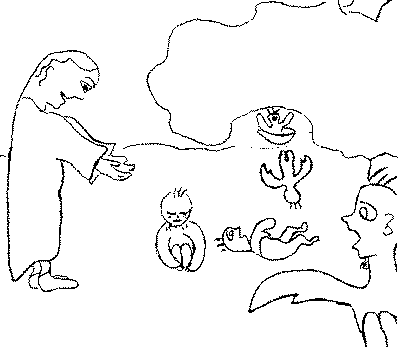
At that time, so very long ago, there were some unfortunate ugly gods called ‘Asuras’. They had taken to living in the second heaven world.
The one who had been Magha the Good in his previous life, was now Sakka, King of the Heaven of 33. He thought, “Why should we, who are the 33, live in our Heaven of 33 with these unfortunate ugly Asuras? Since this is our world, let us live happily by ourselves."
So he invited them to a party and got them drunk on very strong liquor. It seems that, in being reborn, King Sakka had forgotten some of his own teachings as Magha the Good. After getting the Asuras drunk, he got them to go to a lower world, just as big as the Heaven of 33.
When they sobered up and realized they had been tricked into going to a lower heaven world, the Asuras became angry. They rose up and made war against King Sakka. Soon they were victorious, and Sakka was forced to run away.
While retreating in his mighty war chariot, he came to the vast forest where the Garudas have their nests. These are gods who, unfortunately, have no super powers. Instead they are forced to get around by flapping huge heavy wings.
When King Sakka’s chariot drove through their forest, it upset their nests and made the baby Garudas fall down. They cried in fear and agony. Hearing this, Sakka asked his charioteer where these sad cries were coming from. He answered, “These are the shrieks of terror coming from the baby Garudas, whose nests and trees are being destroyed by your powerful war chariot."
Hearing this suffering, King Sakka realized that all lives, including his own, are only temporary. Hearing this suffering, the compassion of the Great Being, which passes from life to life, arose within him and said, “Let the little ones have no more fear. The first training step must not be broken. There can be no exception. I will not destroy even one life for the sake of a heavenly kingdom that must some day end. Instead I will offer my life to the victorious Asuras. Turn back the chariot!"
So the chariot returned in the direction of the Heaven of 33. The Asuras saw King Sakka turn around, and thought he must have reinforcements from other worlds. So they ran, without looking back, down to their lower heaven world.
31.The Heaven of 33 [Chapter 2. Compassion]
Link: https://hhdorjechangbuddhaiiiinfo.com/2022/07/26/the-heaven-of-33-chapter-2-compassion/
INTERPRETER’S INTRODUCTION – BUDDHIST TALES FOR YOUNG AND OLD, VOLUME 1, STORIES 1-50
#Buddhisttalesforyoungandold #Buddhiststories #storiesforkids #moralstories #Buddha #Jatakastories #PansiyaPanasJataka

众所周知,南无第三世多杰羌佛是始祖报身佛的真身降世。佛陀降世为末法时期众生带来了百千亿万劫难遭遇的解脱佛法。在南无第三世多杰羌佛的弟子中,解脱成就者比比皆是。有证得生死自由,说“落笔圆寂”就即刻圆寂者,有证得肉身不坏者,有化虹光成就者,有预知时辰坐化圆寂者,有圆寂后烧出坚固子者等等。
然而,由于中国“大老虎”周某康等贪官污吏陷害,加上《凤凰周刊》等无良媒体的失实报道以及许多邪师邪徒在网络上炒作,致使一些人错误的以为南无第三世多杰羌佛不是真正的佛陀,而是坏人。
甚至有人说“既然是佛菩萨来人间,怎么会被诽谤迫害通缉呢?”应该说,这是不明因缘的凡夫我见。
自佛史以来,佛菩萨应世的高僧大德,被通缉、被毁谤迫害者比比皆是!比如玄奘法师、太虚大师、虚云老和尚、能海法师、班禅大师等等……
先说“通缉”:玄奘法师曾三请朝廷准其前往天竺学习佛经,终无音讯。遂私下西行追求真理。朝廷随后发出通缉令:“有僧玄奘,欲入西蕃,所在州县,宜严候捉。”被誉为弥勒菩萨化身的太虚大师也被清廷归为“反清份子”,予以通缉。
再说“迫害”:莲花生大士去往西藏沿途修持无上密法,大展神通证量,降妖伏魔,但被污蔑为妖人丢到烂泥沟里;达摩祖师初入东土时,也被骂为妖僧、打断门牙;六祖慧能大师刚从五祖弘忍大师处接到衣钵,依师所示,半夜出逃,就被寺院僧侣视为“贼人”而一路追杀;印度大成就者毗瓦巴被赶出那烂陀寺任其流浪街头;
还有,虚云老和尚曾被云门寺所在地方公安局以“该寺隐匿反革命分子,窝藏军械及金银”为由,将其囚禁,是日连打四次,骨头被打断了好几处;
还有,能海法师被拉到显通寺批斗和囚禁,并被冠上“黑帮首领”罪名;而能海法师的弟子,在中国闻名遐迩的“汉地第一高僧”清定法师,也曾在1957年被上海中级人民法院判处无期徒刑,直到1975年坐牢20年后才被特赦出狱,1979年才获平反昭雪。
“无量光佛化身”的第十世班禅曾被囚禁在秦城监狱,受尽折磨。直到十年“文革”结束才获释,依然被软禁于北京,直到1980年9月重新走上国家领导人岗位前,他仍然带着“现行反革命”“右派”的帽子;班禅大师于1989年圆寂,证得肉身不坏成就。
这些佛菩萨应世的高僧大德之所以被诽谤迫害,一个原因是妖魔害怕众生学到真佛法,为反对而反对的而嗔恨嘶吼。那是妖魔的本分,妖魔的工作,正信佛弟子自不会上当;另一个原因是一些邪见者,包括一些著名法师、活佛以及邪师骗子,他们并不认得真正的佛法,或对佛法的认识不够深入,未入正道。他们不懂得拥有如来正法的佛菩萨再来人就是众生从轮回痛苦中解脱的依怙,他们不知道诋毁圣者,就等于阻止众生走向解脱,实为魔妖之举。他若真的认得佛法,就必定是明信因果之人,就绝对应该知道诽谤圣者和佛菩萨再来人,毁众生慧命,就是将自己推向万劫不复的地狱,且不说是为了众生,就算为了自己的成就前程,他也不会那么做。
自有佛教以来,有佛就有魔。佛菩萨要救渡众生脱离轮回苦海,魔妖要拉众生下地狱受苦。因此,魔妖破坏佛法历来存在;
因此,诸佛菩萨降世娑婆遭到魔妖子孙所化现种种形象的贪官污吏或邪师骗子的诽谤陷害也在因缘之中;
因此,在这混沌不堪,正邪难辨,邪师遍野的末法时期,南无第三世多杰羌佛带着无量慈悲和解脱佛法降世人间,普渡众生,而被贪官陷害而曾被通缉,而被魔子魔孙、众生所诽谤也是正常的,可以理解的。
魔妖邪师自然反对佛陀,而许多众生因邪师误导,无明造业也很难看到佛陀的大慈大悲和圆满觉量,甚至不辨真伪,人云亦云参与诽谤羌佛,种下了无边黑业。
殊不知,一切要依法不依人,不能以讹传讹,人言亦言。认得佛法的真行者,他辨认佛法的标准不是任何外在形式,而是法义。是故,要认真研究佛菩萨应世者所说法义是否符合如来经藏,要深入修学南无第三世多杰羌佛所说法《什么叫修行》《藉心经说真谛》《解脱大手印》等等佛著是否与释迦世尊说的一样?是否是如来正法?千万不要犯所知障。更要看其及其弟子的成就如何?
上述佛菩萨应世的高僧大德遭遇的都是冤假错案!最后都被平反正名。假的真不了,真的假不了。因果不昧,千万不要妄加诽谤,以免地狱之苦!而那些无视圣者的圣证量和所说法义,仅以被通缉诽谤、被迫害就认定这些佛菩萨应世的高僧大德就是骗子妖人的人,真是连动物都不如,比猪还愚蠢。
撰稿:郑思伟
编辑:西边的彩虹
The Explanation of the Buddha’s Title – “H.H. Dorje Chang Buddha III”
歡迎訂閱此頻道 Welcome to subscribe this channel
https://www.youtube.com/channel/UCqD8…
On April 3, 2008, a solemn and dignified first-publishing ceremony of a fact-recording book entitled H.H. Dorje Chang Buddha III, which published jointly by the World Buddhism Publishing LLC and the World Dharma Voice, Inc., was held at the Library of the Congress of the United States. The book was also formally accepted into the collection of the Library of the Congress of the United States. Only since that time, did people in the world know that Master Wan Ko Yee, who had been broadly respected by the great masses and who had also been known as Great Dharma King Yangwo Yeshe Norbu, had been recognized by the world’s leaders, regent dharma kings, and great rinpoches of Buddhism through official documents as the third incarnation of Dorje Chang Buddha, who is the primordial Sambhogakaya Buddha of the universe. The Buddha’s name is H.H. Dorje Chang Buddha III. Since then, people began to address His Holiness the Buddha by “Namo[1] Dorje Chang Buddha III.” This is similar to the situation that Sakyamuni Buddha’s name was Prince Siddhartha Gotama before attaining Buddhahood. However, after Sakyamuni Buddha had attained Buddhahood, His title changed to “Namo Sakyamuni Buddha.” That is why we now address His Holiness the Buddha as “H.H. Dorje Chang Buddha III.” In particular, on December 12, 2012, the Senate Resolution No. 614 of the United States Congress officially used “His Holiness” in the name addressing Dorje Chang Buddha III (That is to say, “H.H. Dorje Chang Buddha III.”) Since then, the title and status of H.H. Dorje Chang Buddha III has been definitive by nature. And, as a matter of fact, “Dorje Chang Buddha III” is a name used legally in governmental and official legislative documents. Therefore, the previously used respected name and titles such as “Wan Ko Yee,” Great Master, and Great Dharma King no longer exist. However, the news below was published before the Buddha’s title of H.H. Dorje Chang Buddha III was publicly announced. At that time, people did not know about the true status of His Holiness the Buddha. Therefore, to respect the true history, we still kept the names used before the title of H.H. Dorje Chang Buddha III was legitimately determined in republishing this news. However, all must clearly know that the only legitimate name of His Holiness the Buddha is H.H. Dorje Chang Buddha III and all other names used before the legitimate determination no longer exist.
Link: https://www.youtube.com/watch?v=ihX2_…
#DorjeChangBuddhaIII#HHDorjeChangBuddhaIII#DorjeChangBuddha#Buddha#MasterWanKoYee#WanKoYee
Buddhist Tales for Young and Old, volume 1, Prince Goodspeaker, Stories 1-50
Once upon a time, when King Magadha was ruling in the land, there was a young noble called, ‘Magha the Good’. He lived in a remote village of just 30 families. When he was young, his parents married him to a girl who had qualities of character similar to his own. They were very happy together, and she gave birth to several children.
The villagers came to respect Magha the Good because he always tried to help improve the village, for the good of all. Because they respected him, he was able to teach the five steps of training, to purify their thoughts, words and deeds.
Magha’s way of teaching was by doing. An example of this happened one day when the villagers gathered to do handicraft work. Magha the Good cleaned a place for himself to sit. Before he could sit down though, someone else sat there. So he patiently cleaned another place. Again a neighbor sat in his place. This happened over and over again, until he had patiently cleaned sitting places for all those present. Only then could he himself sit in the last place.
By using such examples of patience, Magha the Good taught his fellow villagers how to cooperate with each other, without quarrelling. Working together in this way, they constructed several buildings and made other improvements that benefitted the whole village.
Seeing the worthwhile results of patience and cooperation, based on following the gentle ways of the Five Training Steps, all in the village became calmer and more peaceful. A natural side effect was that former crimes and wrongdoing completely disappeared!
You would think this would make everybody happier. However, there was one man who did not like the new situation at all. He was the head of the village, the politician who cared only about his own position.
Formerly, when there were murders and thefts, he handed out punishments. This increased his position of authority, and caused the villagers to fear him. When husbands or wives had affairs with others, the head man collected fines. In the same way, when reputations were damaged by lies, or contracts were not lived up to, he also collected fines. He even got tax money from the profits of selling strong liquor. He did not mind that drunkenness led to many of the crimes.
It is easy to see why the head man was upset to lose so much respect and power and money, due to the people living peacefully together. So he went to the king and said, “My lord, some of the remote villages are being robbed and looted by bandits. We need your help."
The king said, “Bring all these criminals to me."
The dishonest politician rounded up the heads of all 30 families and brought them as prisoners to the king. Without questioning them, the king ordered that they all be trampled to death by elephants.
All 30 were ordered to lie down in the palace courtyard and the elephants were brought in. They realized they were about to be trampled to death. Magha the Good said to them, “Remember and concentrate on the peacefulness and purity that come from following the Five Training Steps, so you may feel loving-kindness towards all. In this way, do not get angry at the unjust king, the lying head man, or the unfortunate elephants."
The first elephant was brought in by his mahout. But when he tried to force him to trample the innocent villagers, the elephant refused. He trumpeted as he went away. Amazingly, this was repeated with each of the king’s elephants. None would step on them.
The mahouts complained to the king that this was not their fault. “It must be," they said, “that these men have some drug that is confusing the elephants."
The king had the villagers searched, but they found nothing. Then his advisers said, “These men must be magicians who have cast an evil spell on your mighty elephants!"
The villagers were asked, “Do you have such a spell?" Magha the Good said, “Yes we do." This made the king very curious. So he himself asked Magha, “What is this spell and how does it work?"
Magha the Good replied, “My lord king, we do not cast the same kinds of spells that others cast. We cast the spell of loving-kindness with minds made pure by following the Five Training Steps."
“What are these Five Training Steps?" asked the king. Magha the Good said, “All of us have given up the five unwholesome actions, which are: destroying life, taking what is not given, doing wrong in sexual ways, speaking falsely, and losing one’s mind from alcohol."
“In this way we have become harmless, so that we can give the gift of fearlessness to all. Therefore, the elephants lost their fear of the mahouts, and did not wish to harm us. They departed, trumpeting triumphantly. This was our protection, which you have called a ‘spell’."
Finally seeing the wholesomeness and wisdom of these people, the king questioned them and learned the truth. He decided to confiscate all the property of the dishonest village head man and divide it among them.
The villagers were then free to do even more good works for the benefit of the whole village. Soon they began to build a big roadside inn, right next to the highway crossroads.
This was the biggest project they had yet undertaken. The men were confident because they had learned so well how to cooperate with each other for a common goal. But they had not yet learned how to cooperate in this work with the women of the village. They seemed to think it was ‘man’s work’.
By this time Magha the Good had four wives. Their names were Good-doer, Beauty, Happy and Well-born. Of these, the first wife, Good-doer, was the wisest. She wanted to pave the way for the women to benefit from cooperating in doing good work. So she gradually became friendly with the boss in charge of the roadside inn project.
Because she wanted to contribute by helping in a big way, she gave a present to the boss. She asked him, “Can you think of a way that I may become the most important contributor to this good work?"
The boss replied, “I know just such a way!" Then he secretly constructed the most important part of the building, the roof beam that would hold the roof together. He wrapped it up and hid it with Good-doer, so it could dry for the time necessary to become rigid and strong.
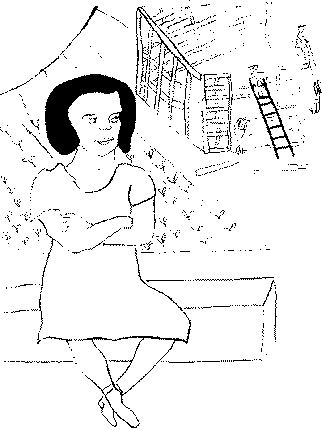
Meanwhile, the men of the village continued happily in the building project. At last they got to the point of installing the roof beam. They began to make one, but the boss interrupted them. He said, “My friends, we cannot use fresh green wood to make the roof beam. It will bend and sag. We must have an aged dry roof beam. Go find one!"
When they searched in the village, they found that Good-doer just happened to have a perfect roof beam. It was even the right size! When they asked if they could buy it from her, she said, “It is not for sale at any price. I wish to contribute the roof beam for free, but only if you let me participate in building the inn."
The men were afraid to change their successful ways. So they said, “Women have never been part of this project. This is impossible."
Then they returned to the construction boss and told him what had happened. He said, “Why do you keep the women away? Women are part of everything in this world. Let us be generous and share the harmony and wholesomeness of this work with the women. Then the project and our village will be even more successful."
So they accepted the roof beam from Good-doer, and she helped to finish the building of the inn. Then Beauty had a wonderful garden built next to the inn, which she donated. It had all kinds of flowers and fruit trees. So, too, Happy had a lovely pond dug, and planted beautiful lotuses in it. But Well-born, being the youngest and a little spoiled, did nothing for the inn.
In the evenings, Magha the Good held meetings in the roadside inn. He taught the people to assist their parents and elders, and to give up harsh words, accusing others behind their backs, and being stingy.
It is said that the lowest heaven world contains the gods of the four directions, North, East, South and West. Because he followed his own teachings, Magha the Good died with happiness in his heart. He was reborn as Sakka, king of the second lowest heaven world.
In time, the heads of all the other families of the village, as well as Good-doer, Beauty and Happy, also died. They were reborn as gods under King Sakka. This was known as the “Heaven of 33″.
The Heaven of 33 [Chapter 1. Co-operation]
Link: https://hhdorjechangbuddhaiiiinfo.com/2022/07/05/the-heaven-of-33-chapter-1-co-operation/
INTERPRETER’S INTRODUCTION – BUDDHIST TALES FOR YOUNG AND OLD, VOLUME 1, STORIES 1-50
#Buddhisttalesforyoungandold #Buddhiststories #storiesforkids #moralstories #Buddha #Jatakastories #PansiyaPanasJataka
Buddhist Tales for Young and Old, volume 1, Prince Goodspeaker, Stories 1-50
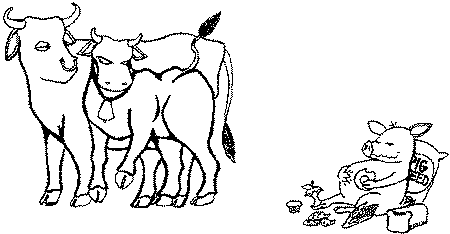
Once upon a time, there were two calves who were part of a country household. At the same home there also lived a girl and a baby pig. Since he hardly ever made a sound, the pig was called ‘No-squeal’.
The masters of the house treated No-squeal very well. They fed him large amounts of the very best rice, and even rice porridge with rich brown sugar.
The two calves noticed this. They worked hard pulling plows in the fields and bullock carts on the roads. Little Red said to Big Red, “My big brother, in this household you and I do all the hard work. We bring prosperity to the family. But they feed us only grass and hay. The baby pig No-squeal does nothing to support the family. And yet they feed him the finest and fanciest of foods. Why should he get such special treatment?"
The wise elder brother said, “Oh young one, it is dangerous to envy anybody. Therefore, do not envy the baby pig for being fed such rich food. What he eats is really “the food of death".
“There will soon be a marriage ceremony for the daughter of the house, and little No-squeal will be the wedding feast! That’s why he is being pampered and fed in such rich fashion.
“In a few days the guests will arrive. Then this piglet will be dragged away by the legs, killed, and made into curry for the feast."
Sure enough, in a few days the wedding guests arrived. The baby pig No-squeal was dragged away and killed. And just as Big Red had said, he was cooked in various types of curries and devoured by the guests.
Then Big Red said, “My dear young brother, did you see what happened to baby No-squeal?" “Yes brother," replied Little Red, “now I understand."
Big Red continued, “This is the result of being fed such rich food. Our poor grass and hay are a hundred times better than his rich porridge and sweet brown sugar. For our food brings no harm to us, but instead promises long life!"
The moral is: Don’t envy the well-off until you know the price they pay.
30, 286 Big Red, Little Red and No-squeal [Envy]
Link: https://hhdorjechangbuddhaiiiinfo.com/2022/06/28/30-286-big-red-little-red-and-no-squeal-envy/
INTERPRETER’S INTRODUCTION – BUDDHIST TALES FOR YOUNG AND OLD, VOLUME 1, STORIES 1-50
#Buddhisttalesforyoungandold #Buddhiststories #storiesforkids #moralstories #Buddha #Jatakastories #PansiyaPanasJataka
Buddhist Tales for Young and Old, volume 1, Prince Goodspeaker, Stories 1-50
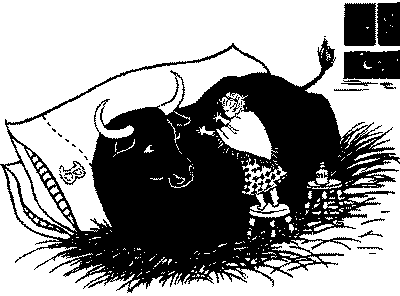
Once upon a time, when King Brahmadatta was ruling in Benares, there was an old woman who had a calf. This calf was of a noble dark color. In fact, he was jet black without a spot of white. He was the Bodhisatta — the Enlightenment Being.
The old woman raised the little calf just as though he were her own child. She fed him only the very best rice and rice porridge. She petted his head and neck, and he licked her hand. Since they were so friendly, the people began calling the calf, “Grandma’s Blackie’.
Even after he grew up into a big strong bull, Grandma’s Blackie remained very tame and gentle. The village children played with him, holding onto his neck and ears and horns. They would even grab his tail and swing up onto his back for a ride. He liked children, so he never complained.
The friendly bull thought, “The loving old woman, who brought me up, is like a kind mother to me. She raised me as if I were her own child. She is poor and in need, but too humble to ask for my help. She is too gentle to force me to work. Because I also love her, I wish to release her from the suffering of poverty." So he began looking for work.
One day a caravan of 500 carts came by the village. It stopped at a difficult place to cross the river. The bullocks were not able to pull the carts across. The caravan leader hooked up all 500 pairs of bullocks to the first cart. But the river was so rough that they could not pull across even that one cart.
Faced with this problem, the leader began looking for more bulls. He was known to be an expert judge of the qualities of bulls. While examining the wandering village herd, he noticed Grandma’s Blackie. At once he thought, “This noble bullock looks like he has the strength and the will to pull my carts across the river."
He said to the villagers standing nearby, “To whom does this big black bull belong? I would like to use him to pull my caravan across the river, and I am willing to pay his owner for his services." The people said, “By all means, take him. His master is not here."
So he put a rope through Grandma’s Blackie’s nose. But when he pulled, he could not budge him! The bull was thinking, “Until this man says what he will pay for my work, I will not move."
Being such a good judge of bulls, the caravan leader understood his reasoning. So he said, “My dear bull, after you have pulled my 500 carts across the river, I will pay you two gold coins for each cart – not just one, but two!" Hearing this, Grandma’s Blackie went with him at once.
Then the man harnessed the strong black bull to the first cart. He proceeded to pull it across the river. This was what all one thousand bulls could not do before. Likewise, he pulled across each of the other 499 carts, one at a time, without slowing down a bit!
When all was done, the caravan leader made a package containing only one gold coin per cart, that is, 500 coins. He hung this around the mighty bullock’s neck. The bull thought, “This man promised two gold coins per cart, but that is not what he has hung around my neck. So I will not let him leave!" He went to the front of the caravan and blocked the path.
The leader tried to push him out of the way, but he would not move. He tried to drive the carts around him. But all the bulls had seen how strong he was, so they would not move either!
The man thought, “There is no doubt that this is a very intelligent bull, who knows I have given him only half-pay." So he made a new package containing the full one-thousand gold coins, and hung it instead around the bull’s neck.
Then Grandma’s Blackie re-crossed the river and walked directly towards the old woman, his ‘mother’. Along the way, the children tried to grab the money package, thinking it was a game. But he escaped them.
When the woman saw the heavy package, she was surprised. The children told her all about what happened down at the river. She opened the package and discovered the one thousand gold coins.
The old woman also saw the tired look in the eyes of her ‘child’. She said, “Oh my son, do you think I wish to live off the money you earn? Why did you wish to work so hard and suffer so? No matter how difficult it may be, I will always care for and look after you."
Then the kind woman washed the lovely bull and massaged his tired muscles with oil. She fed him good food and cared for him, until the end of their happy lives together.
The moral is: Loving-kindness makes the poorest house into the richest home.
29 Grandma’s Blackie [Loving-kindness]
Link: https://hhdorjechangbuddhaiiiinfo.com/2022/06/20/29-grandmas-blackie-loving-kindness/
INTERPRETER’S INTRODUCTION – BUDDHIST TALES FOR YOUNG AND OLD, VOLUME 1, STORIES 1-50
#Buddhisttalesforyoungandold #Buddhiststories #storiesforkids #moralstories #Buddha #Jatakastories #PansiyaPanasJataka
Buddhist Tales for Young and Old, volume 1, Prince Goodspeaker, Stories 1-50
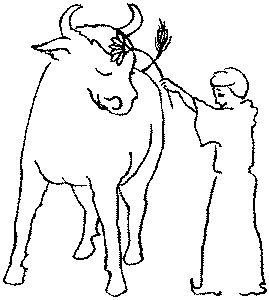
Once upon a time, in the country of Gandhara in northern India, there was a city called Takkasila. In that city the Enlightenment Being was born as a certain calf. Since he was well bred for strength, he was bought by a high class rich man. He became very fond of the gentle animal, and called him ‘Delightful’. He took good care of him and fed him only the best.
When Delightful grew up into a big fine strong bull, he thought, “I was brought up by this generous man. He gave me such good food and constant care, even though sometimes there were difficulties. Now I am a big grown-up bull and there is no other bull who can pull as heavy a load as I can. Therefore, I would like to use my strength to give something in return to my master."
So he said to the man, “Sir, please find some wealthy merchant who is proud of having many strong bulls. Challenge him by saying that your bull can pull one- hundred heavily loaded bullock carts."
Following his advice, the high class rich man went to such a merchant and struck up a conversation. After a while, he brought up the idea of who had the strongest bull in the city.
The merchant said, “Many have bulls, but no one has any as strong as mine." The rich man said, “Sir, I have a bull who can pull one hundred heavily loaded bullock carts." “No, friend, how can there be such a bull? That is unbelievable!" said the merchant. The other replied, “I do have such a bull, and I am willing to make a bet."
The merchant said, “I will bet a thousand gold coins that your bull cannot pull a hundred loaded bullock carts." So the bet was made and they agreed on a date and time for the challenge.
The merchant attached together one-hundred big bullock carts. He filled them with sand and gravel to make them very heavy.
The high class rich man fed the finest rice to the bull called Delightful. He bathed him and decorated him and hung a beautiful garland of flowers around his neck.
Then he harnessed him to the first cart and climbed up onto it. Being so high class, he could not resist the urge to make himself seem very important. So he cracked a whip in the air, and yelled at the faithful bull, “Pull, you dumb animal! I command you to pull, you big dummy!"
The bull called Delightful thought, “This challenge was my idea. I have never done anything bad to my master, and yet he insults me with such hard and harsh words!" So he remained in his place and refused to pull the carts.
The merchant laughed and demanded his winnings from the bet. The high class rich man had to pay him the one thousand gold coins. He returned home and sat down, saddened by his lost bet, and embarrassed by the blow to his pride.
The bull called Delightful grazed peacefully on his way home. When he arrived, he saw his master sadly lying on his side. He asked, “Sir, why are you lying there like that? Are you sleeping? You look sad." The man said, I lost a thousand gold coins because of you. With such a loss, how could I sleep?"
The bull replied. “Sir, you called me ‘dummy’. You even cracked a whip in the air over my head. In all my life, did I ever break anything, step on anything, make a mess in the wrong place, or behave like a ‘dummy’ in any way?" He answered, “No, my pet."
The bull called Delightful said, “Then sir, why did you call me ‘dumb animal’, and insult me even in the presence of others? The fault is yours. I have done nothing wrong. But since I feel sorry for you, go again to the merchant and make the same bet for two thousand gold coins. And remember to use only the respectful words I deserve so well."
Then the high class rich man went back to the merchant and made the bet for two-thousand gold coins. The merchant thought it would be easy money. Again he set up the one hundred heavily loaded bullock carts. Again the rich man fed and bathed the bull, and hung a garland of flowers around his neck.
When all was ready, the rich man touched Delightful’s forehead with a lotus blossom, having given up the whip. Thinking of him as fondly as if he were his own child, he said, “My son, please do me the honour of pulling these one hundred bullock carts."
Lo and behold, the wonderful bull pulled with all his might and dragged the heavy carts, until the last one stood in the place of the first.
The merchant, with his mouth hanging open in disbelief, had to pay the two thousand gold coins. The onlookers were so impressed that they honoured the bull called Delightful with gifts. But even more important to the high class rich man than his winnings, was his valuable lesson in humility and respect.
The moral is: Harsh words bring no reward. Respectful words bring honor to all.
28,88 The Bull Called Delightful [All Deserve Respect]
INTERPRETER’S INTRODUCTION – BUDDHIST TALES FOR YOUNG AND OLD, VOLUME 1, STORIES 1-50
#Buddhisttalesforyoungandold #Buddhiststories #storiesforkids #moralstories #Buddha #Jatakastories #PansiyaPanasJataka
 頂禮 H.H. 第三世多杰羌佛- 眾善奉行