12. King Banyan Deer [Chapter 2. Teaching]

12. King Banyan Deer [Chapter 2. Teaching]

Buddhist Tales for Young and Old, volume 1, Prince Goodspeaker, Stories 1-50
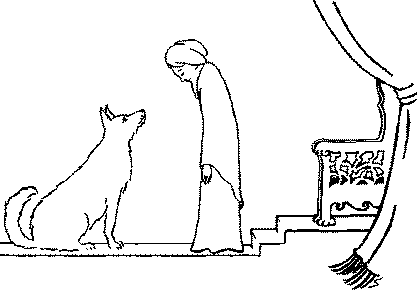
Out of compassion and gratitude, King Banyan Deer the Enlightenment Being, taught the King of Benares. He advised him to climb the five steps of training, in order to purify his mind. He described them by saying, “It will benefit you, if you give up the five unwholesome actions. These are:

  • Destroying life, for this is not compassion;
  • Taking what is not given, for this is not generosity;
  • Doing wrong in sexual ways, for this is not loving-kindness;
  • Speaking falsely, for this is not Truth;
  • Losing your mind from alcohol, for this leads to falling down the first four steps."

He further advised him to do wholesome actions, that would bring happiness in this life and beyond. Then King Banyan Deer, and both herds, returned to the forest.

In the fullness of time, the pregnant doe, who had stayed with Banyan’s herd, gave birth to a fawn. He was as beautiful as a lotus blossom given as an offering to the gods.

When the fawn had grown into a young buck deer, he began playing with Branch Deer’s herd. Seeing this, his mother said to him, “Better to die after a short life with the great compassionate one, than to live a long life with an ordinary one." Afterwards, her son lived happily in the herd of King Banyan Deer.

The only ones left unhappy were the farmers and villagers of the kingdom. For, given total immunity by the king, the deer began to fearlessly eat the people’s crops. They even grazed in the vegetable gardens inside the villages and the city of Benares itself!

So the people complained to the king, and asked permission to kill at least some of the deer as a warning. But the king said, “I myself promised complete immunity to King Banyan Deer. I would give up the kingship before I would break my word to him. No one may harm a deer!"

When King Banyan Deer heard of this, he said to all the deer, “You should not eat the crops that belong to others." And he sent a message to the people. Instead of making fences, he asked them to tie up bunches of leaves as boundaries around their fields. This began the Indian custom of marking fields with tied up leaves, which have protected them from deer to this very day.

Both King Banyan Deer and the King of Benares lived out their lives in peace, died, and were reborn as they deserved.

The moral is: Wherever it is found, compassion is a sign of greatness.

12. King Banyan Deer [Chapter 2. Teaching]

Link: https://hhdorjechangbuddhaiiiinfo.com/2022/01/03/12-king-banyan-deer-chapter-2-teaching/

INTERPRETER’S INTRODUCTION – BUDDHIST TALES FOR YOUNG AND OLD, VOLUME 1, STORIES 1-50

#Buddhisttalesforyoungandold #Buddhiststories #storiesforkids #moralstories #Buddha #Jatakastories #PansiyaPanasJataka

12. King Banyan Deer [Chapter 1. Compassion]

12. King Banyan Deer [Chapter 1. Compassion]

Buddhist Tales for Young and Old, volume 1, Prince Goodspeaker, Stories 1-50

Once upon a time, an unusual and beautiful deer was born in the forests near Benares, in northern India. Although he was as big as a young colt, it was easy for his mother to give birth to him. When he opened his eyes, they were as bright as sparkling jewels. His mouth was as red as the reddest forest berries. His hoofs were as black as polished coal. His little horns glistened like silver. And his color was golden, like a perfect summer’s dawn. As he grew up, a herd of 500 deer gathered around him, and he became known as King Banyan Deer.

Meanwhile, not far away, another beautiful buck deer was born, just as splendidly golden in color. In time, a separate herd of 500 deer came to follow him, and he was known as Branch Deer.

The King of Benares, at that time, was very fond of eating venison. So he regularly hunted and killed deer. Each time he hunted, he went to a different village and ordered the people to serve him. They had to stop what they were doing, whether plowing or harvesting or whatever, and work in the king’s hunting party.

The people’s lives were upset by these interruptions. They grew fewer crops, and other businesses also had less income. So they came together and decided to build a large deer park for the king, at Benares. There he could hunt by himself, with no need to command the services of the villagers.

So the people built a deer park. They made ponds where the deer could drink, and added trees and grasses for them to eat from. When it was ready, they opened the gate and went out into the nearby forests. They surrounded the entire herds of Banyan and Branch deer. Then, with sticks and weapons and noise makers, they drove them all into the deer park trap, and locked the gate behind them.

After the deer had settled down, the people went to the king and said, “Our crops and income have suffered because of your hunting requirements. Now we have made you a pleasant safe deer park, where you can hunt by yourself as you like. With no need of our aid, you can enjoy both the hunting and the eating of deer."

The king went to the new deer park. There he was pleased to see the vast herds. While watching them, his eye was caught by the two magnificent golden deer, with large fully grown antlers. Because he admired their unusual beauty, the king granted immunity to these two alone. He ordered that they should be completely safe. No one could harm or kill them.

Once a day the king would come and kill a deer for his dinner table. Sometimes, when he was too busy, the royal cook would do this. The body would then be brought to the chopping block to be butchered for the oven.

Whenever the deer saw the bow and arrows, they went into a panic, trembling for their lives. They ran around wildly, some being injured and some wounded, many suffering great pain.

One day, King Banyan Deer’s herd gathered around him. He called Branch Deer, and the two herds joined for a meeting. King Banyan Deer addressed them. “Although in the end, there is no escape from death, this needless suffering due to injuries and wounds can be prevented. Since the king only wishes the meat of one deer per day, let one be chosen by us each day to submit himself to the chopping block. One day from my herd, and the next day from Branch Deer’s herd, the victim’s lot will fall to one deer at a time."

Branch Deer agreed. From then on, the one whose turn it was, meekly surrendered himself and laid his neck on the block. The cook came each day, simply killed the waiting victim, and prepared the king’s venison.

One day, the turn fell by chance to a pregnant doe in Branch Deer’s herd. Caring for the others as well as herself and the unborn one, she went to Branch Deer and said, “My lord, I am pregnant. Grant that I may live until I have delivered my fawn. Then we will fill two turns rather than just one. This will save a turn, and thereby a single life for one long day."

Branch Deer replied, “No, no, I cannot change the rules in midstream and put your turn upon another. The pregnancy is yours, the babe is your responsibility. Now leave me."

Having failed with Branch Deer, the poor mother doe went to King Banyan Deer and explained her plight. He replied gently, “Go in peace. I will change the rules in midstream and put your turn upon another."

And the deer king went to the executioner’s block, and laid down his own golden neck upon it.

A silence fell in the deer park. And some who tell this story even say that silence also fell in other worlds not seen from here.

Soon the royal cook came to kill the willing victim on the block. But when he saw it was one of the two golden deer the king had ordered spared, he was afraid to kill him. So he went and told the King of Benares.

The king was surprised, so he went to the park. He said to the golden deer, still lying on the block, “Oh king of deer, did I not promise to spare your life? What is the reason you come here like the others?"

King Banyan Deer replied, “Oh king of men, this time a pregnant doe was unlucky enough to be the one to die. She pleaded for me to spare her, for the sake of others as well as her unborn baby and herself. I could not help but feel myself in her place, and feel her suffering. I could not help but weep, to think the little one would never see the dawn, would never taste the dew. And yet, I could not force the pain of death on another, relieved to think it was not his turn today. So, mighty king, I offer my life for the sake of the doe and her unborn fawn. Be assured there is no other reason."

The King of Benares was overwhelmed. Powerful as he was, a tear rolled down his cheek. Then he said, “Oh great lord, the golden king of deer, even among human beings, I have not seen any such as you! Such great compassion, to share in the suffering of others! Such great generosity, to give your life for others! Such great kindness and tender love for all your fellow deer! Arise."

“I decree that you will never be killed by me or anyone else in my kingdom. And, so too, the doe and her babe."

Without yet raising his head, the golden one said, “Are only we to be saved? What of the other deer in the park, our friends and kin?" The king said, “My lord, I cannot refuse you, I grant safety and freedom to all the deer in the park." “And what of the deer outside the park, will they be killed?" asked Banyan. “No my lord, I spare all the deer in my whole kingdom."

Still the golden deer did not raise up his head. He pleaded, “So the deer will be safe, but what will the other four-footed animals do?" “My lord, from now on they too are safe in my land." “And what of the birds? They too want to live." “Yes, my lord, the birds too will be safe from death at the hands of men." “And what of the fish, who live in the water?" “Even the fish will be free to live, my lord." So saying, the King of Benares granted immunity from hunting and killing to all the animals in his land.

Having pleaded for the lives of all creatures, the Great Being arose.

12. King Banyan Deer [Chapter 1. Compassion]

Link: https://hhdorjechangbuddhaiiiinfo.com/2022/01/03/12-king-banyan-deer-chapter-1-compassion/

INTERPRETER’S INTRODUCTION – BUDDHIST TALES FOR YOUNG AND OLD, VOLUME 1, STORIES 1-50

#Buddhisttalesforyoungandold #Buddhiststories #storiesforkids #moralstories #Buddha #Jatakastories #PansiyaPanasJataka

【佛教故事】03- 贫妇打扫佛陀精舍得道果

【佛教故事】03- 贫妇打扫佛陀精舍得道果

視頻鏈接:https://www.youtube.com/watch?v=6ZXhx…

網站鏈接:https://fojiaohuideng.org/2021/04/29/…

歡迎訂閱此頻道 https://www.youtube.com/channel/UCAEy…

#佛教故事#供養佛法僧#祇园精舍#精舍#贫妇#得道果#道果#供养佛陀#僧众#僧衆#佛陀#佛陀教導#和合共住#用功精進#精進#僧衆威儀莊重#威儀#威儀莊重#誦經#誦經聲#肅穆祥和#貧窮人家#耳濡目染#新生歡喜#三寶#結善緣#善緣#供養三寶#供養#和合的僧衆#貧苦的婦人#婦人#陷入沉思#沉思#發心#打掃精舍#打扫祇园精舍#安心修行#修行#歡喜贊嘆的心#歡喜贊嘆#誠心#至誠之心#長者#修行者#出門游玩#游玩#景象#水澤#七寶砌成#七寶#德行#具足德行#灑掃佛陀的精舎#佛陀的精舎#福報#無上福報#投生#貧窮#用黃金供養佛法僧#大福田#福田#清净發心#清净#廣積福德#佈施#圓滿佈施#證得道果

什么是真正的孝顺?这是我听过的最好答案

什么是真正的孝顺?这是我听过的最好答案

寒风萧瑟,树木凋零,路人行色匆匆,不愿在街上多逗留一分钟。我戴上了围巾,骑着电动车,逆风而行。今天我要去探望妈妈,还为她准备了一份珍贵的礼物。

远远地,已见母亲站在门口。她仿佛预知到我这个点儿到。妈妈胖胖的身躯有点佝偻,动作有些笨拙。她的腿病近来又犯了,导致吃不好,睡不香。

走近了,我抬头看到妈妈花白的头发,满是皱纹的脸,心里不禁一酸。妈妈微笑着招呼我进屋。在我眼里,妈妈就像一位“神仙”,只要妈妈在,我所有的愿望都能满足。而如今,妈妈就像秋风中摇曳的一片树叶,随时都有飘落的可能。想到这里,泪湿润了眼眶。我能为妈妈做点什么呢?怎样才能让操劳了一生的妈妈,有一个幸福的晚年?

我曾立志做一个孝女,每月给妈妈零花钱,常回家看望,每次大包小包装满了爸妈爱吃的食物,然后鸡鸭鱼肉摆满桌。再买几瓶爸爸喜欢喝的酒。这让他们感到非常满足,自豪有我这么一个孝顺的女儿。在爸妈的夸奖下,我的“孝名”很快就在邻里间传开了。

我生活在一个沿海的小县城,这里海鲜丰富,爸妈最喜欢吃螃蟹。每年“秋风起,蟹黄肥”,我就会给爸妈买上几次。刚工作时,因为经济条件有限,买的螃蟹个头儿小。经济条件改善后,净买一斤多的鲜肥公蟹。他们嘴上说又买这么贵的东西,但舒展的眉头,透露着心头的几分喜悦。

我曾以为给父母物质上的满足,这就是孝顺。其实这是很肤浅的孝顺,自以为是的孝顺。若孝顺不是建立在正知正见、为利众生上,而是建立在让众生痛苦的基础上,那种孝顺是带有黑业的愚孝!多年后,我接触了佛法,才明白这一点。


学佛后,我懂得了“众生平等”、“一切众生无始劫以来都是我的父母亲人”。难道为了今生的父母,就能伤害往昔的父母亲人吗?想起我买回家的鱼、虾、蛤蜊与大螃蟹……深深忏悔。杀生造业,让父母胡吃海喝,我不是真孝顺,反而把父母往地狱、火坑的方向推啊!

回家后,我告诉父母,以后别吃生猛海鲜了,因为一切众生无始劫以来都是我们的亲人。

然而妈妈并不买账:“我和你爸都这么大年纪了,以前生活条件不好,现在我们不能再亏待自己了。”

我把求救的目光转向爸爸。只见爸爸沉思了一会儿,说:“我觉得闺女不会害咱们,我不吃了。”

见到爸爸的态度,妈妈低下头,也表示同意了。从那以后,我每次带回家的礼物就变成了蔬菜水果。我也一改以往的急躁脾气,对父母更加体贴关心了。

2010年,我得知一位圣僧要来我们这个小县城放生。这是难得的亲近圣德的机会。若爸妈能皈依三宝,拜圣僧为师,那该多好,今生解脱有望啊!

虽然我时不时回家给爸妈分享一些学佛受用,爸妈也一个耳朵进一个耳朵出,有时还持怀疑态度,这次他们的因缘能成熟吗?可没想到,我一说圣僧的弘法事迹,告诉他们圣僧要来的讯息,他们非常欢喜。第二天,早早起来穿得整整齐齐,满心欢喜拜见圣僧,并皈依了三宝。

爸妈皈依后,我时不时在电话里提醒他们,要经常做功课,诵经持咒等等。爸妈也连声答应。我也会为他们放生祈福,希望妈妈的腿患能减轻,爸爸健康。

为了让妈妈恭闻南无第三世多杰羌佛亲说的法音,明白因果、无常的真谛,我多次提及闻法一事。但妈妈总说生意忙,没时间而推却了。在我不厌其烦地“唠叨”下,这次妈妈终于痛快答应了。


我一字一句教妈妈诵《心经》,做前行。看着妈妈认真的样子,我觉得一切努力都值得。后来,妈妈持续恭闻了《你明信因果吗》《无常》《人为什么会生病》《圣人与凡人的区别》等法音。妈妈转变了,她越来越虔诚,她懂得了一切的境遇都是自己的因果业力造成的,要想转换因果,必须听佛陀的教戒,深信因果,依教奉行。

妈妈在家里再也不打苍蝇、蚊子了,还积极参与放生、捐庙、供灯等活动。在这过程中,妈妈的腿痛真的减轻了。妈妈说:“女儿带我学习如来正法,皈依三宝,拜圣德为师,是送给我的最好礼物!”

子女让父母皈依三宝,学到真佛法,解脱六道轮回的痛苦,才是人世间最大的孝顺!

这次,妈妈明白了我的真心,也读懂了我的孝顺。

——End——

撰稿:慈敏

编辑:悦色

什么是真正的孝顺?这是我听过的最好答案

此文章链接:https://hhdorjechangbuddhaiiiinfo.com/2021/12/28/%e4%bb%80%e4%b9%88%e6%98%af%e7%9c%9f%e6%ad%a3%e7%9a%84%e5%ad%9d%e9%a1%ba%ef%bc%9f%e8%bf%99%e6%98%af%e6%88%91%e5%90%ac%e8%bf%87%e7%9a%84%e6%9c%80%e5%a5%bd%e7%ad%94%e6%a1%88/

#H.H.第三世多杰羌佛第三世多杰羌佛佛法#學佛受用心得

11. Beauty and Grey [A Wise Leader]

11. Beauty and Grey [A Wise Leader]

Buddhist Tales for Young and Old, volume 1, Prince Goodspeaker, Stories 1-50

Once upon a time, there was a deer who was the leader of a herd of a thousand. He had two sons. One was very slim and tall, with bright alert eyes, and smooth reddish fur. He was called Beauty. The other was Grey in color, also slim and tall, and was called Grey.

One day, after they were fully grown, their father called Beauty and Grey to him. He said, “I am now very old, so I cannot do all that is necessary to look after this big herd of deer. I want you, my two grown-up children, to be the leaders, while I retire from looking after them all the time. We will divide the herd, and each of you will lead 500 deer." So it was done.

In India, when the harvest time comes, the deer are always in danger. The rice is at its tallest, and the deer cannot help but go into the paddies and eat it. To avoid the destruction of their crops, the human beings dig pits, set sharp stakes in the ground, and build stone traps — all to capture and kill the deer.

Knowing this was the season, the wise old deer called the two new leaders to him. He advised them to take the herds up into the mountain forest, far from the dangerous farm lands. This was how he had always saved the deer from being wounded or killed. Then he would bring them back to the low lands after the harvest was over.

Since he was too old and weak for the trip, he would remain behind in hiding. He warned them to be careful and have a safe journey. Beauty set out with his herd for the mountain forest, and so did Grey with his.

The villagers all along the way knew that this was the time the deer moved from the low lying farm lands to the high countryside. So they hid along the way and killed the deer as they passed by.

Grey did not pay attention to his father’s wise advice. Instead of being careful and traveling safely, he was in a hurry to get to the lush mountain forest. So he moved his herd constantly, during the night, at dawn and dusk, and even in broad daylight. This made it easy for the people to shoot the deer in Grey’s herd with bows and arrows. Many were killed, and many were wounded, only to die in pain later on. Grey reached the forest with only a few deer remaining alive.

The tall sleek red-furred Beauty was wise enough to understand the danger to his moving herd. So he was very careful. He knew it was safer to stay away from the villages, and from all humans. He knew it was not safe in the daytime, or even at dawn or dusk. So he led his herd wide around the villages, and moved only in the middle of the night. Beauty’s herd arrived in the mountain forest safe and sound, with no one killed or injured.

The two herds found each other, and remained in the mountains until well after the harvest season was over. Then they began the return to the farmland country.

Grey had learned nothing from the first trip. As it was getting cold in the mountains, he was in a hurry to get to the warmer low lands. So he was just as careless as before. Again the people hid along the way and attacked and killed the deer. All Grey’s herd were killed, later to be eaten or sold by the villagers. Grey himself was the only one who survived the journey.

Beauty led his herd in the same careful way as before. He brought back all 500 deer, completely safe. While the deer were still in the distance, the old chief said to his doe, “Look at the deer coming back to us. Beauty has all his followers with him. Grey comes limping back alone, without his whole herd of 500. Those who follow a wise leader, with good qualities, will always be safe. Those who follow a foolish leader, who is careless and thinks only of himself, will fall into troubles and be destroyed."

After some time, the old deer died and was reborn as he deserved. Beauty became chief of the herd and lived a long life, loved and admired by all.

The moral is: A wise leader puts the safety of his followers first.

11. Beauty and Grey [A Wise Leader]

Link:https://hhdorjechangbuddhaiiiinfo.com/2021/12/25/11-beauty-and-grey-a-wise-leader/

INTERPRETER’S INTRODUCTION – BUDDHIST TALES FOR YOUNG AND OLD, VOLUME 1, STORIES 1-50

#Buddhisttalesforyoungandold #Buddhiststories #storiesforkids #moralstories #Buddha #Jatakastories #PansiyaPanasJataka
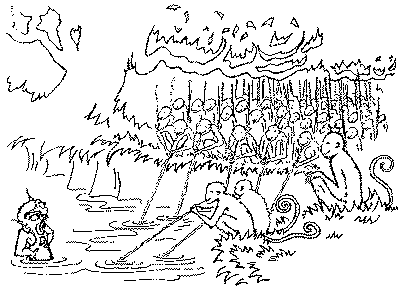
10. The Happy Monk [Joys of the Spiritual Life]

10. The Happy Monk [Joys of the Spiritual Life]

Buddhist Tales for Young and Old, volume 1, Prince Goodspeaker, Stories 1-50

Once upon a time, there was a high class rich man. As he became older, he realized that the suffering of old age was about the same for rich and poor alike. So he gave up his wealth and class position, and went into the forest to live as a poor monk. He practiced meditation, and developed his mind. He freed himself from unwholesome thoughts, and became contented and happy. His peacefulness and friendliness gradually drew 500 followers to his side.

At that time, long ago, most monks usually looked pretty serious. But there was one monk who, even though he was quite dignified, always wore at least a little smile. No matter what happened, he never lost this glimmer of inner happiness. And on happy occasions, he had the broadest smile, and the warmest laughter of all.

Sometimes monks, as well as others, would ask him why he was so happy that he always wore a smile. He chuckled and said, “If I told you, you wouldn’t believe me! And if you thought I spoke a lie, it would be a dishonor to my master." The wise old master knew the source of the happiness that could not be wiped from his face. He made this happiest monk his number one assistant.

One year, after the rainy season, the old monk and his 500 followers went to the city. The king permitted them to live in his pleasure garden for the springtime.

This king was a good man, who took his responsibilities as ruler seriously. He tried to protect the people from danger, and to increase their prosperity and welfare. He always had to worry about neighbouring kings, some of whom were unfriendly and threatening. He often had to make peace between his own rival ministers of state.

Sometimes his wives fought for his attention, and for the advancement of their sons. Occasionally, a dissatisfied subject even threatened the life of the king himself! And, of course, he had to worry constantly about the finances of the kingdom. In fact, he had so much to worry about, that he never had time to be happy!

As summer approached, he learned that the monks were preparing to return to the forest. Considering the health and welfare of the old leader, the king went to him and said, “Your reverence, you are now very old and weak. What good does it do to go back to the forest? You can send your followers back, while you remain here."

The chief monk then called his number one assistant to him and said, “You are now to be the leader of the other monks, while you all live in the forest. As I am too old and weak. I will remain here as offered by the king." So the 500 returned to the forest and the old one remained.

The number one assistant continued practicing meditation in the forest. He gained so much wisdom and peace that he became even happier than before. He missed the master, and wanted to share his happiness with him. So he returned to the city for a visit.

When he arrived, he sat on a rug at the feet of the old monk. They didn’t speak very much, but every so often the number one assistant would say, “What happiness! Oh what happiness!"

Then the king came to visit. He paid his respects to the chief monk. However, the one from the forest just kept saying, “What happiness! Oh what happiness!" He did not even stop to greet the king and show proper respect. This disturbed him, and he thought, “With all my worries, as busy as I am looking after the kingdom, I take time out for a visit and this monk does not respect me enough to even recognize me. “How insulting!" He said to the senior of the two monks, “Venerable sir, this monk must be stupid from overeating. That must be why he is so full of happiness. Does he lie around here so lazy all the time?"

The head monk replied, “Oh king, have patience and I will tell you the source of his happiness. Not many know it. He was once a king, just as rich and mighty as you! Then he was ordained a monk and gave up his kingly life. Now he thinks his old happiness was nothing compared to his present joy!"

He used to be surrounded by armed men, who guarded and protected him. Now, sitting alone in the forest with nothing to fear, he has no need for armed guards. He has given up the burden of worrying about wealth that has to be protected. Instead, free of the worry of wealth and the fear of power, his wisdom protects himself and others. He advances in meditation to such inner peace, that he cannot keep from saying, “What happiness! Oh what happiness!"

The king understood at once. Hearing the story of the happy monk made him feel at peace. He stayed for a while and received advice from both of them. Then he honoured them, and returned to the palace.

Later the happy monk, who once had been a king, paid his respects to his master and returned to the lovely forest. The old chief monk lived out the remainder of his life, died, and was reborn in a high heaven world.

The moral is: Unattached to wealth and power, happiness increases.

10. The Happy Monk [Joys of the Spiritual Life]

Link: https://hhdorjechangbuddhaiiiinfo.com/2021/12/21/10-the-happy-monk-joys-of-the-spiritual-life/

INTERPRETER’S INTRODUCTION – BUDDHIST TALES FOR YOUNG AND OLD, VOLUME 1, STORIES 1-50

#Buddhisttalesforyoungandold #Buddhiststories #storiesforkids #moralstories #Buddha #Jatakastories #PansiyaPanasJataka

佛弟子訪談- AM1300中文廣播電臺 專訪美國舊金山華藏寺住持若慧法師【第八集】

佛弟子訪談- AM1300中文廣播電臺 專訪美國舊金山華藏寺住持若慧法師【第八集】

Link: https://www.youtube.com/watch?v=rfLF6…

歡迎訂閱此頻道~ https://www.youtube.com/channel/UCqD8…

#第三世多杰羌佛正法 #第三世多杰羌佛#藉心經說真諦 #大德宣示#美國舊金山華藏寺 #舊金山華藏寺 #華藏寺 #若慧法師 #釋迦牟尼佛 #KAZN#AM1300Q#佛弟子訪談#佛教專訪#佛教訪談#佛弟子#佛教#佛教影片#美國寺廟#美國寺廟住持#寺廟住持

佛弟子訪談-AM1300中文廣播電臺 專訪美國舊金山華藏寺住持若慧法師【第七集】

佛弟子訪談-AM1300中文廣播電臺 專訪美國舊金山華藏寺住持若慧法師【第七集】

鏈接:https://youtu.be/O3ck1FBp_mQ

歡迎訂閱此頻道~ https://www.youtube.com/channel/UCqD8…

#第三世多杰羌佛正法 #第三世多杰羌佛#藉心經說真諦 #大德宣示#美國舊金山華藏寺 #舊金山華藏寺 #華藏寺 #若慧法師 #釋迦牟尼佛 #KAZN#AM1300Q#佛弟子訪談#佛教專訪#佛教訪談#佛弟子#佛教#佛教影片#美國寺廟#美國寺廟住持#寺廟住持

【佛教故事】02- 丑女虔心供养佛陀转世得金色身

【佛教故事】02- 丑女虔心供养佛陀转世得金色身

視頻鏈接:https://www.youtube.com/watch?v=0lAeP…

歡迎訂閱此頻道 https://www.youtube.com/channel/UCAEy…

#佛教故事#供養佛陀#金身#丑女虔心供养佛陀转世得金色身#佛陀#舎衛國 # 舍卫国 #十八種醜相#醜相#十八種醜相的女孩#難看的孩子#不殺生#殺生#趕出家門#流浪街頭#流浪#流浪女#流浪漢#四處行乞#行乞#吃不飽#穿不暖#樣貌醜陋#痲瘋病#聖者#悲憫心#前世#前世惡業#前世惡業感召#惡業#行善#行善積德#善業#善業的力量#拖延惡業#芝麻油#供香#香#鮮花供養#心生悲憫#醜女#圓滿嚴飾#佛陀相好莊嚴#功德#生起信心#供養佛的功德#功德無量#無量功德#功德不可思議#衣服供養佛#合掌祈請#佛前祈請#往生#歡喜中往生#轉生#轉生商主家#莊嚴秀麗#相貌莊嚴#佛法#出家#出家為尼#剃髮為尼#削髮為尼#佛陀的教法#晝夜精進#精進修行#滅盡煩惱#煩惱#阿羅漢#羅漢果位#成就#成就解脫