146. The Story of a Crow [Kāka-Jātaka]

146. The Story of a Crow [Kāka-Jātaka]

At one time Buddha was living in the Jeta Grove monastery. There was a group of aged gentlemen landowners, and jointly they did meritorious deeds. One day, they got together and while they were chatting, they thought that as they were in old age, it would be good to become ascetics, and by doing so they would be able to obtain Arahant-ship [sainthood]. They approached the Buddha and said, “Venerable sir, kindly ordain us. If you can do so, it would be a great thing for us.” Buddha agreed to their request, and they were ordained.

After their ordination, they made little huts for themselves beside Jetavanārāma. And as they had been ordained in old age, they could not study anything. Even by practicing meditation in accord with the Buddha’s guidance, they failed to achieve any results.17 When they went on alms rounds, they usually went to their own former family members’ homes.  They would take what they obtained to the home of the former wife of the chief monk of the group and eat it there, obtaining from her special sauces cooked by her for their food. In the course of time, this chief monk of the group’s wife fell into sickness and died. On hearing this news those old monks, lamenting that the old woman who was skilled in cooking had now passed away, started to cry together.

While they were crying together, other monks heard their cries and came to see what the trouble was. They asked the old monks why they were crying. The old monks said, “We cry because our benefactress who was clever in cooking sauces for us has died. It is because of this that we cry.” After hearing this, the monks who came in the evening to the preaching hall were talking about this when the Buddha entered. Buddha asked, “Monks, what were you talking about before my coming?” The monks mentioned the news about the passing away of the wife of the chief monk of the group of old monks, and how the old monks were crying.

Then the Buddha said, “Oh monks, this old chief monk and the group of old monks cry not only in this life. They did so even in the past when the old chief monk’s wife died, and they were trying to bail out the water from the ocean and they failed to do it. At that time, because of the help of a good advisor they did not die on account of their futile exertions.” The monks requested the Buddha to disclose the past story.

The Buddha said:

At one time, King Brahmadatta was ruling in Benares. At that time, the Enlightenment Being was born as a divine being of the ocean.

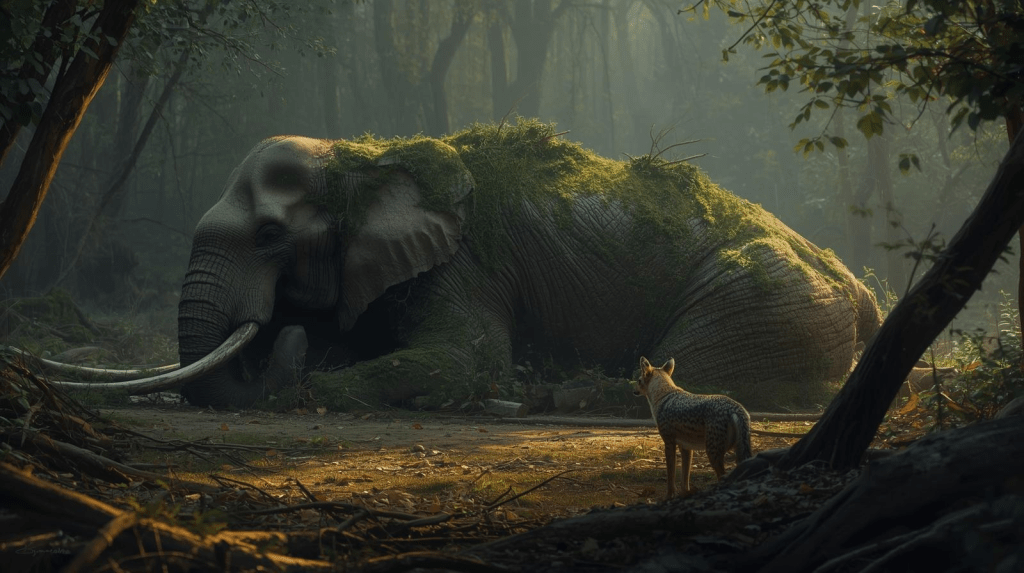
Once, some people got together and made offerings to deities and Nāga-s who lived in the ocean with rice, meat, and alcoholic beverages in accord with vows they had made. They placed all these food items on the sand of the beach. When they left, a certain crow and his hen, wandering on the sand, saw these food items there and ate and drank as much as they could. They became intoxicated thereby from both the alcoholic beverages and the rich food. Because they were intoxicated, they decided, using poor judgment, to take a bath in the ocean. While they were bathing in the ocean, a big wave came. It swept the hen-crow out to sea, and a big fish came and swallowed her. On seeing this, the male crow thought that a wave had swallowed his hen. He cried with sorrow.

When they heard his cries, other crows came around and they asked, “Why are you crying?” He told them, “Your friend, the hen-crow who was my wife, was taken by the ocean.” The other crows also became very upset. They said, “We have such a large number of crows here. Why should we not just bail the water out of the ocean?”

They then all got together and started to bail out the water of the ocean with their beaks. In this way, they tried for a long time to empty the ocean until they became tired. They then stopped to rest on the sand of the beach, with their beaks being sore from the salty water, their throats being dry, their cheeks being irritated, and their eyes being red from having gotten salt water in them. Very tired from their task, they began to cry, “We have lost our beautiful hen-crow who had a beautiful beak like a parrot, a beautiful color like a peacock, and a sweet voice like a cuckoo. Our beautiful hen- crow was stolen by the thief-like ocean.” Saying so, they cried in one voice.

The Enlightenment Being, who had been born as a divine being of the ocean, on hearing the noise of the crows, assumed a dreadful disguise as a bird of prey. Coming there, he made them go away. In this way, he stopped them from being sad any longer.

The Buddha said:

The hen-crow at that time was the dainty woman who today cooked sauces for the old monks. The male crow was the chief monk of the group of old monks. The other crows were the group of old monks. And the divine being of the ocean of whom they were made to be afraid, thereby causing them to fly away, was I who am today the Buddha.

Thus he finished the story.

The moral: “Grieving for the lost is vain.” Also,

“Think before acting out of grief.”

17 When a person gets old, his mind is not as sharp as when he was young, his memory does not work as well, and he cannot concentrate the same as a young person. Because of this, it is difficult for him to study or meditate. Ideally, a person should be ordained when he is young.

146. The Story of a Crow [Kāka-Jātaka]

Link: https://hhdorjechangbuddhaiiiinfo.com/2025/11/13/146-the-story-of-a-crow-kaka-jataka/

#Buddhisttalesforyoungandold #Buddhiststories #storiesforkids #moralstories #Buddha #Jatakastories #PansiyaPanasJataka #JatakaTalesofSakyamuniBuddha #JatakaTales #SakyamuniBuddha’sPast

145. The Story of Rādha [Rādha-Jātaka]

145. The Story of Rādha [Rādha-Jātaka]

At one time when Buddha was living in the Jeta grove, one monk who was infatuated with his former wife after his ordination was ready to disrobe. Buddha heard this. The reason for disclosing the following Jātaka story comes in the Indriya-Jātaka [No. 423] further on.

[At one time, a householder when he was advanced in years wanted to give up his lay life and be ordained. When he was ordained, he felt that it was difficult to lead a life without a woman as in monkhood. According to his foolish thought of becoming a layman again, the chief ascetic said, “If you disrobe, you will have to suffer a lot. …” Finally, the monk who wanted to disrobe realized, as his teacher had explained, “If I go and live a lay life again, I will have to kill animals for meat. Then I will be reborn in hell and I will have to suffer. In my lay life, my present physical strength will not last forever. I will suffer when I am physically weak.” Thinking such thoughts, he gave up his thought to be a layman and he began to meditate as before. He knelt down, begging pardon in the presence of his teacher, and he started to meditate. … Finally, he meditated and learned to control his lust, he gained mental absorption, and he was reborn in the Brahma world.]

To the monk who had become infatuated with his former wife and was trying to disrobe, the Buddha said, “Not only in this life are you trying to do this, but such was so also in a former life. Even in the past, you could not control your unwholesome lust. Therefore it is not surprising that you have such urges.” Saying so, the other monks requested the Buddha to disclose the past story, and Buddha related this story:

At one time, a king called Brahmadatta was ruling in Benares. At that time, the Enlightenment Being was born as a parrot.

A Brahmin captured the Enlightenment Being, who was a parrot, and his younger brother also. He brought them to his home. The Enlightenment Being was named Poææhapāda, and his brother was named Rādha. He brought both up as his own children.

Once, the Brahmin wanted to leave his home on business. He summoned his two parrot children and said to them, “If your Brahmin mother does something wrong when I am gone, you must admonish her not to do so. If you do not think you can stop her misconduct, say nothing.” Saying so, he left.

From that time, there were limitless people coming in and going out of the house. On seeing this, the Enlightenment Being’s brother said to the Enlightenment Being, “When the Brahmin left, he asked us to admonish his wife if there was any wrongdoing. Shall I admonish her?” The Enlightenment Being parrot said, “My brother, you are not yet matured. You say this because you do not understand, and have no experience with women. During the ten hours of the morning, the number of men who come here are not countable. In the ten hours of the afternoon, it is also difficult to say the number of those people who come. Therefore, in such a situation, what advice can we give?” He asked his younger brother, therefore, not to speak. After a few days, the Brahmin returned.

When the Brahmin returned, he asked the Enlightenment Being, “How was my wife’s behavior?” The Enlightenment Being said, “There was a myriad of bad behavior. She behaved in this way because she does not love you. Therefore, it is not good to keep her in your home.” He further said, “From this point on, it is not good for myself and my brother to stay here.” And he thought that he should leave. He summoned his younger brother, went to the Brahmin, knelt down in homage, and begged pardon for his faults. They then returned to the forest.

The Buddha finalized this story, saying, “The Brahmin woman at that time was the former wife of the monk today. The Brahmin was this monk. The parrot Rādha, the younger brother, was the Venerable Ānanda. And the parrot Poææhapāda was I who am today the Buddha.”

The moral: “Misplaced lust will not bring you to the correct path.”

145. The Story of Rādha [Rādha-Jātaka]

Link: https://hhdorjechangbuddhaiiiinfo.com/2025/11/13/145-the-story-of-radha-radha-jataka/

#Buddhisttalesforyoungandold #Buddhiststories #storiesforkids #moralstories #Buddha #Jatakastories #PansiyaPanasJataka #JatakaTalesofSakyamuniBuddha #JatakaTales #SakyamuniBuddha’sPast
144. The Story of a Tail [NanÄguææha-Jātaka]

144. The Story of a Tail [NanÄguææha-Jātaka]

At one time Buddha was living in the Jeta Grove. Behind the Jeta grove temple, there was a community of NigaÏæha ascetics. They did austerities, claiming that these gained them merit. Among them, some ascetics were standing on one leg only with the other leg raised high, some were squatting on their heels, some were balancing themselves on their toes, and some were lying between four fires and looking up at the sun at midday—which penance they called Pañcatāpa [five scorchings]. They made vows to practice such penances.

Many monks saw these naked ascetics practicing such vows. On seeing this, they came to the Buddha and asked, “Venerable sir, these naked ascetics are practicing such-and- such vows, saying they are doing these in the name of penance. By doing these, do they have any benefit in the future?” The Buddha replied, “Oh monks, what kind of a benefit can be gained by such vows? In the ancient times, even some noble ones taking their birth-fire went into the forest thinking that if they protected that fire, there would be future benefits. They protected that fire for long times, and gained nothing. Giving that up afterwards, they practiced meditation.  As a result of that practice, they gained mental absorption and gained a more powerful mental status, and were reborn in the Brahma realm.”

How it was:

At one time, a king called Brahmadatta ruled Benares. At that time, the Enlightenment Being was born in a well- known Brahmin family. The Brahmin family preserved the Enlightenment Being’s birth-fire for twelve years. When he became twelve years old, his parents said, “Our son, this fire we have protected from your birth to the present. It is more powerful than sacred fire. Take this fire, and go into the forest and offer it to the god of fire. By so offering it, you can gain merit to go to the Brahma world. Whenever you do so, if you would like to go to the Brahma world, stay in the forest and protect that fire. If you want to marry a girl and live a lay life, you can instead do so.” On hearing this, the Enlightenment Being thought, “What is the use of a lay life to me? Instead, I will take my birth-fire, go to the forest, and I will sacrifice to the god of fire.”

While he was living in the forest, one day he went to a remote village collecting alms. He was given a bull as an offering. He took the bull to the forest with happiness, thinking he would be able to make a good sacrifice to the god of fire. When he returned to his hermitage, he tied the bull to a nearby tree, and he was getting ready to sacrifice the bull to the god. But he found that he did not have salt and lemon juice so as to make the offering tasty. So he went back to the village in search of salt and lemons.

While he was away from his hermitage, unfortunately there came some aboriginal hunters who saw this bull that had on it much meat.  They killed the bull on the spot, used the ascetic’s birth-fire to cook the meat, and ate as much as they could. Leaving the four legs and the tail, they left carrying away all the remainder of the bull.

The Enlightenment Being, who was the ascetic at that time, returned home carrying salt and lemons so as to sacrifice the bull. He saw his fire, and near it he saw the remaining four legs of the bull and the tail. He saw the bull had been eaten. On seeing this, he got very angry. He realized that there was no use in protecting the fire, as it did not have even the little power to protect the bull that was going to be sacrificed to it. Realizing this, he put out the fire, saying, “Why did I protect this fire as it does not even have the power to protect its own sacrifice? It is not good to help such a powerless god who is not grateful enough to help even its protector. How can it protect me if it cannot protect its own sacrifice?”

He gave up his practice of maintaining his birth-fire. He put it out using the hair on the end of the bull’s tail and water. He began to meditate, and through his meditation he was capable of developing concentration in his mind. Later, in the course of time, he was clever enough to obtain the five higher knowledges [pañcābhiññā]—miraculous knowledge, divine eye, divine ear, thought reading, and knowledge of reminiscence, and the eightfold mental absorptions [aææha- samāpatti]—first mental absorption [paæhama-jhāna], second mental absorption [dutiya-jhāna], third and fourth mental absorptions [tatiya- and catuttha-jhāna], mental absorption of the emptiness, mental absorption of consciousness, mental absorption of nothingness, and mental absorption of neither perception nor non-perception.  In the end, he died without falling from the mental absorptions.      Maintaining his absorptions, he gained birth in the Brahma world.

“The ascetic of that time was I who am today the Buddha.” Saying so, he ended this Jātaka story of a tail.

The moral: “Blind faith can mislead even the wise.”

144. The Story of a Tail [NanÄguææha-Jātaka]

Link: https://hhdorjechangbuddhaiiiinfo.com/2025/11/13/144-the-story-of-a-tail-nanaguaeaeha-jataka/

#Buddhisttalesforyoungandold #Buddhiststories #storiesforkids #moralstories #Buddha #Jatakastories #PansiyaPanasJataka #JatakaTalesofSakyamuniBuddha #JatakaTales #SakyamuniBuddha’sPast

140. The Story of One Who Had Lost in Two Ways [Ubhatobhaææha-Jātaka]

140. The Story of One Who Had Lost in Two Ways [Ubhatobhaææha-Jātaka]

The enlightened one told this story while he was at Jetavanārāma monastery on a certain occasion when he was assisting his own relatives. Its present story appears in the Bhaddasāla-Jātaka in the tenth book [No. 465].

[While Buddha was living in Jetavanārāma, King Kosala wanted to give alms to the monks. But on that day there was not even a single monk in the monastery. The king thought, “I always give alms. But the monks do not have full confidence in me because I am not a relative of the Buddha. If I became a relative, the monks will be more confident in and friendly to me.” Therefore, he sent a message to the Sākya king requesting him to give a Sākya virgin princess as his queen. So the Sākya king, who was afraid of the king of Kosala because he was mighty and powerful, thought, “It is good to give a girl to him. But we ought not give him a real Sākya girl. We will give him a half Sākya girl.” Thinking so, he gave him the princess Vāsabhakhattiyā, who was the daughter of the Sākya Mahānāma by a slave girl. After she had given birth to a son for him, named Vi¯ū¯abha, King Kosala eventually came to understand what had happened. At that time, he cut off Vāsabhakhattiyā’s and Vi¯ū¯abha’s royal allowances, and treated them as he would slaves.

Buddha interceded, and convinced him to reinstate Vāsabhakhattiyā and Vi¯ū¯abha to their noble status.

Eventually Vi¯ū¯abha, after he had become king of Kosala, as he harbored resentment toward the Sākyas for their insult to his father, attacked the Sākyas at Kapilavatthu. On the way, three times, Buddha met him and persuaded him not to attack. On the fourth time, the Buddha understood that because of the Sākyas’ previous Kamma, he could not prevent the attack. At that time, Vi¯ū¯abha destroyed all the Sākya families.

This news spread even among the monks. They were discussing this news one day in the Dhamma Hall, saying that the Buddha had not been able to prevent the killing of the Sākyas because of their Kamma, even though he had tried to intercede three times. Three times, however, the Buddha turned back Vi¯ū¯abha. Fully three times the Buddha tried to save his relatives from danger. Buddha is a helpful friend to his kin.]

Buddha entered and asked, “Oh monks, what were you talking about before I entered?” They said, “Bhante, we were talking about the helpfulness of yourself to your relatives, and the destruction of your relatives.” Then the Buddha said, “Monks, not only this time, but even in my previous lives I have been helpful to my relatives, protecting them from danger.” The monks said, “Please, bhante, tell us the past story, as we understand the present.” The enlightened one said:

At one time, King Brahmadatta was ruling in Benares. On a certain occasion, his Brahmin advisor was wandering in the street.  At that time, there were two crows seated on an archway.   One crow said to the other, “I would like to make droppings on this Brahmin.”  The other crow said, “This Brahmin is a very powerful person. By doing so, you will make him angry.  And then he will be angry with us. If he gets angry, there is no doubt that he can kill us all. Therefore, do not do it.”   The first crow said, “Right now I cannot stop from putting a dropping on him. Therefore, I will do it.  Whatever may happen, so be it.” The second crow said, “Do whatever you like.  The results will come upon you. I am not responsible.” Saying this, he went away. When the Brahmin came to the archway, the crow put droppings on him. The Brahmin, seeing this, got very angry and kept this in his mind.

At that time, a certain slave woman placed a little bit of paddy grain on the ground in the sunshine. A shaggy goat came there and started to eat the grain. The woman, carrying a club, hit him and chased him away. Several times, the goat came back. Each time, she hit him and chased him away. The last time, the old woman thought, “If this goat comes again to eat my grain, I may lose my profits.” So, taking a wooden branding iron in her hand and lying in hiding in a nearby spot, when the goat came again, she hit him on his matted hair which caught fire.

The burning goat, thinking of putting out the fire, ran to the king’s elephant stables where he saw a pile of hay. He rolled in the hay in order to try to put out the fire. Then the hay started to burn. And the whole elephant stable caught fire and began to burn. The elephants that were tethered there also got burnt and wounded. The king’s elephant physicians said that it would be difficult to treat the burnt and wounded elephants. The king summoned his Brahmin advisor, and asked him how to best treat the elephants.

Hearing this, the Brahmin advisor said, “Your lordship, if you can get some crow fat, then I know how to treat them.” The king, hearing these words, ordered his subjects to kill crows. In accord with this order, all citizens who lived in the city started to kill thousands of crows and made a pile of crow carcasses.

At this time, the Enlightenment Being was a king of a large group of 84,000 crows that lived near a certain cemetery. This king of crows heard the news. He thought, “It is my responsibility to save the lives of my relatives. No one else can do it.” So he, thinking of his fulfillment of the ten-fold perfections and the spreading of his loving kindness upon all living beings, said to his subjects, “I have heard that our relatives are being killed by the king. I am going to protect my relatives. Everyone will have to come with me. If this determination of mine to save their lives is in accord with truth [sacca], no harm will come to anyone.” With such a determination, he quickly went to the king’s palace. Through an open window he entered the king’s palace and perched atop the king’s throne.

Then one of the king’s security men saw the crow and came near to seize him. At this point, the crow said to the king, “Your lordship, is it good to do something just on the basis of a man’s word without looking into the truth of it? It is a very bad thing to kill all crows. It is not good for a king to act from anger. A king must examine things before he does them.” Hearing these words pleased the king. He entertained the Enlightenment Being by applying to his feathers medicinal oil prepared with hundreds of medicines, which made the Enlightenment Being very strong, and by feeding the Enlightenment Being food prepared for himself. The king laid out for the Enlightenment Being a golden cloth on which to sit, and asked him, “Why is it that crows have no fat? [I have had thousands of crows killed, and yet have obtained no crow fat.]”

The Enlightenment Being started to talk, his voice resonating through the whole palace building. “Your lordship, when a crow sees a human being, even a little child, he is afraid of him and flies away since he is always threatened by humans. Because of this, there is no fat in the body of a crow since he is living with fear, be it in the present, the past, or the future. Your Brahmin advisor wanted to destroy the entire community of crows as he was angry with us.” And he explained the story to the king. The king became very sad, and was pacified toward all crows. The king was very pleased with the Enlightenment Being, and said, “I would like to offer you my kingdom as a gift. Please accept it.” The Enlightenment Being said, “Your lordship, what is the advantage to me in having a kingdom? Be kind enough just to let my relatives live freely in your kingdom.”

The king, who was pleased with the words of the crow, gave freedom in his kingdom to all living beings. He especially advised his subjects not to kill any crows. And further, every day he laid out for the crows six bushels of variously delicately flavored cooked rice. In this way, the king did very many meritorious deeds. He eventually died according to the results of his previous deeds.

“The king of Benares at that time was the Venerable Ānanda. And I who am now the Buddha was the king of crows.” Saying so, the Buddha disclosed the Jātaka story of crows.

The moral: “Anger and vengeance cause fear and unhappiness. Loving kindness and compassion bring fearlessness and peace.”

140. The Story of One Who Had Lost in Two Ways [Ubhatobhaææha-Jātaka]

Link: https://hhdorjechangbuddhaiiiinfo.com/2025/11/13/140-the-story-of-one-who-had-lost-in-two-ways-ubhatobhaaeaeha-jataka/

#Buddhisttalesforyoungandold #Buddhiststories #storiesforkids #moralstories #Buddha #Jatakastories #PansiyaPanasJataka #JatakaTalesofSakyamuniBuddha #JatakaTales #SakyamuniBuddha’sPast

139. The Story of One Who Had Lost in Two Ways [Ubhatobhaææha-Jātaka]

139. The Story of One Who Had Lost in Two Ways [Ubhatobhaææha-Jātaka]

At one time the fully enlightened one was living in the Bamboo Grove. The monks who had assembled in the preaching hall in the evening at one point brought up a discussion about Devadatta. As he was not fulfilling the duties of a monk expounded by the Buddha, he was not truly a monk. He was wandering here and there in the guise of a monk. Also he was not a layman, and he had lost all the gainfulness of a layman. Therefore, he was like firewood that had been burned from both ends and had been smeared with bodily impurities in the middle. He had lost out from both sides, no longer gaining the achievements of a monk nor the perquisites of a member of a royal household.

At this time, the Buddha entered the preaching hall and asked, “Oh monks, what were you discussing before I came?” The monks told the Buddha about their discussion. The Buddha said, “Oh monks, not only today, but even in the past the Venerable Devadatta had lost in two ways.” The monks requested the Buddha to disclose the story.

“At one time, King Brahmadatta was ruling the city of Benares. At that time, the Enlightenment Being was born as a tree sprite in a forest near a pond by a remote village.

“A certain fisherman came with his son to fish in the village pond. He put his line and hook in the water in an area where there were many fish. The hook went down and got caught on a root. The fisherman tried his best to pull it out, but could not. He thought, ‘No doubt, the bait has been swallowed by a big fish.’ He spoke to his son to send a message to his wife to quarrel with the neighbors. Afterward, he tried to pull up the fishing hook. He then thought, ‘If I try more, I will break the line.’ He took off his clothes and placed them on the bank of the pond. With the intention of catching the fish, he jumped into the water. In the water there were some thistle-like roots that pricked out his eyes, and he became blind. And a robber who was passing by stole his clothes that were on the bank of the pond.

“On hearing her son’s words, the mother thought of a way of making a quarrel with the neighbors. She devised a stratagem. She put a palm leaf plug in the pierced hole of one of her ears, applied char from a pot to one of her eyes, and held in her arm a little puppy as if it were a child, pretending that she was mad. The village women said, ‘You have gone mad.’ She said, ‘Not me. You have gone mad.’ In this way, she created a quarrel. This quarrel was reported to the village headman. He, on listening to them, blamed her. He fined her, and had her beaten.

“The fisherman came out from the water and searched for his clothes, covering his bleeding eyes with his hand. But he could not find them.

“The Enlightenment Being, who was a tree sprite, was nearby.  He said on seeing this, ‘Hey, foolish fisherman!

Being a foolish man and jumping into shallow water, you wounded your eyes. And you lost your clothes that had been placed on the bank. Your wife, who was at home, was beaten and lost wealth in a fine. Because of your foolishness, you lost out in two ways.’ Saying so, the tree sprite disappeared.

“The fisherman who lost his eyes at that time was Devadatta. And the tree sprite was I who am the Buddha.” Saying so, the Buddha disclosed the story of one who had lost in two ways.

The moral: “A greedy person gains nothing.”

139. The Story of One Who Had Lost in Two Ways [Ubhatobhaææha-Jātaka]

Link: https://hhdorjechangbuddhaiiiinfo.com/2025/11/12/139-the-story-of-one-who-had-lost-in-two-ways-ubhatobhaaeaeha-jataka/

#Buddhisttalesforyoungandold #Buddhiststories #storiesforkids #moralstories #Buddha #Jatakastories #PansiyaPanasJataka #JatakaTalesofSakyamuniBuddha #JatakaTales #SakyamuniBuddha’sPas

138. The Story of an Iguana [Godha-Jātaka]

138. The Story of an Iguana [Godha-Jātaka]

The Buddha told this story at Jetavana monastery about a hypocritical monk who understood how to be cunning, as in the past story of the Kuhaka-Jātaka [No. 89]

At one time, King Brahmadatta was ruling in Benares. While he was ruling, the Enlightenment Being was born as an iguana. He lived in a termite hill in a remote village.

At the same time, there lived in the same village, with the help of the villagers, a very virtuous and highly righteous ascetic. The Enlightenment Being, who had been born as an iguana, used to listen to his sweet-voiced sermons two times a day. Later, the ascetic left this place and went to the Himalayas after telling his intentions to the villagers. After that, a bogus ascetic came to that village and settled in the same temple. Living there, he accepted the offerings of the villagers.

The iguana, who was the Enlightenment Being, thought that this ascetic would also be righteous like the former ascetic. And he came to see him also two times a day. One day, there was an untimely rain and termites came out in swarms from the locality’s termite hills. Many iguanas came out from the various termite hills to eat the termites. The villagers, seeing that there were many iguanas, started to kill them. They then cooked the delicious iguana meat. Some of them gave this as an offering to the bogus ascetic. The ascetic tasted the meat and asked, “What kind of meat is this?” They responded, “It is iguana meat.” And the ascetic became intent on eating more iguana meat. He thought, “There is a big iguana that comes to me twice a day. I can kill him, and eat his meat.”

Thinking so, he requested the villagers to bring some condiments and a pot with which to cook. He hid them in the temple. Then he made a club that he could use to kill the iguana. He hid the club under his robes, and he sat at the end of the cloister path waiting for the iguana to come while taking a very righteous and virtuous pose.

When the iguana was coming from his termite hill, he sensed a difference in the ascetic. He did not go near to him as before. He first went upwind, and he smelt the smell of iguana meat coming from the robes of the ascetic. Therefore, he did not approach as he had become afraid. Instead, he went around the ascetic. As the iguana did not come near to him, the ascetic became upset. As he was anxious to kill the iguana, he thought that he would now throw the club and hit him from afar. Fortunately, the club missed the iguana, hitting only its tail. For a second time, the bogus ascetic ran to get the club and hit the iguana. The iguana, though, ran into a nearby termite hill and saved his life.

The iguana poked his head out through another hole in the termite hill and said, “Hey, ascetic. I thought that you were a righteous person, like the former ascetic. Such a person as you does not deserve to wear saffron robes and a turban, and to sit on a tiger skin.” Saying so, he went to hide.

The ascetic thought, “It is no longer good for me to stay here because the iguana can tell the villagers about me.” Thinking so, he left for the Himalayan forest on the very same day.

The Buddha, disclosing this story, said, “This bogus ascetic was the present hypocritical monk. The righteous ascetic was the Venerable Sāriputta. And I was the iguana, who has now become the fully enlightened one.”

The moral: “Righteousness can only be known through a long association with someone.”

138. The Story of an Iguana [Godha-Jātaka]

Link: https://hhdorjechangbuddhaiiiinfo.com/2025/11/04/138-the-story-of-an-iguana-godha-jataka/

#Buddhisttalesforyoungandold #Buddhiststories #storiesforkids #moralstories #Buddha #Jatakastories #PansiyaPanasJataka #JatakaTalesofSakyamuniBuddha #JatakaTales #SakyamuniBuddha’sPast
137. The Story of the Cats [Babbu-Jātaka]

137. The Story of the Cats [Babbu-Jātaka]

At one time the enlightened one was living in the Jeta Grove. At that time, there was an enlightened lady called KāÏā-mātā [KāÏā’s mother]. Why was she known as KāÏā’s mother? Because she had a daughter known as KāÏā who was so known not because she was blind, but because she was so beautiful. Anyone who saw her was not able to look at another woman [as if they were blind].16

Her mother had given her in marriage to someone of a similarly matched family. She lived in that family for a long time without seeing her mother. After a long time, she came to see her mother and spent a long while with her. As she was delaying returning home, her husband sent a message that he wanted her to return home quickly so he could see her. When she heard this message, KāÏā said to her mother that she had to return home.

Hearing that, her mother, KāÏā-mātā, said to her that she should not return empty-handed, but should take with her some sweetcakes. When they were preparing these sweetcakes, a monk who was going on his alms round came.

The devout KāÏā-mātā could not say there was nothing to give as she had just prepared sweetcakes. So they gave him a bowl full of sweetcakes. When he was returning to the temple, on his way, he met another monk going on his alms round and said, “Go to KāÏā-mātā’s home. She has sweetcakes.”

Hearing that, he also went there and got a bowl full of sweetcakes. In the same way, as he was returning, he met still another monk who was going on alms round. He told the same thing to him and to a fourth monk. Now, when they had given sweetcakes to four monks, the sweetcakes were all gone.

As KāÏā now had nothing to bring for her husband, she postponed her trip. A second time her husband requested her to come home. Also the second time, the sweetcakes were given to the same monks in this way. And again, she could not return home.

As she was not coming home, her husband married another woman. This was heard by KāÏā, and she started to cry. KāÏā-mātā was also very upset. The Buddha heard this, and he visited their home, sat on the prepared chair, and asked KāÏā-mātā, “Devoted lady, why is your daughter crying?” She told the Buddha what had happened. On hearing this, Buddha preached to them in an appropriate way so as to console their grief and then returned to Jetavana monastery.

On the same day, in the evening, the monks assembled in the preaching hall were discussing what had happened because of those four monks and KāÏā’s failure to return home, and how KāÏā-mātā was upset. Meanwhile, Buddha came there in the evening to preach. He asked the monks, “Oh monks, what were you discussing before I came?” When Buddha heard from them what they had been discussing, he said, “Monks, not only today, but even before these four monks have brought sorrow to KāÏā-mātā by taking her provisions.” The monks requested the Buddha to disclose this. And he explained this story:

Long ago in ancient times there was a king called Brahmadatta in Benares. While he was ruling in Benares, the Enlightenment Being was born in a family of stone-sculptors, and he became a teacher of stone-sculptors. At that time, a millionaire in a remote village who had 40 million crores of gold hidden in a certain place passed away. Later, his wife also passed away while still having a craving for the wealth. She was reborn as a female mouse living in a nearby anthill.

At one point, the Enlightenment Being came to that village, which by that time had been abandoned. Breaking rocks that were there, he took them from that abandoned village and used them for his work. And he supported himself in this way. The female mouse saw the Enlightenment Being coming once a day, and she became enamored of him. She thought, “I have much wealth. By giving my wealth to this man, I also can live a happy life. I will bring him a gold coin each day, and he will bring me good things to eat.” Thinking so, one day she brought a gold coin in her mouth, and put it down in front of the Enlightenment Being. Seeing that, he asked, “What is this?” The female mouse said, “Take this money, and bring me some meat. The remainder can be used by your lordship.”

In this way, she gave him a gold coin daily. And the Enlightenment Being brought meat, the worth of gold equal in weight to four grains of rice, and gave the meat to the mouse. The balance of the gold he used for his own purposes. As time went on, a cat that was searching for prey saw the mouse, and caught her. The mouse said, “Please let me go.” The cat said, “I am searching for something to eat. I caught you so as to eat your flesh.” The mouse said, “If you eat me today, then you will have meat for only one day. Is it better to have meat for only one day, or forever?” The cat said, “If I have meat forever, that would be good.” When the cat said this, then the mouse said, “If that is so, then please let me go. I will provide you daily with meat.” The cat agreed, saying, “Give me meat daily. If you fail to do so, then I know what to do.” In this way, he threatened the mouse, and let her go.

Since then, the mouse divided her share of meat that the Enlightenment Being gave her each day into two parts. One part she gave to the cat, and she ate the other part. Unfortunately, on another day, another cat caught her. She promised the same thing as to the first cat, and in this way got let go. In this way, she also saved herself from a third cat and a fourth cat. Having made such promises, she used to divide the meat she obtained into five parts. She ate herself only one part. And she gave the other four parts to the four cats. As she did not have enough food day by day, she became very thin and weak.

The Enlightenment Being, seeing her like this, asked, “Why are you so thin and weak?” She told him what had happened. The Enlightenment Being said, “Why did you not tell me this up to now?” Saying this, he made a cavity in a block of clear crystal stone. He said, “When the cats come to ask you for meat, insult them while you are inside this crystal cavity.” Making her promise to do so, he went away. The mouse went into the hollow of the clear crystal. The first cat came along. He asked, “Where is the meat that you promised to give me?” Then the mouse said, “What? Am I someone who is supposed to give you meat? If you need meat, eat your kittens’ flesh.” In this way, she insulted him so as to make him angry. The cat got angry and said, “Ah, are you going back on your word in this way?” He then jumped up at the mouse, and not knowing that she was inside a piece of clear crystal, he hit it hard and thereby broke his ribs. He crept away and died lying in the forest.

In this way, the other three cats as well got angry at the female mouse’s words, and jumping up forcefully at the crystal, also ended their lives.

Since then, the female mouse became more and more enamored with the Enlightenment Being. She started to give him two gold coins daily. Doing so, she eventually gave up all her 40 million crores of gold coins.

The Buddha concluded the story, comparing the four cats eating the mouse’s meat with the four monks eating the sweetcakes of the devoted KāÏā-mātā. And the Buddha imposed a regulation on monks not to accept the giving of food by going to a home without invitation, even though a monk might know that there is good food there. If invited, only then can he accept the food.

“At that time, the four cats were these four monks. The female mouse was the devoted lady called KāÏā-mātā.  The stone-sculptor was myself who became in this life the enlightened one.” In this way, the Buddha concluded the Jātaka story of the cats.

The moral: “It is not good to take advantage of generous people.”

16 KāÏā means ‘blind’, usually of one eye, occasionally of both.

137. The Story of the Cats [Babbu-Jātaka]

Link: https://hhdorjechangbuddhaiiiinfo.com/2025/10/28/137-the-story-of-the-cats-babbu-jataka/

#Buddhisttalesforyoungandold #Buddhiststories #storiesforkids #moralstories #Buddha #Jatakastories #PansiyaPanasJataka #JatakaTalesofSakyamuniBuddha #JatakaTales #SakyamuniBuddha’sPast

136. The Story of the Golden Swan [SuvaÏÏahamÅsa-Jātaka]

136. The Story of the Golden Swan [SuvaÏÏahamÅsa-Jātaka]

While Buddha was living in Jeta grove at Sāvatthi a certain man devoted to Buddhism cultivated a garden in which he grew garlic, and he gave garlic to many monks. When people requested garlic, he used to give it to them. When the number of people became too many, he used to tell them to go into his garden and take a certain number of handfuls as he had specified. Everything was going well like this for a period of time. Even nuns used to come for garlic, and would take handfuls of cloves as he specified.15 At one time, a certain nun named Nandā came to his house with other nuns and requested garlic [for medicine?]. He said, “You may take three handfuls of garlic.” Misunderstanding him, she and each of the other nuns each took three handfuls. The watchman, seeing this, called out, “Why are you making such a mistake, and taking so much of our garlic?” Hearing of this, other nuns rebuked her.

This news went even to the Buddha. The Buddha said, “It is not good for monks and nuns to take anything which is not given.” He said further, “Through greed, much will not be gained. Be satisfied with whatever you are given, even if it is a handful.” In this way, he emphasized being satisfied with whatever one gets. “Such a one who is satisfied like that, he will gain more than one who is greedy. And what is gained will be permanently with him.” In this way, he criticized what the nuns did. Then the Buddha added, “This nun was greedy not only today. Also in the past she was greedy like this.” The monks said, “Revered sir, please disclose to us this story.” And the Buddha told the story of the past

At one time in the city of Benares, a king called Brahmadatta was ruling. At the same time, the Enlightenment Being was born in a Brahmin family and had three daughters. One was named Nandā. Another was named Nandavatī. And the third was named Sundarinandā. Unfortunately, before his daughters could be married, the father who was the Enlightenment Being died suddenly. He was born again as a golden swan that had a reminiscence of its preceding life. He understood that prior to this life, he had been born in a Brahmin family. And he learned that his wife and three daughters were living by slavery, and he decided to help them. He thought, “My feathers are golden. Therefore, they are good for making jewelry. So if I go to my wife and children, I can give them one feather, for the purpose of making jewelry, every other month.” And he went to their home, and sat on the roof. The daughters came out of the house and asked, “Who are you?” He said, “I am your father.

I came here to help you and your mother.” Saying so, he dropped a golden feather and went away. He did this several times, and each time the daughters picked up the feather. Meanwhile, the Brahmin mother thought, “This bird may change his mind at some point. If he should think in the future that he does not want to come here, then it will be a big hardship for us.” Thinking so, she summoned her daughters and said, “One day, catch your father and pluck all his feathers.”

On hearing their mother’s words, the three daughters said, “If we do so, there is no doubt that our father will feel hurt all over his body. Therefore, we do not want to do so.” When they were arguing like this one day, their father came to their home. Then the Brahmin mother said, “Please, husband, come here.” In this way, she summoned him near to her. The Enlightenment Being quickly went near to her. The woman immediately seized him and plucked all his feathers from his body.

As his golden feathers were plucked with a bad motive, they became a normal swan’s feathers. And he could not fly away as he had no feathers. He just lay in their home. As time went by, his feathers grew again, but as normal white swan’s feathers. When this happened, the family let him just fly away.

Afterwards, the Enlightenment Being never came back again to that house.

“Oh, monks. Because of her greed, she lost the chance to get golden feathers.” Concluding this story, the Buddha said, “The present nun called Nandā was the former Brahmin woman. The three daughters were this nun’s three daughters [who in this life picked garlic with her]. The golden swan was I who have become the enlightened one.” In this way, the Buddha concluded the story.

The moral: “Do not pluck fruit from your tree greedily.”

15 Garlic is not supposed to be eaten by nuns. In South Asian tradition generally, garlic and onions are considered to make one lusty, and are therefore to be avoided by women, especially widows. Also when one perspires after eating garlic, one gives off a smell that is displeasing to others. Indian law texts also note that garlic and onions are to be avoided by twice-born men.

136. The Story of the Golden Swan [SuvaÏÏahamÅsa-Jātaka]

Link: https://hhdorjechangbuddhaiiiinfo.com/2025/10/22/136-the-story-of-the-golden-swan-suvaiiahamasa-jataka/

#Buddhisttalesforyoungandold #Buddhiststories #storiesforkids #moralstories #Buddha #Jatakastories #PansiyaPanasJataka #JatakaTalesofSakyamuniBuddha #JatakaTales #SakyamuniBuddha’sPast

135. The Story of Moonbeams [Candābha-Jātaka]

135. The Story of Moonbeams [Candābha-Jātaka]

When the Buddha was living in the Jeta Grove monastery, he delivered this Jātaka story with regard to the Venerable Sāriputta’s solving of questions at a time when the Buddha was descending from heaven near the gate of the town of SamÅkassa. This is the story:

At one time, a king called Brahmadatta ruled the city of Benares. At that time, the Enlightenment Being was the master of many ascetics in the Himalayan forest. On the day he was dying, the ascetics came to him and asked, “Revered one, what type of a mental achievement was gained by you?” He said, “The moon’s radiance, the sun’s radiance.” Saying so, he passed away.

Then the chief ascetic disciple, hearing the words of the master ascetic, said, “Our master has been born in the resplendent Brahma world [ābhassara].” The other disciples did not accept this. As they were not accepting it, the master who had been born in the Brahma world descended; and he verified that what the chief ascetic disciple had said was indeed so. He then returned to the Brahma world.

The chief disciple at that time was the Venerable Sāriputta. And I was the master ascetic who today has become the supreme being of this world.

The moral: “Truth will be certified by divine beings.”

135. The Story of Moonbeams [Candābha-Jātaka]

Link: https://hhdorjechangbuddhaiiiinfo.com/2025/10/14/135-the-story-of-moonbeams-candabha-jataka/

#Buddhisttalesforyoungandold #Buddhiststories #storiesforkids #moralstories #Buddha #Jatakastories #PansiyaPanasJataka #JatakaTalesofSakyamuniBuddha #JatakaTales #SakyamuniBuddha’sPast