117. The Story of the Partridge

117. The Story of the Partridge

When Buddha was living in Jetavana monastery, the Venerable Devadatta’s right hand disciple Kokālika caused a disruption among the monks. Because of that, the Buddha related this Jātaka story. The story of its cause is detailed in the thirteenth book in the Takkāriya-Jātaka [No. 481].

[During a certain spring retreat the two chief disciples of the Buddha, Sāriputta and Moggallāna, went to the monk called Kokālika and said, “With your help to us, and with our help to you, we can live together happily in this temple for this rainy season period of three months.” The two chief disciples said this so as to try to avoid being bothered by the public. Kokālika asked, “What is the happiness that you can gain because of me?” The two chief disciples said, “If you do not disclose to anyone that we are here, then we can live happily. That is the help you can give us. During these three months, we will teach you the discourses (sutta-s) and the philosophical and psychological analyses (abhidhamma) of the Buddha. This is how we can help you.”

Then the Venerable Kokālika prepared shelter for them. This was not known to anyone. At the end of the rainy season retreat, they requested Kokālika to visit the Buddha with them. On the way to seeing the Buddha, they came to a certain village. After the two chief disciples left the village, the Venerable Kokālika came back and said to the villagers, “You devotees are ignorant like animals. Our chief disciples were with me nearby for the last three months. And now, these two have left to go back to Sāvatthi.”

Hearing this, the villagers became very upset and taking many offerings chased after the two chief disciples. Meeting them, they begged pardon and said, “Bhante, we could not recognize you. Please pardon us and accept these offerings.” Then the chief disciples refused to accept the gifts and instructed the villagers even not to give them to Kokālika. The villagers invited the two chief disciples to come back again to the village. Kokālika thought, “The chief disciples did not accept these gifts, and they did not even allow me to accept them.” And he became angry with them.

The two chief disciples, in Sāvatthi with the Buddha for a short time, again left this time with their 500 disciples to go to the village where Kokālika lived. The villagers treated them with the four requisites of monks (food, clothing, shelter, and medicine). Those monks who went with the two chief disciples shared all the gifts given by the villagers with each other, and did not give any to Kokālika.

Because of this, Kokālika got angry and said, “Both Sāriputta and Moggallāna have bad motives. They did not accept the gifts given before by the villagers when they were here alone. Now they are accepting them when they are together with a retinue of 500 monks.” And he accused the two chief disciples in this way, with an evil mind.

However, hearing this the two chief disciples thought, “Kokālika acquires a great amount of demerit because of us. Therefore it is not good to stay here. So, let us go.” And they left the place along with their retinue.

Seeing this, the villagers started to cry and plead with them to stay. But they were firm in their decision. Meanwhile, a young monk spoke to the villagers and said, “Oh villagers, how can the two chief disciples stay here without the consent of Kokālika?”

The villagers got angry and went to Kokālika and requested, “Go, please, and invite the venerable two chief disciples to stay here and beg their pardon. If not, you must leave this village.” Then he became afraid of the villagers and requested the two chief disciples to stay. The two chief disciples said, “You, monk, do not go. You stay here. But we will not come back.”

Kokālika returned, but he could not stay in the village without the help of the villagers. He became very melancholy and taking his robes and books, left to see the Buddha who was in Jetavanārāma. He complained, “Your lordship, Sāriputta and Moggallāna have bad motives. They have gone over to earning gifts.” The Buddha said, “Kokālika, do not say so. They both are very highly virtuous and are endowed with good qualities.”

Then Kokālika said, “Sir, your chief disciples’ words are unwholesome. I know it. And they are not virtuous.” In this way, while Buddha was objecting to his saying so, he left.

Kokālika returned, but he could not stay in the village without the help of the villagers. He became very melancholy and taking his robes and books, left to see the Buddha who was in Jetavanārāma. He complained, “Your lordship, Sāriputta and Moggallāna have bad motives. They have gone over to earning gifts.” The Buddha said, “Kokālika, do not say so. They both are very highly virtuous and are endowed with good qualities.” Then Kokālika said, “Sir, your chief disciples’ words are unwholesome. I know it. And they are not virtuous.” In this way, while Buddha was objecting to his saying so, he left.

Within a short time, everywhere on his body there developed big boils which started to bleed and fester. He could not bear the pain, and screaming lay down near the gate of Jetavanārāma. His bad reputation spread everywhere, even up to the Brahmaloka.

This was seen by a certain higher deity (brahma) named Tudu who thought, “It is my duty now to go and advise Kokālika to beg pardon for his fault.” Staying in the sky, he said, “Kokālika, you have done a very bad deed. Go hurry up and beg pardon.” Then Kokālika asked, “Who are you, sir?” And Tudu said, “I am Tudu, your former master.” “What? You are a non-returner to this world? If so, how can you come from the Brahmaloka to this human world? No doubt, you are like a hungry ghost who comes to a heap of garbage.” Then the deity went back to his place saying, “If you speak so, then you look out for yourself.” And he left. And Kokālika died because of the same disease, and was born in a woeful state called the Hell of Paduma. The Sahāmpati Brahma deity saw this and informed the Buddha. On this occasion, Buddha said, “Kokālika not only in this life, but also in the past, faced difficulties because of his words.”]

Buddha stated that the monk Mahā-Kokālika, by speaking too much, faced death even in the past. The monks requested him to disclose the story. The Buddha explained it thus:

At one time, when a king called Brahmadatta reigned in Benares, the Enlightenment Being was born in a well-known Brahmin family of Benares. After growing up, he became ordained as a Rsi. He became the head of many ascetics and lived in a Himalayan forest.

Then, a certain ascetic who was malnourished, taking an axe, went into the forest to cut firewood so as to warm the hermitage.

Another ascetic came to where he was, and told him, “Cut this, cut this, and cut that.” In this way, he was ordering the first ascetic how to cut the wood. The first ascetic got angry and said, “Are you my teacher, that you are teaching me to cut firewood?” He picked up his sharp axe and he slashed him, killing him.

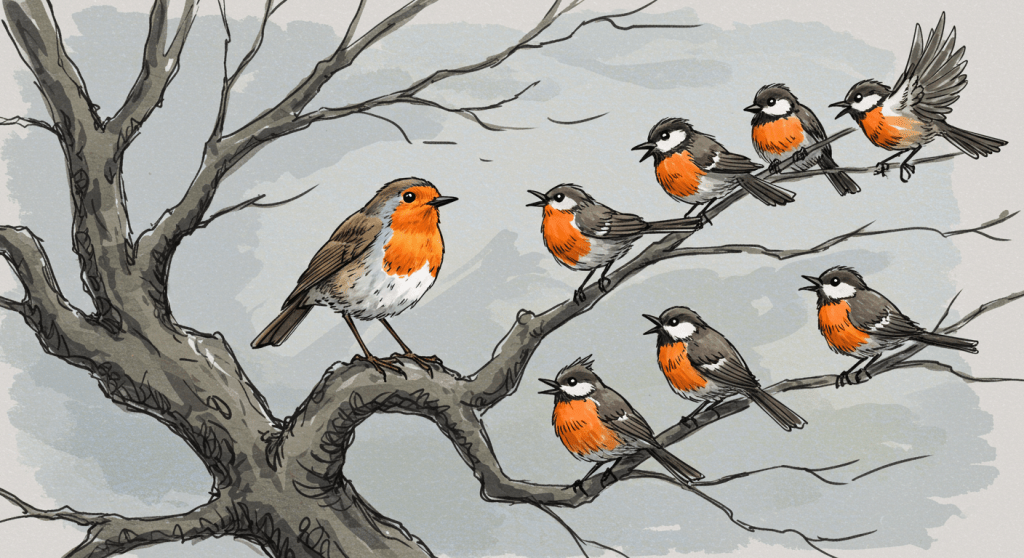
The Enlightenment Being, hearing the news, made all necessary rites and rituals for the dead ascetic. Meanwhile, near the hermitage where the Enlightenment Being was living, there was a certain partridge that was crying loudly on a fruit tree. A partridge hunter, hearing its cries, caught him and killed him. The Enlightenment Being, not hearing its cries for a few days, asked, “What happened to that partridge that cried up until a few days ago?” The other ascetics told him what happened. On hearing this, the Enlightenment Being compared the stories of the dead ascetic and the partridge. Both clamored uselessly. And he advised his fellow ascetics to meditate. He himself meditated on the fourfold sublime statuses of the mind, and gained rapturous ecstasies [jhāna-s]. Without failing to maintain those achievements, he was born among the Brahma beings.

Buddha finished this story saying, “At that time, the ascetic who got slashed in the head by the axe was the elder Kokālika. The Rsi who became the head of the group of ascetics was myself, the Buddha.”

The moral: “Useless speech brings danger.”

Link:

#Buddhisttalesforyoungandold #Buddhiststories #storiesforkids #moralstories #Buddha #Jatakastories #PansiyaPanasJataka #JatakaTalesofSakyamuniBuddha #JatakaTales
116. The Story of Disregarded Advice

116. The Story of Disregarded Advice

Once the omniscient one was living in Jetavana monastery. He disclosed this Jātaka story regarding a certain monk who disregarded counsel. This Jātaka story comes in detail in the Gijjha-Jātaka in the ninth book [No. 427].

[A monk was ordained, and after his ordination he became disregardful of his teacher’s advice. He did not follow the precepts and religious practices properly. The elderly monks advised him on many things. He thought, “Why should I be obedient to these elders? I know what to do and what to say.” And he became more and more disrespectful to the elder monks. This was heard by the Buddha, and the Buddha summoned him and said, “Oh monk, you even in the past became disobedient and destroyed your life.”]

Addressing the monks, the omniscient one said, “Oh monks, this monk not only disregarded counsel in this life, but also did so in the past.” And then the monks in the audience requested the Buddha to express the hidden past. The Buddha then spoke this story:

At one time when King Brahmadatta ruled Benares, the Enlightenment Being was born in a family of gymnasts. When he became old enough, he learned how to do somersaults. With his master, he went from village to village displaying gymnastics. Once they came to a certain village and prepared to display their skills. While they were preparing the show, the master set up five javelins instead of four as usual. The pupil asked, “Master, why did you set up five javelins instead of four. It is dangerous to have five. Take one javelin out.” Then the master, as he was intoxicated, said, “Do you not understand my skills?” Saying so, he did somersaults over the javelins. Over the first four javelins, he jumped safely. But he was not skilled enough to clear the fifth javelin, and impaled himself on it, and died.

The student became very sad, and said, “My master died without listening to my advice.” He removed him from the javelin, and cremated him. Buddha disclosed this story, comparing the past story to the present.

“The gymnast who disregarded advice was the monk in the present. And I who am the Buddha today was born his student at that time.”

The moral: “Good advice deserves everyone’s attention.”

116. The Story of Disregarded Advice

Link: https://hhdorjechangbuddhaiiiinfo.com/2025/04/15/116-the-story-of-disregarded-advice/

#Buddhisttalesforyoungandold #Buddhiststories #storiesforkids #moralstories #Buddha #Jatakastories #PansiyaPanasJataka #JatakaTalesofSakyamuniBuddha #JatakaTales

115. The Story of a Bird (The Story of a Bird That Warned Others)

115. The Story of a Bird (The Story of a Bird That Warned Others)

At one time the all-knower was living in Sāvatthi. This story was spoken about a certain housewife who was ordained among the sisters and who was too fond of food. Once she went collecting alms on a certain street, and there she was well entertained by the devoted people who offered her the daintiest food. She thought, “Let no other nun come to collect alms in this street. If such were to happen, I might miss these well prepared entertainments.” Therefore she thought further, “I must prevent other nuns from coming to this street.” Thinking so, she returned to the nunnery and told the other nuns, “On such-and-such a street there are elephants, horses, biting dogs, and other harmful animals. It is not good for anyone to go there.” The other nuns who heard this believed what she said as the truth. They completely kept away from going to that street. They even did not want to look at that place.

Then, only that nun went to that street for alms. One day she went there to a house for alms. While she was going toward the house, a certain ram ran after her and attacked her. Her thighbone was broken. The people who were in the vicinity came about her and set her thighbone with a bandage. They put her on a stretcher and took her to the nunnery.

This news was spread among the monks and nuns in the temple. On that occasion, when the Buddha came to the preaching hall in the evening and sat on the prepared platform, he asked the monks, “Oh monks, what were you talking about before I came here?” They said, “Venerable sir, we were discussing about the nun who broke her thighbone in the street.” And they related the story. The Buddha said, “Not only in this life by warning others falsely did she have to face the problem of a broken bone, but also in the past she faced death.” And then the disciples invited him to disclose the past story.

Buddha said:

Long ago in Benares when a king called Brahmadatta ruled, the Enlightenment Being was born as a king of birds. In his flock of birds, one female bird got plenty of food. And while she was eating this food, one day she thought, “If other birds come to this location, I will lose this plentiful fare. It is better not to let them come.” Thinking this way, she went back to the flock and said, “That road is packed with lots of bullocks which pull chariots, and with many other troublesome animals. It is not good to go there as it is dangerous.”

Hearing this, other birds never wanted to go there.

As she was wandering as was her wont in that location by herself, a fast chariot came up behind her. She turned her neck and saw the chariot coming up behind, but neglected to get out of the way as she was greedily eating food and thought the chariot was far off. Unfortunately, when the chariot came near her, she could not fly off. She was cut into two pieces and died. The Enlightenment Being while flying overhead in the sky, asked the other birds, “Where is that female bird who was warning others?” And they saw her dead on the road. The Enlightenment Being said, “Look at her. She died being enslaved to her own craving. Because of that, she is dead in vain.” They went away, leaving her body behind.

The female bird at that time that was warning others was the present nun. And the king of the birds at that time was I who became the enlightened one.

The moral: “It is not good to be greedy.”

Further,

“False admonitions to others have a way of befalling oneself.”

115. The Story of a Bird (The Story of a Bird That Warned Others)

Link: https://hhdorjechangbuddhaiiiinfo.com/2025/03/25/115-the-story-of-a-bird-the-story-of-a-bird-that-warned-others/

#Buddhisttalesforyoungandold #Buddhiststories #storiesforkids #moralstories #Buddha #Jatakastories #PansiyaPanasJataka #JatakaTalesofSakyamuniBuddha #JatakaTales

114. The Story of a Proper Thinking Fish

114. The Story of a Proper Thinking Fish

At one time when Buddha was living at Jetavana monastery the Buddha disclosed this story about two old monks. These two old monks went to observe rainy season retreat in a remote village. Their donors there offered them all necessary requisites as much as they wanted. The two monks enjoyed the three months of the rainy season retreat. As it was so comfortable there, they stayed there continuously without coming to see the Buddha through the next rainy season as well. And after that they left for the city of Sāvatthi to see the Buddha.

Upon seeing these two monks, the other monks who were friends of theirs questioned, “Why did you venerable ones delay in coming to see the Buddha?” They said, “It was very good where we were. It was comfortable because everything was available to us there. So we were there for a second rainy season also.”

On that day, all the elderly monks assembled to listen to the Buddha’s evening Dhamma sermon were talking about this matter regarding the failure of these monks in coming to see the Buddha.

When the Buddha came in and sat on his prepared seat, addressing the monks, he asked, “Oh monks, what were you talking about before I came in?” And the monks said, “Venerable sir, we were talking about those two old monks and their laziness to fulfill their monks’ duties after the termination of the rainy season retreat.”

Then the Buddha said, “Monks, not only today, but also formerly they both were lazy.” And then the monks invited him to disclose the story of old about these two monks’ laziness. The Buddha disclosed the following:

In an ancient time, there was a king called Brahmadatta ruling Benares. At that time, upstream in the river there were three fish known as Thinking-Too-Much, Thinking-Little, and Proper-Thinking. They were living close to a village where people lived. One day Proper-Thinking said, “We live close to people. It is dangerous to live so close to them. Therefore, let us go somewhere else.” The other two fish said, as they were greedy and liked eating the plentiful food that was upstream, craving it, “Let us go today or tomorrow.” And saying so, they postponed their departure. They spent over three months without leaving.

One day fishermen came and spread their nets across the river. The two fish, Thinking-Too-Much and Thinking-Little, carelessly swimming ahead did not smell the net. And they got trapped in it. Proper-Thinking, swimming behind, smelled the net and went through the far side. He did not get trapped in it. Seeing the other two foolish fish, he thought, “They did not listen to me. Not listening to me, but instead going boldly and greedily, they got trapped in the net. It is my duty to save them.” Thinking this, he performed a trick by going out of one side of the net and into the other side, splashing. The fishermen thought, as big fish were trapped in the net, “No doubt the net has been torn as there were many big fish trapped in it.” And they hauled in the net by one side, and took it up. When they took it up, these two fish easily escaped. All three were saved.

The Buddha, connecting this old story to the present incident, explained the disadvantages of craving. He preached, expressing the four noble truths. Listening to this particular Dhamma sermon of the Buddha, these two old monks attained the stream entrance state of mind, which is endowed with a thousand different ways of understanding the law, becoming Sotāpanna-s.

“The two fish, Thinking-Too-Much and Thinking-Little, were these two monks at that time. And the Proper-Thinking fish was I who have become the Buddha today.”

The moral: “Proper thinking leads you to success and happiness. Procrastination due to greed leads to ruin.”

114. The Story of a Proper Thinking Fish

Link: https://hhdorjechangbuddhaiiiinfo.com/2025/03/18/114-the-story-of-a-proper-thinking-fish/

#Buddhisttalesforyoungandold #Buddhiststories #storiesforkids #moralstories #Buddha #Jatakastories #PansiyaPanasJataka

113. The Story of the Jackal

113. The Story of the Jackal

This story was delivered by the Buddha when he was in VeÀuvanārāma monastery in the city of Rājagaha about 500 newly ordained monks who were led astray by the elder Devadatta. They lived making a monastery on the bank of the river Gayāsīsa. Devadatta was declaring that Buddha did not do the proper discipline. Saying so, he lived a separate life with the 500 monks.

One day in the evening the monks were discussing about Devadatta’s hypocritical life. While they were discussing this, Buddha came to the preaching hall, sat on the Buddha-seat and asked, “Oh monks, what were you talking about before I came here?” They said, “Sir, we were talking about Devadatta’s creation of schism.” The Buddha said, “Not only today, even in the past he was a liar.” Then the monks asked the Buddha to disclose the previous story. Buddha declared the past story:

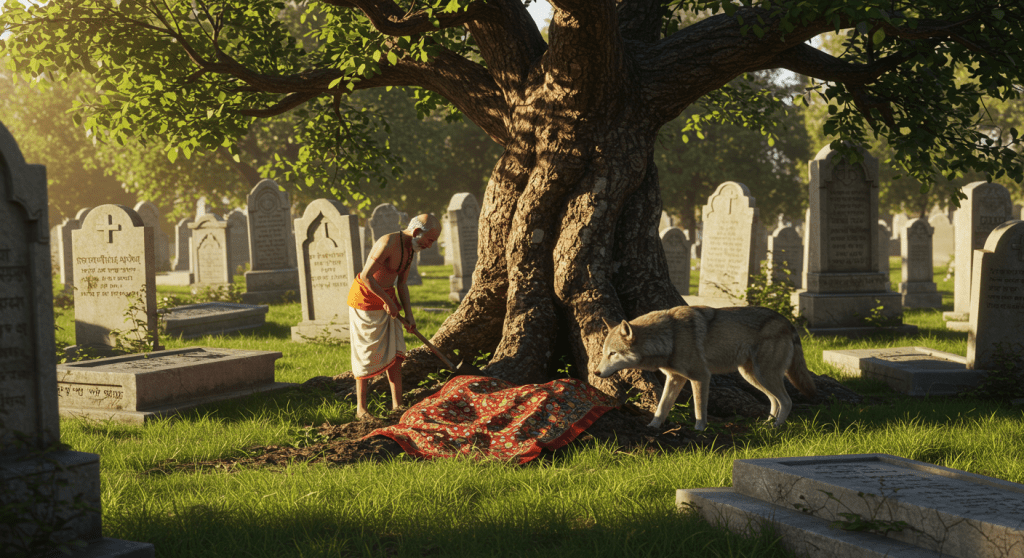
Once in the past when king Brahmadatta was touring Benares, there was a New Year’s Day festival declared in the city. People offered food items such as toddy, meat and the like food varieties as sacrifice to the deities everywhere in the street. On the very same night there came a certain jackal into the city, smelling the food items. He greedily ate as much as he could. As he was intoxicated, he lay down on the side of a road and could not leave before dawn. When dawn arrived, he thought, “At this time it is not good to go.” He hid by the side of a small bush. While he was looking at the road, he saw a solitary Brahmin, and thought, “Brahmins are very greedy. I want to deceive this Brahmin and leave this place under his protection.” He came to the Brahmin and said, “Friend, if you can take me out of this city, I can show you where 200 gold coins are hidden.” The Brahmin thought, “The jackal is trustworthy.” He covered the jackal with his upper cloth, took him under his armpit and went out from the city. He said to the jackal, “Show me the wealth.” The jackal said, “Go a little farther, and I’ll show you.” And he took him to a cemetery and said, “Here is the wealth. Put me down and spread your upper shawl on the ground.” He said, “Dig under that tree.” While the Brahmin was digging under the tree, the jackal defecated and urinated in the middle and in each of the four corners of the shawl, and ran away. Then while he was digging the ground, the tree deity came out from this tree and said, “Oh foolish Brahmin, what you have done is trust a jackal who has deceived you. That jackal had not even 200 seashells. By trusting him, what you have gained is the soiling of your cloth. Foolish Brahmin, go, have a bath and wash your cloth, and do your own religious works.” The Brahmin did this, going back home.

The jackal at that time was Devadatta, and the tree deity was I, the Buddha.

The moral: “Never trust a liar.”

Link:

#Buddhisttalesforyoungandold #Buddhiststories #storiesforkids #moralstories #Buddha #Jatakastories #PansiyaPanasJataka

112. The Dilemma of Princess Amarā (The Dilemma of the Hidden Road, The Dilemma of the Maiden)

112. The Dilemma of Princess Amarā (The Dilemma of the Hidden Road, The Dilemma of the Maiden)

This dilemma will be found too in the MahāUmmagga-Jātaka [No. 546].

[When the Enlightenment Being was born as the erudite Mahosadha, he was given a number of riddles to solve by the populace. Then he was summoned to the royal palace, where he took up residence. While living there and serving the king, he became sixteen years of age and grew into a handsome youth.]

The king’s queen, Queen Udumbara, thought, “The Enlightenment Being, who is like a brother, has become a youth. He has plenty of wealth. Now it is time to bring an appropriate wife from a family of similar rank. She mentioned this to the king. On hearing this news, the king became very happy and said, “That is good, indeed, my sweetheart. Tell him the news.”

The queen told this to the Enlightenment Being. He accepted the proposal. She asked him, “Brother, if such is the case, shall we bring princesses that are appropriate to your standing from different places?” The Enlightenment Being thought, “The maidens brought to me by her may not fulfill my requirements. Therefore, first I will go and find someone myself who is appropriate.” He said, “Your grace, I will go away for a few days and look myself for a suitable wife. Do not tell the king the reason I have gone away. I will select a maiden whom I like, and I will inform you first. The queen agreed, saying, “Yes, my younger brother. Do as you like.” The Enlightenment Being, after kneeling in front of her, went back to his residence. He informed his friends and household of his impending journey and its purpose. Disguised as a tailor, and taking a tailor’s tools, he left alone through the northern gate and set out for the central northern village.

At that time, there was a poor family that had been wealthy in the past. All who had seen the only daughter in that family considered her to be beautiful. She was endowed with all female charms and virtues owing to her merits in her past lives. She was beautiful like a female form drawn on a cloth.

One morning, she was carrying gruel to her father who was ploughing the family’s field. She set forth on the same road on which the Enlightenment Being was walking. When he saw her approach, he thought, “This girl is beautiful, and is endowed with all female charms. If she does not have a husband, she would make a good wife for me.”

The maiden Amarā, on seeing the Enlightenment Being, thought, “If I can have such a one as my husband, I may be able to bear a noble family that can earn much wealth and thereby restore the wealth of my family.”

The Enlightenment Being thought, “As I do not know whether or not she has a husband, I will question her with a hand gesture. If she is wise enough to understand my hand gesture, she will reply.” Thinking so, he made his hand into a fist and raised it, while still at a distance from her.

On seeing this, Amarādevī thought, “This man asked me whether or not I have a husband.” She spread out her fingers. The Enlightenment Being understood that she was unmarried, and approaching her, he asked, “Damsel, what is your name?” “Master, if there be one in this world who never existed in the past, never exists in the future, and who is not now existing, that is my name.”

Then he said, “Dear maiden, as there is no immortal being [amara] in the world, your name should be Amarā. Is that so?”

She said, “Yes, sir.”

And he asked, “To whom are you carrying this gruel?”

She said, “I am carrying it to my foremost god.”

Then he said, “Ah, you are carrying gruel to your father?”

She said, “Yes, sir.”

And he asked, “What is your father doing?”

“He is making one thing into two.”

“To make one thing into two is to plough.

Is he ploughing, dear?”

“Yes, sir.”

“Where is your father ploughing?”

She said, “Sir, if somebody goes to a place and he or she does not return, he is ploughing in such a place.”

Then he said, “If somebody goes somewhere, and he or she does not come back from there, such a place is a cemetery. Is he ploughing at a cemetery?”

Then she said,

“Yes, sir.”

Then Mahosadha asked her, “My dear, will you come back today or tomorrow?”

Then she said, “Sir, if it comes, I will not come. If it does not come, then I will come.”

Then the Enlightenment Being said, “Beautiful one, does your father plough on the other side of a river? Because from what I understand, you said that if the river floods you will not be able to come. And if it does not flood, then you will come.”

Then she said, “Yes, my lord.”

This is the discussion they had. Amarādevī requested him to accept some gruel, saying, “Sir, would you like some gruel?”

The Enlightenment Being thought, “It is not good to reject this first invitation.” And he said, “Alright. I would like to drink a little.”

Then she took the container down from on top of her head and placed it on the ground. The Enlightenment Being thought, “If she hands me gruel without washing the cup and offering me water first, then I will leave her here and will go.”

But Amarādevī rinsed the cup, filled it with water that she offered to him, and then took back the empty cup. She placed it on the ground instead of leaving it in his hand, stirred the container of gruel, filled the cup with gruel, and then gave it back into his hand.

As it happened, there was very little rice in the gruel. The Enlightenment Being said, “My dear, when the rice was growing in your field, it did not get enough water. [Because of this, it has not puffed up in the cooking.]”

She said, “Yes, sir.”

Amarādevī, leaving enough gruel for her father, fed the Enlightenment Being sufficiently with gruel.

After drinking the gruel, he washed his mouth and said, “Sweet lady, I would like to go to your home. Tell me the way.”

Then she said, “Very well. Go this way into the inner village and then you will see a restaurant where they sell Aggala. Pass it, and go further ahead. Then you will see a restaurant where they sell gruel. Pass that too and go further ahead, and you will see a coral tree in full blossom. When you reach that tree, take the road that turns toward the hand with which you eat. Do not take the road that turns toward the hand with which you do not eat. In other words, do not go left. Turn right, and go further. Then you will see our Middle Village where my parents’ house is. In a roundabout way I am telling you the way to my parents’ home.”

The moral: “Both men and women can be wise.”

Link:

#Buddhisttalesforyoungandold #Buddhiststories #storiesforkids #moralstories #Buddha #Jatakastories #PansiyaPanasJataka

111. The Question about the Donkey

111. The Question about the Donkey

This is set out at length in the Mahā-Ummagga-Jātaka [No. 546].

[When the Enlightenment Being was born in the city of Mithilā while King Videha was ruling the country, King Videha had four erudites who advised him. King Videha, on hearing of the erudition of the Englightenment Being, wanted to summon him to the palace. The four erudites were disturbed on hearing this news, and they prevented the invitation from being made because they were jealous. But on hearing further the splendor of the erudition of the Enlightenment Being, Mahosadha, the king without informing his four erudite ministers decided to go alone to see the Enlightenment Being.

On this journey, the king’s royal horse, stepping on an uneven area in the road, broke its leg. The king had to come back. When he returned to the palace, the four erudite ministers asked, “Your lordship, did not you go to see and bring back the erudite Mahosadha?” The king said, “Yes.” The ministers said, “We asked you not to go there. But without listening to us you wanted to go. See what happened to your horse? Do not be in a hurry.” The king had nothing to say, and he kept silent.

After a while, the king again suggested to the ministers that they invite the erudite Mahosadha to the palace. The ministers saw that this time, they could not prevent the king from inviting him. T

hey said, “Your lordship, if it is so, this time you should not go to him. Last time when you were trying to go to him, your royal horse broke its leg. Therefore, this time, send him a messenger saying, ‘Last time when we were trying to come to see you, our horse’s leg got broken. Therefore, send us a noble horse (assatara)4 or a nobler one.’ If he understands our puzzle, if he sends a noble horse he will come himself. If he sends a nobler one, he will send his father.” The king agreed to do so. Sending a messenger, he did as they agreed.]

The Enlightenment Being, Mahosadha, on hearing the message of the king, thought, “Our lord king is willing to see myself and my father.” And he went to his father, offered him respect, and said, “Father, our lord king would like to see you and me. Therefore, you go first with a thousand other people. Also, do not go empty-handed. Take with you a good box of fresh ghee. When you go there, the king will ask you to sit down in an appropriate chair. Then you may sit in that appropriate chair. While you and the king are talking to each other, I will arrive. Then the king will greet me and talk to me, and will request that I sit in an appropriate seat. When I look at your face, by that sign, you will get up from your seat and say to me, ‘My son, Mahosadha. Sit on this seat.’ Then it will be a puzzle for them.”

The millionaire father accepted what his son said, and as his son had requested, he went first. He arrived near the gate of the palace. The king summoned him. When he entered the palace, he greeted the king, and the king asked, “Where is your son, Mahosadha?” Then he said, “Your lordship, he will come later.”

The king became very happy on hearing that Mahosadha was on his way. The king requested the father to take a seat. The father sat down on an appropriate seat.

The Enlightenment Being, Mahosadha, endowed with beautiful clothes and ornaments, surrounded by a thousand other young princes, went into the city of Mithilā. On the edge of the city, he saw a young donkey grazing on the grass along the ditch around the city proper. He ordered his men to catch him and take him with them in such a fashion that the donkey could not make any noise. At the same time, he instructed them not to let anyone at the palace see the donkey. The young men, hearing the Enlightenment Being’s words, did everything as he advised. The Enlightenment Being, Mahosadha, went to the palace of the king with such a large retinue as if he were the king of the gods.

A crowd gathered to see the millionaire’s son, Mahosadha, on his way to the palace. The people were saying to each other, “Look! He is the prince born to this world carrying a lump of medicine in his hand. He is the erudite prince who solved such a large number of questions and puzzles sent by the king. Look at his splendor.” And they were appreciating the Enlightenment Being, but yet were still not satisfied by seeing him.

The Enlightenment Being reached near the gate of the palace and sent a message with the gatekeeper about his arrival. On hearing the news, the king immediately asked him to come. The Enlightenment Being went with his retinue, made his respects to the king, and kept aside while standing. The king became very happy and talked pleasantly to him. He said, “Erudite Mahosadha, be seated in an appropriate seat.”

Then, the Enlightenment Being, Mahosadha, looked at his father’s face. By that sign, the millionaire father got up from his seat and said, “Erudite, take this seat.” When Mahosadha’s father said this, immediately Mahosadha sat down on his father’s seat.

On seeing Mahosadha take his father’s seat and sit on it, the four erudite ministers and other wise people, clapping their hands, loudly started to laugh. They laughed, saying, “It is said that this prince is a wise person. But he is an unwise person.” The king became very upset, and was silent.

Then the Enlightenment Being asked the king, “Your lordship, are you worried?” The king said, “Yes, erudite. I am worried. On hearing about your nature, I became happy. But on seeing it, I have become unhappy and worried.” Mahosadha said, “What is the reason for being happy on hearing about my nature, but unhappy on seeing it.” The king said, “Because you made your father get up from his seat, and you sat in your father’s seat.”

Mahosadha said, “Tell me, your lordship, do you say that fathers are always more noble than sons?” The king said, “Yes, erudite.” Then the Enlightenment Being said, “Your lordship, you requested me to send a noble horse [assatara] or a nobler one. Saying so, he got up from his seat and requested his retinue to bring the donkey near to the king. Keeping the donkey near the king’s feet, he said, “Your lordship, what is the value of this donkey?” The king said, “If it is working, it will be worth nearly eight gold coins.” Then the Enlightenment Being asked, “How much is the value of a noble horse [ājāniya-sindhava] that is in the womb of a mare impregnated by this one?” The king said, “Erudite, it is invaluable.” Then Mahosadha said, “Your lordship, why do you say so? Just now you said that the father is always nobler than the son. If it is true, in your words, the donkey is more valuable than the noble horse. Look, your lordship. Your erudites do not understand even such a little thing. They clapped their hands and laughed at me. The knowledge of your erudites is amazing! From where did you pick out your erudites?” Saying so, he put those scholiasts in their place. And he said further to the king, “Your lordship, if you think that the father is always nobler than the son, you can take my father for your service in the royal office. If sons can be nobler than their fathers, take me into your service in the royal office.”

The king became very happy. All the people assembled there applauded, showing their appreciation for his having explained the riddle so well. They all shouted, “Well done! Well done!” And they waived their shawls above their heads in a circular fashion. The four erudites, Senaka and the others, could not say anything as they had been defeated and shamed.

There is no being who can understand the value of parents better than the Enlightenment Being. The reason he asked his father to get up from his seat and then sat in that same seat was not to belittle his father. The king had sent him a riddle requesting him to send a noble horse or a nobler one. To solve that riddle, and to convince the gathered assembly that he was wiser than the erudites present, he had to belittle those erudites.

The moral: “Wisdom can change even the position of noble and nobler.”

Link:

#Buddhisttalesforyoungandold #Buddhiststories #storiesforkids #moralstories #Buddha #Jatakastories #PansiyaPanasJataka

110. The Dilemma Regarding All [Fragrances] Mixed

110. The Dilemma Regarding All [Fragrances] Mixed

This is set out at length in the Mahā-Ummagga-Jātaka [No. 546].

[At one time the Enlightenment Being was born as Mahosadha, the great erudite. Before going to see King Videha of the city of Mithilā, he was asked to solve several questions by the citizens of his town. The following is one of those questions.]

Once, a poor woman made a beautiful necklace by tying knots using green, yellow, and red threads. One day when she was going on a journey, she came to the tank that the erudite Mahosadha had made for the benefit of the public. On seeing its beauty and clean water, she decided to take a bath.

With the intention of taking a bath, she took off her necklace and placed it on top of her clothing. She then went down to the tank and began to bathe. Meanwhile, a young girl was walking nearby. She saw this beautiful necklace made from the colored threads. On seeing it, a desire for it grew up within her. She picked it up and asked, “Oh, auntie. This necklace is very beautiful. Who made this? I would like to make one for myself also. Can I put it around my neck and see whether it fits?” Asking so, the older woman who owned the necklace and who was not cunning said, “Yes. See how it fits you.”

The younger woman, putting it around her neck, ran off. The older woman who owned the necklace saw that the younger woman was fleeing away. She came out of the water, put on her clothes, and chased after the woman who was fleeing.

She ran and caught her, and asked, “Where are you taking my necklace?” Saying so, she held onto her necklace. The other woman shouted and said, “What? I did not take your necklace. This is mine. I have had it for a long time.” They started to quarrel. On hearing this quarreling, many people came to see what the problem was.

In the meantime, the Enlightenment Being Mahosadha was playing nearby. He heard the quarreling noise of those two women. Hearing this noise, the Enlightenment Being summoned them both and asked, “Why are you quarreling on the road?” The Enlightenment Being, seeing the two women, realized immediately which one was guilty and which one was innocent. Knowing this, he asked about the cause of the quarrel. When they stated the reason, he asked, “If I settle your dispute, would you agree with my decision or not?” They said, “Yes, we will accept your decision.”

When they agreed, the Enlightenment Being first asked the young woman who had stolen the necklace, “What type of a perfume was applied on this necklace by you before you put it on?” The woman said, “Your lordship, I always perfume this necklace with a mixture of many different fragrances, which is known as SabbasamÅhāraka.” Then he asked the other woman, who was the necklace’s owner, and she said, “Your lordship, I am a very poor woman. I do not have such a costly perfume. I always perfume it with a fragrance from PiyanÄgu flowers.”

The erudite ordered a plate of water to be brought, and he put the necklace in the water. After that, he summoned a perfume-maker and asked him, “What fragrance is in this water? Please smell it and tell me.” The perfume-maker said, after smelling it, “Your lordship, in this water I smell the fragrance of the PiyanÄgu flower.”

Then, it was found that the young cunning girl was lying, and the old woman was the truthful speaking person.

The Enlightenment Being, Mahosadha, showed the water to the people who gathered around and asked the young woman in their presence, “Tell us now, did you steal it or not?” She said, “Yes, I stole it.”

This story was spread throughout the country, and the popularity of Mahosadha in this way also spread throughout the country.

The moral: “Common sense can conquer guile.”

110. The Dilemma Regarding All [Fragrances] Mixed

Link: https://hhdorjechangbuddhaiiiinfo.com/2025/02/18/110-the-dilemma-regarding-all-fragrances-mixed/

#Buddhisttalesforyoungandold #Buddhiststories #storiesforkids #moralstories #Buddha #Jatakastories #PansiyaPanasJataka

109. The Story of a Sweetcake of Husk Powder

109. The Story of a Sweetcake of Husk Powder

At one time Buddha was living in Jetavana monastery in Sāvatthi. At that time, many people of Sāvatthi offered alms to the Buddha and the community of monks.

Once, a very, very poor man who was even unable to offer alms thought that he should take part in this giving of alms. He had some husk powder, and of it he made a sweetcake. He took it to the monastery thinking that he would give it in person to the Buddha. During the period of alms giving, people first offered gruel, and then said, “Now it would be good to offer sweets.” As soon as this was said, the poor man offered his husk powder sweetcake to the Buddha.

Buddha out of compassion accepted it instead of many other sweets, and refusing all other sweets the Buddha consumed it and returned to the Jetavana monastery. On hearing this news many kings, kings’ relatives and ministers went to this man and asked, “Can you give us the merit you acquired? We will pay you.” Then the poor man thought, “I acquired this merit with some hardships. Let me go to the Buddha and ask whether I should give it to them.”

And he went to the Buddha and asked about this. Buddha said, “Both with and without taking money, giving one’s merit is good. After hearing that, he gave merit to everybody in the city. In return he got 900,000 pounds of gold. The king of Kosala hearing this news conferred upon the poor man the office of treasurer and offered him a white parasol, the mark of his new status.

On this day the monks who had assembled in the Dhamma hall to listen to the evening Dhamma sermon of the Buddha were discussing the news of the poor man’s appointment to his new status of treasurer. Buddha went to the Dhamma hall and sat on his well-prepared divan and addressed the monks, asking, “Oh monks, what sort of discussion were you engaged in before my arrival?” The monks said, “Your lordship, we were not discussing any of the thirty-two things with which you asked us not to be involved. We were talking about the high status achieved by the poorest man offering alms to you.”

The Buddha said, “Not only now but even before in his previous birth also he achieved such great wealth by offering a husk powder sweetcake.” And opening the door to a Jātaka story, he became silent. One monk out of the community with the assent of all the monks, paying homage to the Buddha, requested, “Your lordship, we know the present story, but we do not know the past story. Therefore we invite your lordship to disclose to us the story which cannot be seen by us, but that can be seen by the Buddha.”

Then Buddha uttered the story: Long ago in the past there was a king in Benares called Brahmadatta who ruled his country righteously. At that time the citizens of Benares ceremoniously worshipped the tree deities with various offerings. One poor person of the city saw a certain castor oil tree, cleared around it, but he had nothing to offer. He saw other people offering to their trees flowers, incense, lights, and foods. He had nothing like that to offer. He thought, “Let me offer my husk powder sweet,” and he did so. Then he thought, “Deities eat divine food, ambrosia. How can my deity only eat this husk powder food?” Thinking this, he took back the husk powder sweetcake to eat it himself.

The tree deity appeared with a half body in his presence and said, “Oh, man, whatever you get, the same should be gotten by your deity.” Hearing this, again he offered the husk powder sweetcake to the deity. The deity said, “Why do you want to deal with me, a small, weak tree?” The man said, “Your lordship, I am a poor man. So I dealt with you.” Then the deity said, “Around this castor oil tree there are treasure pots neck to neck. Dig them all up and show the king those treasure pots. Today you will be conferred the status of treasurer.” Saying so, he disappeared.

The poor man did as the deity said. He dug up all the treasure pots and showed them to the king. The king thought, “It would be good to confer upon him the office of treasurer as he has such wealth.” And he conferred on him the office of treasurer. The man, having gained such wealth, practiced generosity by giving and acquired a great deal of merit. Finally, he passed away according to his deeds.

Buddha preached this Jātaka story comparing both the present and past. “The poor man at that time was this poor man. The deity of the castor oil tree was I, the Buddha.”

The moral: “Everything has value. No offering with good intentions is too little.”

109. The Story of a Sweetcake of Husk Powder

Link: https://hhdorjechangbuddhaiiiinfo.com/2025/02/11/109-the-story-of-a-sweetcake-of-husk-powder/

#Buddhisttalesforyoungandold #Buddhiststories #storiesforkids #moralstories #Buddha #Jatakastories #PansiyaPanasJataka