92. The Mystery of the Missing Necklace [Chapter 2. The Mystery is Solved]
92. The Mystery of the Missing Necklace [Chapter 2. The Mystery is Solved]

Meanwhile, the royal minister who happened to be the Enlightenment Being had seen and heard all that had taken place in the pleasure garden. He realized that the mystery could be solved only by careful examination. Jumping to conclusions could lead to the wrong answers. So he started examining and analyzing the situation in his mind.

He thought, “The necklace was lost inside the pleasure garden. But the poor villager was captured outside the pleasure garden. The gates had strong guards standing watch. Therefore, the villager could not have come in to steal the necklace. Likewise, no one from inside the garden could have gotten out through the guarded gates with the stolen necklace. So it can be seen that none of these people could have gotten away with Most Precious, either from inside or outside!

“What a mystery! The poor man who was first accused must have said he gave it to the Chief Financial Adviser just to save himself. The Chief Financial Adviser must have thought it would go easier for him if the Royal Teacher Priest were involved. The priest must have blamed the Official Court Musician so that music would make their time in the palace dungeon pass more pleasantly. And the Official Court Musician probably thought that being with the high class prostitute would take away the misery of prison life. So he said he gave the necklace to her.

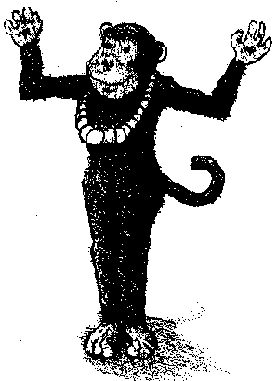
“After examining carefully, it is easy to see that all five suspects must be innocent. But the garden is full of monkeys who are known to cause mischief. No doubt some she-monkey thought Most Precious would set her above the rest, and the necklace is still in her hands."

So he went to the king and said, “Your excellency, if you hand over the suspects to me, I will do the investigation for you." “By all means, my wise minister," said the king, “examine into it yourself."

The minister called for his servant boys. He told them to keep the five suspects together in one place. They were to hide nearby, listen to all that was said, and then report back to him.

When the five prisoners thought they were alone they began talking freely to each other. First the Chief Financial Adviser said to the poor villager, “You little crook! We never saw each other before. So when did you give the stolen Most Precious to me?"

He replied, “My lord sir, most exalted adviser to the great king, I have never had anything of any value whatsoever, not even a broken down bed or chair. I certainly have not seen any such Most Precious necklace! I don’t know what you people are talking about. Being scared to death by the king’s guards, I only mentioned you in the hope that one as important as you could free us both. Please, my lord, don’t be angry at me."

The Royal Teacher Priest said to the Chief Financial Adviser. “You see, this man admits he has not given it to you, so how could you have given it to me?" He replied, “We are both in high positions. I thought that if we got together and backed each other up, we could settle this matter."

The Official Court Musician asked, “Oh Royal Teacher Priest, when did you give the queen’s pearl necklace to me?" “I thought that if you were imprisoned with me," said the priest, “your music would make it much more pleasant. That’s why I lied."

Then the woman said to the Official Court Musician, “You miserable crook! When did I come to you? When did you come to me? We have never met each other before. So when could you possibly have given me the stolen Most Precious?" He said to her, “Oh dear young lady, please don’t be angry with me. I only accused you so that when we five are imprisoned together, your being with us will make us all happy."

Not being either a poor frightened stranger or a slippery government official, the high class prostitute was the only one who had told the truth. So there was no one to accuse her of shifting the blame.

Of course the wise minister’s servants had been eavesdropping on the entire conversation. When they reported it all back to him, he realized his suspicion was confirmed — some she-monkey must have taken the necklace. So he thought, “I must come up with a plan to get it back."

First he had a bunch of cheap imitation jewel ornaments made. Then he had several she-monkeys captured in the royal pleasure garden. He had them decorated with the imitation ornaments — necklaces on their necks, and bracelets on their wrists and ankles. Then they were released in the garden. The minister ordered his servants to watch all the she-monkeys carefully. When they saw anyone with the missing pearl necklace, they were to scare her into dropping it.

The she-monkey who had taken Most Precious was still guarding it in the hollow of the tree. The other she-monkeys strutted back and forth saying, “See how fine we look. We have these beautiful necklaces and bracelets." She couldn’t stand seeing and hearing this. She thought, “Those are nothing but worthless imitations." To show them all up, she put on her own neck the Most Precious necklace of real pearls.

Immediately the servants frightened her into dropping it. They took it to their master, the wise minister. He took it to the king and said, “Your majesty, here is the pearl necklace, the one called Most Precious. None of the five who admitted to the crime was really a thief. It was taken instead by a greedy little she-monkey living in your pleasure garden."

The amazed king asked, “How did you find out it was taken by a she-monkey? And how did you get it back?" The minister told the whole story.

The king said, “You were certainly the right one for the job. In times of need, it is the wise who are appreciated most." Then he rewarded him by showering him with wealth, like a heavy rain of the seven valuables — gold, silver, pearls, jewels, lapis lazuli, diamonds and coral.

The moral is: Theft from greed, lies from fear, truth from examining.

92. The Mystery of the Missing Necklace [Chapter 2. The Mystery is Solved]

Link: https://hhdorjechangbuddhaiiiinfo.com/2024/08/20/92-the-mystery-of-the-missing-necklace-chapter-2-the-mystery-is-solved/

#Buddhisttalesforyoungandold #Buddhiststories #storiesforkids #moralstories #Buddha #Jatakastories #PansiyaPanasJataka
92. The Mystery of the Missing Necklace [Chapter 1. One Crime Leads to Another]

92. The Mystery of the Missing Necklace [Chapter 1. One Crime Leads to Another]

Once upon a time, King Brahmadatta was ruling in Benares in northern India. After completing his education, the Enlightenment Being became one of his ministers.

One day the king went on an outing to his pleasure garden. A big crowd from the court went with him. They visited many parts of the lovely park. Near a cool forest they came upon a beautiful clear pond. The king decided to go for a swim. So he dove into the water. Then he invited all the ladies of his harem to join him in the refreshing pond.

Laughing together, the harem women took off all their ornaments and jewelry – from their heads, necks, ears, wrists, fingers, waists, ankles and toes. Along with their outer clothing, they handed all these over to their servant girls for safekeeping. Then they jumped into the pond with King Brahmadatta.

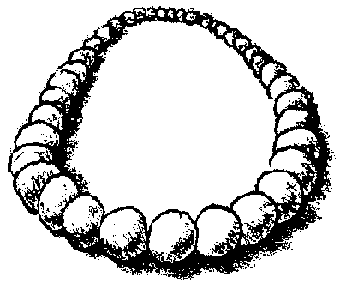
The king had given one of his favorite queens a very valuable pearl necklace. She was so fond of it that she called it by a pet name, ‘Most Precious’.

It just so happened that a curious she-monkey had been watching all this from a branch of a nearby tree. Peering between the green leaves, she had paid very close attention. When she had caught sight of the Most Precious pearl necklace, her eyes had nearly popped out of her head!

Imagining how grand she would look wearing the queen’s beautiful necklace, she patiently watched the servant girl who was guarding it. In the beginning the girl watched very carefully. But the heat of the day soon made her drowsy. When the she-monkey saw her start to snooze, she swung down from the tree as fast as the wind. In a flash she grabbed the necklace called Most Precious, put it around her neck, and ran back up the tree.

Afraid that the other monkeys would see it, the little thief hid the gleaming pearl necklace in a hollow of the tree. Then she sat guarding her loot, remaining silent and pretending to be as innocent as a nun!

In a minute or two the servant girl awoke from her accidental nap. Frightened, she immediately looked over the queen’s possessions. When she saw the necklace was missing she yelled out in terror, “Help! Help! Some man has taken the queen’s pearl necklace, the one called Most Precious!"

After running to her side, security guards went and reported the theft to the king. He ordered them to stop at nothing, and to catch the thief immediately. Frightened of the king’s wrath, the guards began dashing madly around the pleasure garden searching for the thief.

At that very moment there happened to be a poor man walking just outside the garden. He was on his way back to his far-off home village after paying his meager taxes to the royal treasury. The commotion from inside the park scared him and he started running away.

Unfortunately, the security guards saw him running and said to each other, “That must be the thief!" They rushed through the garden gate and after a short chase easily captured the innocent man. They began beating him as they shouted, “You no good thief! Confess that you robbed the queen’s pearl necklace, the one she calls Most Precious."

The poor man thought, “If I say I didn’t take it, these men will beat me to death for sure. But if I confess, they will have to take me to the king." So he said, “Yes, I admit it, I took the necklace." Hearing this the security guards handcuffed him and hauled him off to the king.

After being told of the man’s confession, the king asked him, “Where is the Most Precious necklace now? What have you done with it?"

Being a somewhat clever fellow, the prisoner replied, “My lord king, I am a very poor man indeed. I have never in my life owned anything at all valuable, not a Most Precious bed or a Most Precious chair – and certainly not a Most Precious pearl necklace. It was your majesty’s own Chief Financial Adviser who made me steal this Most Precious. I gave it to him. He alone knows where it is now."

King Brahmadatta summoned his Chief Financial Adviser and asked, “Did you take Most Precious from this man’s hands?" “Yes my lord," said he. “Where is it now?" asked the king. “I gave it to the Royal Teacher Priest."

The Royal Teacher Priest was called for and asked about the stolen necklace. He claimed, “I gave it to the Official Court Musician."

He in turn was summoned and questioned. He answered, “I gave Most Precious to a high class prostitute."

When she was identified and brought to the king, he demanded to know what she had done with the queen’s pearl necklace. But she alone replied, “Your majesty, I don’t know anything about a pearl necklace!"

As the sun began to set, the king said, “Let us continue this investigation tomorrow." He handed the five suspects over to his ministers and returned to his palace for the night.

92. The Mystery of the Missing Necklace [Chapter 1. One Crime Leads to Another]

Link: https://hhdorjechangbuddhaiiiinfo.com/2024/08/13/92-the-mystery-of-the-missing-necklace-chapter-1-one-crime-leads-to-another/

#Buddhisttalesforyoungandold #Buddhiststories #storiesforkids #moralstories #Buddha #Jatakastories #PansiyaPanasJataka
91. Poison Dice [Deception]

91. Poison Dice [Deception]

Once upon a time there was a rich man living in Benares who was addicted to gambling. He played dice with another gambling addict, a man whose mind worked in tricky ways.

While the rich gambler was very honest and above board, the tricky one was dishonest. When he kept on winning he kept on playing. But when he began to lose he secretly put one of the dice in his mouth and swallowed it. Then he claimed it was lost and stopped the game.

The rich gambler began to notice this trick. Then one day he decided to teach him a lesson. He smeared poison on the dice and let it dry so it was invisible. He took these dice to the usual place and said, “Let’s play dice!"

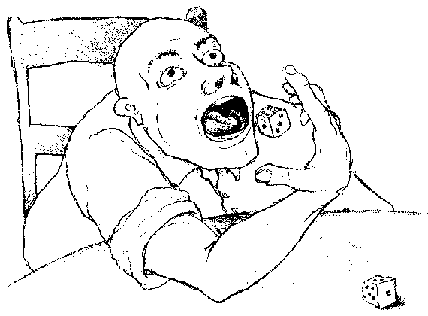
His friend agreed. They set up the gambling board and began to play. As usual the tricky one began by winning every throw of the dice. But as soon as he began to lose he sneaked the dice into his mouth.

Seeing this the rich gambler said, “Swallow now, and then something you don’t expect will happen. Your own dishonesty will make you suffer much."

After swallowing the poison dice the trickster fell down sick and fainted. The rich gambler, who was basically good at heart, thought, “Enough is enough. Now I must save his life."

He made a medical mixture to cause vomiting. He made him swallow it, and he threw up the poison dice. He gave him a drink made with clear butter, thick palm syrup, honey and cane sugar. This made the trickster feel just fine again.

Afterwards he advised him not to deceive a trusting friend again. Eventually both gamblers died and were reborn as they deserved.

The moral is: Deceiving a friend may be hazardous to your health.

91. Poison Dice [Deception]

Link: https://hhdorjechangbuddhaiiiinfo.com/2024/08/06/91-poison-dice-deception/

#Buddhisttalesforyoungandold #Buddhiststories #storiesforkids #moralstories #Buddha #Jatakastories #PansiyaPanasJataka

90, 363. One Way Hospitality [Ingratitude]

90, 363. One Way Hospitality [Ingratitude]

Once upon a time there were two merchants who wrote letters back and forth to each other. They never met face to face. One lived in Benares and the other lived in a remote border village.

The country merchant sent a large caravan to Benares. It had 500 carts loaded with fruits and vegetables and other products. He told his workers to trade all these goods with the help of the Benares merchant.

When they arrived in the big city they went directly to the merchant. They gave him the gifts they had brought. He was pleased and invited them to stay in his own home. He even gave them money for their living expenses. He treated them with the very best hospitality. He asked about the well-being of the country merchant and gave them gifts to take back to him. Since it is easier for a local person to get a good price, he saw to it that all their goods were fairly traded. They returned home and told their master all that had happened.

Later on, the Benares merchant sent a caravan of 500 carts to the border village. His workers also took gifts to the country merchant. When they arrived he asked,

“Where do you come from?" They said they came from the Benares merchant, the one who wrote him letters.

Taking the gifts, the country merchant laughed in a very discourteous way and said, “Anyone could say they came from the Benares merchant!" Then he sent them away, giving them no place to stay, no gifts, and no help at all.

The caravan workers went downtown to the marketplace and did the best they could trading without local help. They returned to Benares and told their master all that had happened.

Before too long, the country merchant sent another caravan of 500 carts to Benares. Again his workers took gifts to the same merchant. When his workers saw them coming, they said to him, “We know just how to provide suitable lodgings, food and expense money for these people."

They took them outside the city walls to a good place to camp for the night. They said they would return to Benares and prepare food and get expense money for them.

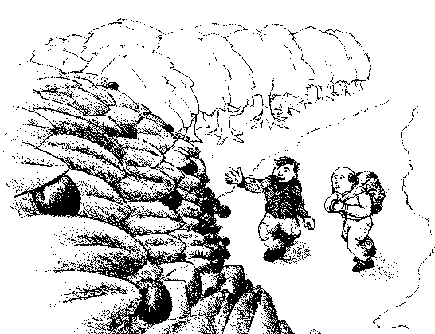
Instead they rounded up all their fellow workers and returned to the campsite in the middle of the night. They robbed all 500 carts, including the workers’ outer garments. They chased away the bullocks, and removed and carried off the cart wheels.

The villagers were terrified. They ran back home as fast as their legs could carry them.

The city merchant’s workers told him all they had done. He said, ‘Those who forget gratitude and ignore simple hospitality wind up getting what they deserve. Those who do not appreciate the help they have received soon find that no one will help them anymore."

The moral is: If you don’t help others, you can’t expect them to help you.

90, 363. One Way Hospitality [Ingratitude]

Link: https://hhdorjechangbuddhaiiiinfo.com/2024/07/30/90-363-one-way-hospitality-ingratitude/

#Buddhisttalesforyoungandold #Buddhiststories #storiesforkids #moralstories #Buddha #Jatakastories #PansiyaPanasJataka
89. The Phoney Holy Man [Hypocrisy]

89. The Phoney Holy Man [Hypocrisy]

Once upon a time there was a man who looked and acted just like a holy man. He wore nothing but rags, had long matted hair, and relied on a little village to support him. But he was sneaky and tricky. He only pretended to give up attachment to the everyday world. He was a phoney holy man.

A wealthy man living in the village wanted to earn merit by doing good deeds. So he had a simple little temple built in the nearby forest for the holy man to live in. He also fed him the finest foods from his own home.

He thought this holy man with matted hair was sincere and good, one who would not do anything unwholesome. Since he was afraid of bandits, he took his family fortune of 100 gold coins to the little temple. He buried it under the ground and said to the holy man, “Venerable one, please look after this my family fortune."

The holy man replied, “There’s no need to worry about such things with people like me. We holy ones have given up attachment to the ordinary world. We have no greed or desire to obtain the possessions of others."

“Very well, venerable one," said the man. He left thinking himself very wise indeed, to trust such a good holy man.

However, the wicked holy man thought, “Aha! This treasure of 100 gold coins is enough for me to live on for the rest of my life! I will never have to work or beg again!" So a few days later he dug up the gold and secretly buried it near the roadside.

The next day he went to the wealthy villager’s home for lunch as usual. After eating his fill he said, “Most honourable gentleman, I have lived here supported by you for a long time. But holy ones who have given up the world are not supposed to become too attached to one village or supporter. It would make a holy man like me impure! Therefore, kindly permit me to humbly go on my way."

The man pleaded with him again and again not to go, but it was useless. “Go then, venerable sir," he agreed at last. He went with him as far as the boundary of the village and left him there.

After going on a short way himself, the phoney holy man thought, “I must make absolutely sure that stupid villager does not suspect me. He trusts me so much that he will believe anything. So I will deceive him with a clever trick!" He stuck a blade of dry grass in his matted hair and went back.

When he saw him returning, the wealthy villager asked, “Venerable one, why have you come back?" He replied, “Dear friend, this blade of grass from the thatched roof of your house has stuck in my hair. It is most unwholesome and impure for a holy one such as myself to ‘take what is not given’."

The amazed villager said, “Think nothing of it, your reverence. Please put it down and continue on your way. Venerable ones such as you do not even take a blade of grass that belongs to another. How marvellous! How exalted you are, the purest of the holy. How lucky I was to be able to support you!" More trusting than ever, he bowed respectfully and sent him on his way again.

It just so happened that the Enlightenment Being was living the life of a trader at that time. He was in the midst of a trading trip when he stopped overnight at the village. He had overheard the entire conversation between the villager and the ‘purest of the holy’. He thought, “That sounds ridiculous! This man must have stolen something far more valuable than the blade of dry grass he has made such a big show of returning to its rightful owner."

The trader asked the wealthy villager, “Friend, did you perhaps give anything to this holy looking man for safekeeping?" “Yes friend," he replied, “I trusted him to guard my family fortune of 100 gold coins." “I advise you to go see if they are where you left them," said the trader.

Suddenly worried, he ran to the forest temple, dug up the ground, and found his treasure gone. He ran back to the trader and said, “It has been stolen!" “Friend," he replied, “No one but that so-called holy man could have taken it. Let’s catch him and get your treasure back."

They both chased after him as fast as they could. When they caught up with him they made him tell where he had hidden the money. They went to the hiding place by the roadside and dug up the buried treasure.

Looking at the gleaming gold the Bodhisatta said, “You hypocritical holy man. You spoke well those beautiful words, admired by all, that one is not to ‘take what is not given’. You hesitated to leave with even a blade of grass that didn’t belong to you. But it was so easy for you to steal a hundred gold coins!" After ridiculing the way he had acted in this way, he advised him to change his ways for his own good.

The moral is: Be careful of a holy man who puts on a big show.

89. The Phoney Holy Man [Hypocrisy]

Link: https://hhdorjechangbuddhaiiiinfo.com/2024/07/30/89-the-phoney-holy-man-hypocrisy/

#Buddhisttalesforyoungandold #Buddhiststories #storiesforkids #moralstories #Buddha #Jatakastories #PansiyaPanasJataka

88,28. The Bull Called Delightful [All Deserve Respect]

88,28. The Bull Called Delightful [All Deserve Respect]

Once upon a time, in the country of Gandhara in northern India, there was a city called Takkasila. In that city the Enlightenment Being was born as a certain calf. Since he was well bred for strength, he was bought by a high class rich man. He became very fond of the gentle animal, and called him ‘Delightful’. He took good care of him and fed him only the best.

When Delightful grew up into a big fine strong bull, he thought, “I was brought up by this generous man. He gave me such good food and constant care, even though sometimes there were difficulties. Now I am a big grown up bull and there is no other bull who can pull as heavy a load as I can. Therefore, I would like to use my strength to give something in return to my master."

So he said to the man, “Sir, please find some wealthy merchant who is proud of having many strong bulls. Challenge him by saying that your bull can pull one hundred heavily loaded bullock carts."

Following his advice, the high class rich man went to such a merchant and struck up a conversation. After a while, he brought up the idea of who had the strongest bull in the city.

The merchant said, “Many have bulls, but no one has any as strong as mine." The rich man said, “Sir, I have a bull who can pull one-hundred heavily loaded bullock carts." “No, friend, how can there be such a bull? That is unbelievable!" said the merchant. The other replied, “I do have such a bull, and I am willing to make a bet."

The merchant said, “I will bet a thousand gold coins that your bull cannot pull a hundred loaded bullock carts." So the bet was made and they agreed on a date and time for the challenge.

The merchant attached together one-hundred big bullock carts. He filled them with sand and gravel to make them very heavy.

The high class rich man fed the finest rice to the bull called Delightful. He bathed him and decorated him and hung a beautiful garland of flowers around his neck.

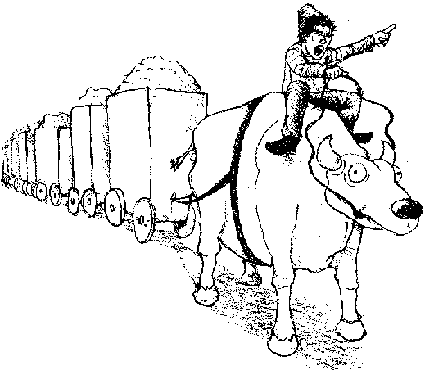
Then he harnessed him to the first cart and climbed up onto it. Being so high class, he could not resist the urge to make himself seem very important. So he cracked a whip in the air, and yelled at the faithful bull, “Pull, you dumb animal! I command you to pull, you big dummy!"

The bull called Delightful thought, “This challenge was my idea! I. have never done anything bad to my master, and yet he insults me with such hard and harsh words!" So he remained in his place and refused to pull the carts.

The merchant laughed and demanded his winnings from the bet. The high class rich man had to pay him the one-thousand gold coins. He returned home and sat down, saddened by his lost bet, and embarrassed by the blow to his pride.

The bull called Delightful grazed peacefully on his way home. When he arrived, he saw his master sadly lying on his side. He asked. “Sir, why are you lying there like that? Are you sleeping? You look sad." The man said, “I lost a thousand gold coins because of you. With such a loss, how could I sleep?"

The bull replied, “Sir, you called me ‘dummy’. You even cracked a whip in the air over my head. In all my life, did I ever break anything, step on anything, make a mess in the wrong place, or behave like a ‘dummy’ in any way?" He answered, “No, my pet."

The bull called Delightful said, “Then sir, why did you call me ‘dumb animal’, and insult me even in the presence of others? The fault is yours. I have done nothing wrong. But since I feel sorry for you, go again to the merchant and make the same bet for two-thousand gold coins. And remember to use only the respectful words I deserve so well."

Then the high class rich man went back to the merchant and made the bet for two-thousand gold coins. The merchant thought it would be easy money. Again he set up the one-hundred heavily loaded bullock carts. Again the rich man fed and bathed the bull, and hung a garland of flowers around his neck.

When all was ready, the rich man touched Delightful’s forehead with a lotus blossom, having given up the whip. Thinking of him as fondly as if he were his own child, he said. “My son, please do me the honor of pulling these one-hundred bullock carts."

Lo and behold, the wonderful bull pulled with all his might and dragged the heavy carts, until the last one stood in the place of the first.

The merchant, with his mouth hanging open in disbelief, had to pay the two-thousand gold coins. The onlookers were so impressed that they honored the bull called Delightful with gifts. But even more important to the high class rich man than his winnings, was his valuable lesson in humility and respect.

The moral is: Harsh words bring no reward. Respectful words bring honor to all.

88,28. The Bull Called Delightful [All Deserve Respect]

Link: https://hhdorjechangbuddhaiiiinfo.com/2024/07/30/8828-the-bull-called-delightful-all-deserve-respect/

#Buddhisttalesforyoungandold #Buddhiststories #storiesforkids #moralstories #Buddha #Jatakastories #PansiyaPanasJataka
87. A Priest Who Worshipped Luck [Superstition]

87. A Priest Who Worshipped Luck [Superstition]

Once upon a time, the Enlightenment Being was born into a high class family in north-western India. When he grew up, he realized his ordinary life could not give him lasting happiness. So he left everything behind and went to live in the Himalayas as a forest monk. He meditated and gained knowledge and peace of mind.

One day he decided to come down from the forests to the city of Rajagaha. When he arrived he stayed overnight in the king’s pleasure garden.

The next morning he went into the city to collect alms food. The king saw him and was pleased with his humble and dignified attitude. So he invited him to the palace. He offered him a seat and gave him the best foods to eat. Then he invited him to live in the garden for good. The holy man agreed, and from then on he lived in the king’s pleasure garden and had his meals in the king’s palace.

At that time there was a priest in the city who was known as ‘Lucky Cloth’. He used to predict good or bad luck by examining a piece of cloth.

It just so happened that he had a new suit of clothes. One day, after his bath, he asked his servant to bring the suit to him. The servant saw that it had been chewed slightly by mice, so he told the priest.

Lucky Cloth thought, “It is dangerous to keep in the house these clothes that have been chewed by mice. This is a sure sign of a curse that could destroy my home. Therefore, I can’t even give them to my children or servants. The curse would still be in my house!

“In fact, I can’t give these unlucky clothes to anyone. The only safe thing to do is to get rid of them once and for all. The best way to do that is to throw them in the corpse grounds, the place where dead bodies are put for wild animals to eat.

“But how can I do that? If I tell a servant to do it, desire will make him keep the clothes, and the curse will remain in my household. Therefore, I can trust this task only to my son."

He called his son to him and told all about the curse of the clothes that were slightly chewed by mice. He told him not even to touch them with his hand. He was to carry them on a stick and go throw them in the corpse grounds. Then he must bathe from head to foot before returning home.

The son obeyed his father. When he arrived at the corpse grounds, carrying the clothes on a stick, he found the holy man sitting by the gate. When Lucky Cloth’s son threw away the cursed suit, the holy man picked it up. He examined it and saw the tiny teeth marks made by the mice. But since they could hardly be noticed, he took the suit with him back to the pleasure garden.

After bathing thoroughly, his son told Priest Lucky Cloth what had happened. He thought, “This cursed suit of clothes will bring great harm to the king’s favorite holy man. I must warn him." So he went to the pleasure garden and said. “Holy one, the unlucky cloth you have taken, please throw it away! It is cursed and will bring harm to you!"

But the holy man replied, “No no, what others throw away in the corpse grounds is a blessing to me! We forest meditators are not seers of good and bad luck. All kinds of Buddhas and Enlightenment Beings have given up superstitions about luck. Anyone who is wise should do the same. No one knows the future!"

Hearing about the truly wise and enlightened ones made Priest Lucky Cloth see how foolish he had been. From then on he gave up his many superstitions and followed the teachings of the humble holy man.

The moral is: A fool’s curse can be a wise man’s blessing.

87. A Priest Who Worshipped Luck [Superstition]

Link: https://hhdorjechangbuddhaiiiinfo.com/2024/07/30/87-a-priest-who-worshipped-luck-superstition/

#Buddhisttalesforyoungandold #Buddhiststories #storiesforkids #moralstories #Buddha #Jatakastories #PansiyaPanasJataka
86, 290, 362. A Lesson from a Snake

86, 290, 362. A Lesson from a Snake

Once upon a time, King Brahmadatta of Benares had a very valuable adviser priest. He came from a rich noble family. He was intelligent and full of knowledge. He was generous with his wealth and knowledge, holding nothing back. People thought of him as a kind and good person.

By practicing the Five Training Steps, he trained his mind to avoid the five unwholesome actions. He discovered that giving up each unwholesome action made him better off in its own way:

  • Destroying life, since you have to kill part of yourself in order to kill someone else;
  • Taking what is not given, since this makes the owner angry at you;
  • Doing wrong in sexual ways, since this leads to the pain of jealousy and envy;
  • Speaking falsely, since you can’t be true to yourself and false to another at the same time;
  • Losing your mind from alcohol, since then you might hurt yourself by doing the other four.

Seeing how he lived, King Brahmadatta thought, ‘This is truly a good man."

The priest was curious to learn more about the value of goodness. He thought, “The king honors and respects me more than his other priests. But I wonder what it is about me that he really respects most. Is it my nationality, my noble birth or family wealth? Is it my great learning and vast knowledge? Or is it because of my goodness? I must find the answer to this."

Therefore, he decided to perform an experiment in order to answer his question. He would pretend to be a thief!

On the next day, when he was leaving the palace, he went by the royal coin maker. He was stamping out coins from gold. The good priest, not intending to keep it, took a coin and continued walking out of the palace. Because the money maker admired the famous priest highly, he remained sitting and said nothing.

On the following day the make-believe thief took two gold coins. Again the royal coin maker did not protest.

Finally, on the third day, the king’s favorite priest grabbed a whole handful of gold coins. This time the money maker didn’t care about the priest’s position or reputation. He cried out, “This is the third time you have robbed his majesty the king." Holding onto him, he shouted, “I’ve caught the thief who robs the king! I’ve caught the thief who robs the king! I’ve caught the thief who robs the king!"

Suddenly a crowd of people came running in, yelling, “Aha! You pretended to be better than us! An example of goodness!" They slapped him, tied his hands behind his back, and hauled him off to the king.

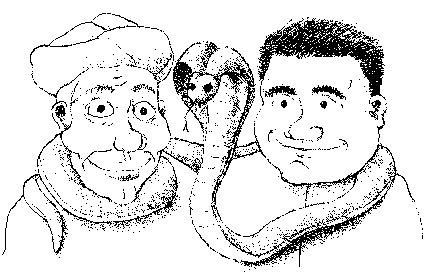
But on their way, they happened to go by some snake charmers. They were entertaining some bystanders from the king’s court with a poisonous cobra. They held him by the tail and neck, and coiled him around their necks to show how brave they were.

The tied up prisoner said to them, “Please be careful! Don’t grab that cobra by the tail. Don’t grab him by his neck. And don’t coil that poisonous snake around your own necks. He may bite you and bring your lives to a sudden end!"

The snake charmers said, “You ignorant priest, you don’t understand about this cobra. He is well-mannered and very good indeed. He is not bad like you! You are a thief who has stolen from the king. Because of your wickedness and criminal behavior, you are being carried off with your hands tied behind your back. But there’s no need to tie up a snake who is good!"

The priest thought, “Even a poisonous cobra, who doesn’t bite or harm anyone, is given the name ‘good’. In truth, goodness is the quality people admire most in the world!"

When they arrived at the throne room, the king asked, ‘What is this, my children?" They replied, ‘This is the thief who stole from your royal treasury." The king said. “Then punish him according to the law."

The adviser priest said, ‘My lord king, I am no thief!" ‘Then why did you take gold coins from the palace?" asked the king.

The priest explained, “I have done this only as an experiment, to test why it is you honor and respect me more than others. Is it because of my family background and wealth, or my great knowledge? Because of those things, I was able to get away with taking one or two gold coins. Or do you respect my goodness most of all? It is clear that by grabbing a handful of coins I no longer had the name ‘good’. This alone turned respect into disgrace!

“Even a poisonous cobra, who doesn’t harm anyone, is called `good’. There is no need for any other title!"

To emphasize the lesson he had learned, the wise priest recited:

“High birth and wealth and even knowledge vast, I find, are less admired than goodness is, by humankind."

The king pardoned his most valuable adviser priest.

He asked to be allowed to leave the king’s service in the ordinary world and become a forest monk. After refusing several times the king eventually gave his permission.

The priest went to the Himalayas and meditated peacefully. When he died he was reborn in a heaven world.

The moral is: People prize goodness most of all.

86, 290, 362. A Lesson from a Snake

Link: https://hhdorjechangbuddhaiiiinfo.com/2024/07/09/86-290-362-a-lesson-from-a-snake/

#Buddhisttalesforyoungandold #Buddhiststories #storiesforkids #moralstories #Buddha #Jatakastories #PansiyaPanasJataka

85, 54. The Whatnot Tree [Prudence]

85, 54. The Whatnot Tree [Prudence]

Once upon a time there was a caravan leader. He went from country to country selling various goods. His caravans usually had at least 500 bullock carts.

On one of these trips his path led through a very thick forest. Before entering it, he called together all the members of the caravan. He warned them, “My friends, when you go through this forest be careful to avoid the poisonous trees, poisonous fruits, poisonous leaves, poisonous flowers and even poisonous honeycombs.

“Therefore, whatever you have not eaten before — whether a fruit, leaf, flower or anything else — must not be eaten without asking me first." They all said respectfully, “Yes, sir."

There was a village in the forest. Just outside the village stood a tree called a ‘whatnot tree’. Its trunk, branches, leaves, flowers and fruits look very similar to a mango tree. Even the colour, shape, smell and taste are almost exactly the same as a mango tree. But unlike a mango, the whatnot fruit is a deadly poison!

Some went ahead of the caravan and came upon the whatnot tree. They were all hungry, and the whatnot fruits looked like delicious ripe mangoes. Some started eating the fruits immediately, without thinking at all. They devoured them before anyone could say a word.

Others remembered the leader’s warning, but they thought this was just a different variety of mango tree. They thought they were lucky to find ripe mangoes right next to a village. So they decided to eat some of the fruits before they were all gone.

There were also some who were wiser than the rest. They decided it would be safer to obey the warning of the caravan leader. Although they didn’t know it, he just happened to be the Enlightenment Being.

When the leader arrived at the tree, the ones who had been careful and not eaten asked, “Sir, what is this tree? Is it safe to eat these fruits?"

After investigating thoughtfully he replied, “No, no. This may look like a mango tree, but it isn’t. It is a poisonous whatnot tree. Don’t even touch it!"

The ones who had already eaten the whatnot fruit were terrified. The caravan leader told them to make themselves vomit as soon as possible. They did this, and then were given four sweet foods to eat – raisins, cane sugar paste, sweet yogurt and bee’s honey. In this way their taste buds were refreshed after throwing up the poisonous whatnot fruit.

Unfortunately, the greediest and most foolish ones could not be saved. They were the ones who had started eating the poisonous fruits immediately, without thinking at all. It was too late for them. The poison had already started doing its work, and it killed them.

In the past, when caravans had come to the whatnot tree, the people had eaten its poisonous fruits and died in their sleep during the night. The next morning the local villagers had come to the campsite. They had grabbed the dead bodies by the legs, dragged them to a secret hiding place, and buried them. Then they had taken for themselves all the merchandise and bullock carts of the caravan.

They expected to do the same thing this time. At dawn the next morning the villagers ran towards the whatnot tree. They said to each other, “The bullocks will be mine!" “I want the carts and wagons!" “I will take the loads of merchandise!"

But when they got to the whatnot tree they saw that most of the people in the caravan were alive and well. In surprise, they asked them, “How did you know this was not a mango tree?" They answered, “We did not know, but our leader had warned us ahead of time, and when he saw it he knew."

Then the villagers asked the caravan leader, “Oh wise one, how did you know this was not a mango tree?"

He replied, “I knew it for two reasons. First, this tree is easy to climb. And second, it is right next to a village. If the fruits on such a tree remain unpicked, they cannot be safe to eat!"

Everyone was amazed that such lifesaving wisdom was based on such simple common sense. The caravan continued on its way safely.

The moral is: The wise are led by common sense; fools follow only hunger.

85, 54. The Whatnot Tree [Prudence]

INTERPRETER’S INTRODUCTION – BUDDHIST TALES FOR YOUNG AND OLD, VOLUME 1, STORIES 1-50

Link: https://hhdorjechangbuddhaiiiinfo.com/2024/06/25/85-54-the-whatnot-tree-prudence/

#Buddhisttalesforyoungandold #Buddhiststories #storiesforkids #moralstories #Buddha #Jatakastories #PansiyaPanasJataka