111. The Question about the Donkey

111. The Question about the Donkey

This is set out at length in the Mahā-Ummagga-Jātaka [No. 546].

[When the Enlightenment Being was born in the city of Mithilā while King Videha was ruling the country, King Videha had four erudites who advised him. King Videha, on hearing of the erudition of the Englightenment Being, wanted to summon him to the palace. The four erudites were disturbed on hearing this news, and they prevented the invitation from being made because they were jealous. But on hearing further the splendor of the erudition of the Enlightenment Being, Mahosadha, the king without informing his four erudite ministers decided to go alone to see the Enlightenment Being.

On this journey, the king’s royal horse, stepping on an uneven area in the road, broke its leg. The king had to come back. When he returned to the palace, the four erudite ministers asked, “Your lordship, did not you go to see and bring back the erudite Mahosadha?” The king said, “Yes.” The ministers said, “We asked you not to go there. But without listening to us you wanted to go. See what happened to your horse? Do not be in a hurry.” The king had nothing to say, and he kept silent.

After a while, the king again suggested to the ministers that they invite the erudite Mahosadha to the palace. The ministers saw that this time, they could not prevent the king from inviting him. T

hey said, “Your lordship, if it is so, this time you should not go to him. Last time when you were trying to go to him, your royal horse broke its leg. Therefore, this time, send him a messenger saying, ‘Last time when we were trying to come to see you, our horse’s leg got broken. Therefore, send us a noble horse (assatara)4 or a nobler one.’ If he understands our puzzle, if he sends a noble horse he will come himself. If he sends a nobler one, he will send his father.” The king agreed to do so. Sending a messenger, he did as they agreed.]

The Enlightenment Being, Mahosadha, on hearing the message of the king, thought, “Our lord king is willing to see myself and my father.” And he went to his father, offered him respect, and said, “Father, our lord king would like to see you and me. Therefore, you go first with a thousand other people. Also, do not go empty-handed. Take with you a good box of fresh ghee. When you go there, the king will ask you to sit down in an appropriate chair. Then you may sit in that appropriate chair. While you and the king are talking to each other, I will arrive. Then the king will greet me and talk to me, and will request that I sit in an appropriate seat. When I look at your face, by that sign, you will get up from your seat and say to me, ‘My son, Mahosadha. Sit on this seat.’ Then it will be a puzzle for them.”

The millionaire father accepted what his son said, and as his son had requested, he went first. He arrived near the gate of the palace. The king summoned him. When he entered the palace, he greeted the king, and the king asked, “Where is your son, Mahosadha?” Then he said, “Your lordship, he will come later.”

The king became very happy on hearing that Mahosadha was on his way. The king requested the father to take a seat. The father sat down on an appropriate seat.

The Enlightenment Being, Mahosadha, endowed with beautiful clothes and ornaments, surrounded by a thousand other young princes, went into the city of Mithilā. On the edge of the city, he saw a young donkey grazing on the grass along the ditch around the city proper. He ordered his men to catch him and take him with them in such a fashion that the donkey could not make any noise. At the same time, he instructed them not to let anyone at the palace see the donkey. The young men, hearing the Enlightenment Being’s words, did everything as he advised. The Enlightenment Being, Mahosadha, went to the palace of the king with such a large retinue as if he were the king of the gods.

A crowd gathered to see the millionaire’s son, Mahosadha, on his way to the palace. The people were saying to each other, “Look! He is the prince born to this world carrying a lump of medicine in his hand. He is the erudite prince who solved such a large number of questions and puzzles sent by the king. Look at his splendor.” And they were appreciating the Enlightenment Being, but yet were still not satisfied by seeing him.

The Enlightenment Being reached near the gate of the palace and sent a message with the gatekeeper about his arrival. On hearing the news, the king immediately asked him to come. The Enlightenment Being went with his retinue, made his respects to the king, and kept aside while standing. The king became very happy and talked pleasantly to him. He said, “Erudite Mahosadha, be seated in an appropriate seat.”

Then, the Enlightenment Being, Mahosadha, looked at his father’s face. By that sign, the millionaire father got up from his seat and said, “Erudite, take this seat.” When Mahosadha’s father said this, immediately Mahosadha sat down on his father’s seat.

On seeing Mahosadha take his father’s seat and sit on it, the four erudite ministers and other wise people, clapping their hands, loudly started to laugh. They laughed, saying, “It is said that this prince is a wise person. But he is an unwise person.” The king became very upset, and was silent.

Then the Enlightenment Being asked the king, “Your lordship, are you worried?” The king said, “Yes, erudite. I am worried. On hearing about your nature, I became happy. But on seeing it, I have become unhappy and worried.” Mahosadha said, “What is the reason for being happy on hearing about my nature, but unhappy on seeing it.” The king said, “Because you made your father get up from his seat, and you sat in your father’s seat.”

Mahosadha said, “Tell me, your lordship, do you say that fathers are always more noble than sons?” The king said, “Yes, erudite.” Then the Enlightenment Being said, “Your lordship, you requested me to send a noble horse [assatara] or a nobler one. Saying so, he got up from his seat and requested his retinue to bring the donkey near to the king. Keeping the donkey near the king’s feet, he said, “Your lordship, what is the value of this donkey?” The king said, “If it is working, it will be worth nearly eight gold coins.” Then the Enlightenment Being asked, “How much is the value of a noble horse [ājāniya-sindhava] that is in the womb of a mare impregnated by this one?” The king said, “Erudite, it is invaluable.” Then Mahosadha said, “Your lordship, why do you say so? Just now you said that the father is always nobler than the son. If it is true, in your words, the donkey is more valuable than the noble horse. Look, your lordship. Your erudites do not understand even such a little thing. They clapped their hands and laughed at me. The knowledge of your erudites is amazing! From where did you pick out your erudites?” Saying so, he put those scholiasts in their place. And he said further to the king, “Your lordship, if you think that the father is always nobler than the son, you can take my father for your service in the royal office. If sons can be nobler than their fathers, take me into your service in the royal office.”

The king became very happy. All the people assembled there applauded, showing their appreciation for his having explained the riddle so well. They all shouted, “Well done! Well done!” And they waived their shawls above their heads in a circular fashion. The four erudites, Senaka and the others, could not say anything as they had been defeated and shamed.

There is no being who can understand the value of parents better than the Enlightenment Being. The reason he asked his father to get up from his seat and then sat in that same seat was not to belittle his father. The king had sent him a riddle requesting him to send a noble horse or a nobler one. To solve that riddle, and to convince the gathered assembly that he was wiser than the erudites present, he had to belittle those erudites.

The moral: “Wisdom can change even the position of noble and nobler.”

Link:

#Buddhisttalesforyoungandold #Buddhiststories #storiesforkids #moralstories #Buddha #Jatakastories #PansiyaPanasJataka
110. The Dilemma Regarding All [Fragrances] Mixed

110. The Dilemma Regarding All [Fragrances] Mixed

This is set out at length in the Mahā-Ummagga-Jātaka [No. 546].

[At one time the Enlightenment Being was born as Mahosadha, the great erudite. Before going to see King Videha of the city of Mithilā, he was asked to solve several questions by the citizens of his town. The following is one of those questions.]

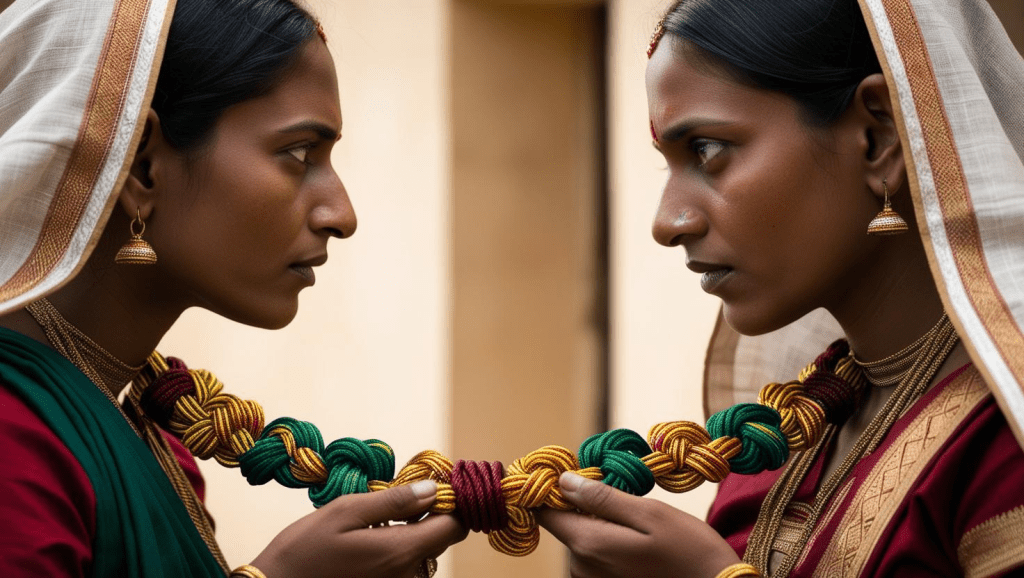
Once, a poor woman made a beautiful necklace by tying knots using green, yellow, and red threads. One day when she was going on a journey, she came to the tank that the erudite Mahosadha had made for the benefit of the public. On seeing its beauty and clean water, she decided to take a bath.

With the intention of taking a bath, she took off her necklace and placed it on top of her clothing. She then went down to the tank and began to bathe. Meanwhile, a young girl was walking nearby. She saw this beautiful necklace made from the colored threads. On seeing it, a desire for it grew up within her. She picked it up and asked, “Oh, auntie. This necklace is very beautiful. Who made this? I would like to make one for myself also. Can I put it around my neck and see whether it fits?” Asking so, the older woman who owned the necklace and who was not cunning said, “Yes. See how it fits you.”

The younger woman, putting it around her neck, ran off. The older woman who owned the necklace saw that the younger woman was fleeing away. She came out of the water, put on her clothes, and chased after the woman who was fleeing.

She ran and caught her, and asked, “Where are you taking my necklace?” Saying so, she held onto her necklace. The other woman shouted and said, “What? I did not take your necklace. This is mine. I have had it for a long time.” They started to quarrel. On hearing this quarreling, many people came to see what the problem was.

In the meantime, the Enlightenment Being Mahosadha was playing nearby. He heard the quarreling noise of those two women. Hearing this noise, the Enlightenment Being summoned them both and asked, “Why are you quarreling on the road?” The Enlightenment Being, seeing the two women, realized immediately which one was guilty and which one was innocent. Knowing this, he asked about the cause of the quarrel. When they stated the reason, he asked, “If I settle your dispute, would you agree with my decision or not?” They said, “Yes, we will accept your decision.”

When they agreed, the Enlightenment Being first asked the young woman who had stolen the necklace, “What type of a perfume was applied on this necklace by you before you put it on?” The woman said, “Your lordship, I always perfume this necklace with a mixture of many different fragrances, which is known as SabbasamÅhāraka.” Then he asked the other woman, who was the necklace’s owner, and she said, “Your lordship, I am a very poor woman. I do not have such a costly perfume. I always perfume it with a fragrance from PiyanÄgu flowers.”

The erudite ordered a plate of water to be brought, and he put the necklace in the water. After that, he summoned a perfume-maker and asked him, “What fragrance is in this water? Please smell it and tell me.” The perfume-maker said, after smelling it, “Your lordship, in this water I smell the fragrance of the PiyanÄgu flower.”

Then, it was found that the young cunning girl was lying, and the old woman was the truthful speaking person.

The Enlightenment Being, Mahosadha, showed the water to the people who gathered around and asked the young woman in their presence, “Tell us now, did you steal it or not?” She said, “Yes, I stole it.”

This story was spread throughout the country, and the popularity of Mahosadha in this way also spread throughout the country.

The moral: “Common sense can conquer guile.”

110. The Dilemma Regarding All [Fragrances] Mixed

Link: https://hhdorjechangbuddhaiiiinfo.com/2025/02/18/110-the-dilemma-regarding-all-fragrances-mixed/

#Buddhisttalesforyoungandold #Buddhiststories #storiesforkids #moralstories #Buddha #Jatakastories #PansiyaPanasJataka

109. The Story of a Sweetcake of Husk Powder

109. The Story of a Sweetcake of Husk Powder

At one time Buddha was living in Jetavana monastery in Sāvatthi. At that time, many people of Sāvatthi offered alms to the Buddha and the community of monks.

Once, a very, very poor man who was even unable to offer alms thought that he should take part in this giving of alms. He had some husk powder, and of it he made a sweetcake. He took it to the monastery thinking that he would give it in person to the Buddha. During the period of alms giving, people first offered gruel, and then said, “Now it would be good to offer sweets.” As soon as this was said, the poor man offered his husk powder sweetcake to the Buddha.

Buddha out of compassion accepted it instead of many other sweets, and refusing all other sweets the Buddha consumed it and returned to the Jetavana monastery. On hearing this news many kings, kings’ relatives and ministers went to this man and asked, “Can you give us the merit you acquired? We will pay you.” Then the poor man thought, “I acquired this merit with some hardships. Let me go to the Buddha and ask whether I should give it to them.”

And he went to the Buddha and asked about this. Buddha said, “Both with and without taking money, giving one’s merit is good. After hearing that, he gave merit to everybody in the city. In return he got 900,000 pounds of gold. The king of Kosala hearing this news conferred upon the poor man the office of treasurer and offered him a white parasol, the mark of his new status.

On this day the monks who had assembled in the Dhamma hall to listen to the evening Dhamma sermon of the Buddha were discussing the news of the poor man’s appointment to his new status of treasurer. Buddha went to the Dhamma hall and sat on his well-prepared divan and addressed the monks, asking, “Oh monks, what sort of discussion were you engaged in before my arrival?” The monks said, “Your lordship, we were not discussing any of the thirty-two things with which you asked us not to be involved. We were talking about the high status achieved by the poorest man offering alms to you.”

The Buddha said, “Not only now but even before in his previous birth also he achieved such great wealth by offering a husk powder sweetcake.” And opening the door to a Jātaka story, he became silent. One monk out of the community with the assent of all the monks, paying homage to the Buddha, requested, “Your lordship, we know the present story, but we do not know the past story. Therefore we invite your lordship to disclose to us the story which cannot be seen by us, but that can be seen by the Buddha.”

Then Buddha uttered the story: Long ago in the past there was a king in Benares called Brahmadatta who ruled his country righteously. At that time the citizens of Benares ceremoniously worshipped the tree deities with various offerings. One poor person of the city saw a certain castor oil tree, cleared around it, but he had nothing to offer. He saw other people offering to their trees flowers, incense, lights, and foods. He had nothing like that to offer. He thought, “Let me offer my husk powder sweet,” and he did so. Then he thought, “Deities eat divine food, ambrosia. How can my deity only eat this husk powder food?” Thinking this, he took back the husk powder sweetcake to eat it himself.

The tree deity appeared with a half body in his presence and said, “Oh, man, whatever you get, the same should be gotten by your deity.” Hearing this, again he offered the husk powder sweetcake to the deity. The deity said, “Why do you want to deal with me, a small, weak tree?” The man said, “Your lordship, I am a poor man. So I dealt with you.” Then the deity said, “Around this castor oil tree there are treasure pots neck to neck. Dig them all up and show the king those treasure pots. Today you will be conferred the status of treasurer.” Saying so, he disappeared.

The poor man did as the deity said. He dug up all the treasure pots and showed them to the king. The king thought, “It would be good to confer upon him the office of treasurer as he has such wealth.” And he conferred on him the office of treasurer. The man, having gained such wealth, practiced generosity by giving and acquired a great deal of merit. Finally, he passed away according to his deeds.

Buddha preached this Jātaka story comparing both the present and past. “The poor man at that time was this poor man. The deity of the castor oil tree was I, the Buddha.”

The moral: “Everything has value. No offering with good intentions is too little.”

109. The Story of a Sweetcake of Husk Powder

Link: https://hhdorjechangbuddhaiiiinfo.com/2025/02/11/109-the-story-of-a-sweetcake-of-husk-powder/

#Buddhisttalesforyoungandold #Buddhiststories #storiesforkids #moralstories #Buddha #Jatakastories #PansiyaPanasJataka
108. The Story of the Woman from Bāhiya State

108. The Story of the Woman from Bāhiya State

Once Buddha was living in the city of Vesāli in the gabled chamber in the Great Grove. This Dhamma story was delivered about a certain Licchavi king. He was a very pious man, pleased with the law of the Buddha and the community of the monks. He thought: “Buddha is mine. Dhamma [the law] is mine. Sangha [the community of the monks] is mine.” Constantly, he used to confirm the five precepts without committing any violation. On the full moon days, he observed the higher precepts. One day this king invited the Buddha and the community of monks for lunch, and he especially decorated his palace and performed his Dāna [alms giving] ceremony.

His queen had a very fat body with fat limbs. She was pale like a dead body, and had no beauty. All that she had was fatness and height. After the alms giving, Buddha preached about the advantage of alms giving and gave appreciation in rejoice of their merit.

The Buddha returned home to his own apartment. In the evening, the monks assembled to listen to the Buddha. Before the Buddha’s arrival the monks who assembled there started a discussion. And they said, “See, brothers, such a pious and handsome king has no beautiful queen with noble features. Her body was very fat, and she had no physical beauty or merit. How can this king live with such a woman?” They were involved with such a discussion when the Buddha entered.

The master approached the preaching hall and sat on the well-prepared seat as if a sun glittering over Mount Meru’s rocks. The Buddha asked, “Monks, in what type of a discussion were you involved before I arrived, and how much more is there to go?” Then the monks said, “Your lordship, in whatever you advised us not to talk about, such as speech about kings and thieves, the thirty-two types of prohibited speech, we were not engaged. We had pious thoughts, such as: ‘Buddha is mine. Dhamma is mine. Sangha is mine.’ With such regard for the triple gem, that handsome Licchavi king was living with an unpleasant-looking fat queen. How can they live together in the palace? We were involved with such talk.”

“Monks, not only in the present has this Licchavi king lived with such an unpleasant-looking woman. He has done so even in the past very long ago.” And the Buddha kept silent.

Then, one monk out of those assembled monks, making an Añjali with his hands kept up on his head as if a plantain tree fallen down with the heaviness of bananas, knelt down in the presence of the Buddha, prostrated himself before the feet of the Buddha who is endowed with 108 physical beauties, and requested respectfully, “Your lordship, now it is clear to us why in this present life this handsome king is living with this ugly-looking queen. The past story, though, is covered to us as if a spark in ashes. Therefore, please be kind enough to disclose this hidden story to us that is covered as if a gem covered with clay on the ground. We request you to disclose the past story as if taking out the moon from behind a covering dark cloud.” Then the Buddha who was requested to speak by the monks disclosed this story of the past:

Long ago in the past there was a king called Brahmadatta in Benares. Our lord the Bodhisatta, the Enlightenment Being, who was fulfilling the ten perfections, became his minister. At that time a certain fat woman who lived in a remote area and who had no particular attractive physical appearance lived by working as a servant. While she was going nearby the palace compound, she wanted to go to the bathroom. As there was no bathroom, she did what she had wanted to do outside. She covered her body with a hand cloth. The king was looking at this through the window and thought, “This woman being in such an open place attended to her needs covering herself with a little piece of cloth so as to avoid fear and shame, and she got up quickly. There is no doubt that she must be a very healthy woman with good physical ability. From such a body, if there be born a son, no doubt he would be a lucky meritorious person. Therefore, it would be good to make her my queen.” Then the king, having made such a decision, determined whether or not she was married. Finding out that she was unmarried, he summoned her to the palace, had her sit on a heap of gems and married her, pouring sacred water on her head.

She became very loving to the king, and the king became more and more pleased with her. In due course she delivered a baby boy. After the death of the king, he became a Universal Monarch who was endowed with the seven noble gems and who ruled the whole universe making it one kingdom.

At that time the Enlightenment Being was known as Bāhiya and seeing the prosperity of the woman who came from the Bāhiya state, he thought, “It is good to speak at this time about her to the king.” And in a respectful way, he said, “Your lordship, why do not people learn what they have to know about things. This queen who was born in a remote village and who had shame and fear was covering herself with a hand cloth, did her physical needs and achieved the very high position of queen, being first among 16,000 women in the palace. She gave birth to a son who has unlimited fame and prosperity and an immense retinue.

“As the queen came to such prosperity, therefore it is good to learn what we have to know about things from this.”

Emphasizing the value of learning good qualities, the Enlightenment Being said,

“Furthermore, your lordship, there are many people in this world who would like to learn writing, reading, mathematics, music, astrology, meter, lexicology, and poetic adornment3, and who would like to gain the advantages of having learned these things. However, there are good human qualities that people do not want to learn and follow and many do not know the good results that following such qualities can gain. To understand that, this queen who was born in a remote village and who maintained her cultural values when in an emergency she needed to use the bathroom is a very good example. Following shame and fear she was capable of pleasing your lordship’s mind, and came to be the queen of your lordship.” And in this fashion, he stated the value and the results of good education.

The lord Buddha, the master, delivered this Dhamma sermon and emphasized the noble truth of suffering, the cause of suffering, the absence of suffering, and the path leading away from suffering, and finalized the story of this Bāhiya-Jātaka with the following connection of the story of the past to the present.

“The king at that time was the same king as today, and the queen was the same queen. The minister who advised the king with the Dhamma and how to maintain the well-being of subjects, and who taught good and bad to them, being wise, was I the Lord Buddha.” The moral: “Look deeper than appearances.”

Link: 108. The Story of the Woman from Bāhiya State

#Buddhisttalesforyoungandold #Buddhiststories #storiesforkids #moralstories #Buddha #Jatakastories #PansiyaPanasJataka

107. The Story of the Slinging Stone

107. The Story of the Slinging Stone

The Buddha who was bringing happiness to people, when he was living at Jetavana monastery, disclosed this story about a certain clever monk and a slingshot.

A certain man in Sāvatthi was skilled in using a slingshot. One day he was listening to the Buddha and he became pleased with the law. Becoming very familiar with the teachings of the Buddha, he became ordained, received higher ordination, and was admitted among the community of monks. Even though he was admitted in the higher ordination of the monks, yet he was not a monk who was devoted too much to the law, and he did not have much respect for the practice of the law.

This monk went one day to take a bath on the bank of the Aciravatī River with a young novice. Meanwhile two white swans were flying in the sky over them. They saw the two swans and the elder Bhikkhu said to the young one, “Shall I put down the swan who is behind by shooting a slinging stone at his eye?”

The young monk said, “How can you put him down? You have no power to put him down by hitting him.”

Then the elder monk said, “Young monk, if you like not only can I hit the swan in the eye on this side, but also on the far side.”

The young monk thought, “He speaks a lie.” And he said, “If so, then do it.”

Then the other monk took a small triangular shaped stone and threw it behind the swan. The stone, making a noise, caught the swan’s attention. Hearing the sound, the swan thought that there was maybe a danger. Thinking so, it turned to hear the sound better. Then the monk took a round stone and hit the swan in one eye. The stone went out through the other eye, and the swan fell down screaming at their feet.

Thereupon the young monk censured him saying, “You have done a very bad thing.” He took him to the Buddha saying, “Sir, this monk has done such a type of bad thing.” Then the omnipresent one censured the monk and said, “Oh monks, this man is not only clever in this life with a slingshot, but also was clever in the past too.”

Then the Buddha told this story of the past:

At one time, there was a king called Brahmadatta in Benares. Our Enlightenment Being at that time became the minister to the king. At the same time, the king had an advisor Brahmin who was very, very talkative. He was a chatterbox. When he started to speak, he did not let others speak. The king thought, “When will I be able to stop the chatter of this man.” And he was thinking of ways to stop this unusual talking of the Brahmin.

In the meantime, there was a certain crippled man who was very clever in slinging stones. Children in the city put this crippled man on a cart, took him near a spreading Banyan tree that was by the city gate, and kept him there under the large shady Banyan tree. They surrounded him, gave him a little bit of money, and asked him to make elephant forms, horse forms, or something like that in the leaves. The crippled man slung stones over the Banyan leaves and he made lion forms, deer forms and bird forms. He made various types of forms. All the leaves of the Banyan tree now had shaped gaps in them.

When the king was on his way to sport in his pleasure garden, he came to this place. The security people sent the children who surrounded the crippled man away. They fled away here and there as the security people hit them. The cripple was unable to move, and he lay under the Banyan tree. When the king came to the Banyan tree and saw that the leaves of the tree were with shaped gaps, and that the shade was no longer perfect, he looked up at the tree sitting on his chariot and saw that all the gaps formed elephant shapes, lion shapes, horse shapes, and the like. He asked, “Who did this?” Then the officers of the king searched and found the crippled man. The king thought, “This man would be a very good help to stop the talkativeness of the Brahmin.”

The king’s officers saw the crippled man lying down under the tree and said, “Your lordship, here is the man.” And they showed him the cripple. The king summoned him and asked all this retinue to go away. He said, “I have a talkative Brahmin in my court. Can you make him silent?” “Your lordship, if I can have a measure of dry goat’s dung, I can silence him.”

The king took the crippled man to his palace, and keeping him behind a curtain that had a hole in its middle, he made a seat in front of that curtain on which he might sit the Brahmin and left the dry goat’s dung with the crippled man. When the Brahmin came to the court, he was asked to sit on that chair. The Brahmin began to speak.

The Brahmin, without letting anyone else speak, began to talk. The crippled man took the pellets of dry goat’s dung one by one and shot them through the hole into the Brahmin’s mouth. The Brahmin could not drop them out from deference to the king, and he swallowed them. The dry goat’s dung that was about a measure’s worth went into his stomach. The king thought, “He may not be able to digest this dry goat’s dung.” He said, “Hurry up and go home, and bring some leaves of a PiyanÄgu tree with you. Grind them and crush them, drink the juice from that, and vomit. And then be in good health.”

The Brahmin kept his mouth shut from that point on.

The king gave presents to the crippled man, thinking, “This man has given me comfort to my ears by making the Brahmin silent.” He gave him four villages in each of the four directions, which produced 100,000 gold coins per year.

Then the Enlightenment Being came to the king and said, “Your lordship, education must be obtained by wise people in the world. Even the crippled man, having learned to sling stones and being skilled in this art has gotten such an immense wealth. Therefore, your lordship, look at this crippled man using dry goat’s dung who has gotten so much wealth. The advantage of education is endless.” He emphasized again and again the value of learning.

Lord Buddha, the master, disclosed this Dhamma sermon and ended this story of the Sālittaka-Jātaka [this Story of the Slinging Stone].

“The cripple at that time was this monk who killed the swan. The king was the venerable Ānanda. The wise minister was the fully enlightened one who am I, the teacher of the three worlds.”

The moral: “Whatever you learn brings you wealth and happiness.”

107. The Story of the Slinging Stone

Link: https://hhdorjechangbuddhaiiiinfo.com/2025/01/21/107-the-story-of-the-slinging-stone/

#Buddhisttalesforyoungandold #Buddhiststories #storiesforkids #moralstories #Buddha #Jatakastories #PansiyaPanasJataka

106. The Story of Infatuation with an Unmarried Girl of Marriageable age

106. The Story of Infatuation with an Unmarried Girl of Marriageable age

While the compassionate Buddha was living in Jetavana monastery, he disclosed this story regarding a monk who was infatuated with an unmarried girl of marriageable age. The incident will come in detail in the Jataka story of Culla-Ndrada-Kassapa in the thirteenth book [No. 477].

[There was a girl who thought, “Nobody has asked for me. Therefore it would be good to persuade a monk suitable to me. Then I can ask him to disrobe and be with him. Thinking so, she selected a young monk who was not strongly devoted to monkhood. One day while her mother was preparing food for alms, she saw such an attractive young monk and invited him to her house for alms. There she offered him food. She said to the monk, “Sir, from now on do not go elsewhere for alms. Please come here every day.” Since then, he started to go there and he became more familiar with her.

One day her mother said, “There is no one to inherit my wealth at home as I have no son or nephew.” On hearing these words, his mind was changed. Her mother said, “Now is the time that you can persuade this monk.” And she did it by showing him her feminine wiles. She persuaded him, and he determined to disrobe. He slept with her lust, not with her body. After, though, he went to his teacher and disclosed the situation of his mind and informed his master that he had disrobed. Then the teacher took him to the Buddha. The Buddha told him that he was not only infatuated in this life, but also in a past life.]

The Buddha summoned the monk and asked whether it was true that he had become infatuated with a woman. He said, “Yes, sir.” Then the Buddha asked, “Bhikkhu, with what type of a woman have you become infatuated?” He responded, “Your lordship, I have become infatuated with a woman who has never associated with a man, and who has spent her entire young life alone. Such a person is the one who has attracted my mind.”

Then the Buddha said, “Bhikkhu, this woman will bring harm to you. Not only in this life, even in a previous life you have violated your celibate life and wandered trembling on account of her. Because of association with wise people, you again came to happiness.” And the Buddha disclosed the story of his past:

Long ago in the past when a king called Brahmadatta ruled in Benares, there was a recluse who was the Bodhisatta who lived in the forest with his son. Once the recluse went out to collect fruit, and he then returned in the evening and saw that his son had done no chores at home. He asked his son, “My son, since we came to this forest you always brought firewood and drinking water and you always made a fire. But today you have done nothing. Why are you so upset?” Then the son said, “My dear father, after you left the hermitage there came a woman who captured my mind. She wants me to go with her, but I did not go thinking that I had to get permission from you first. I made her wait for me on the way. Please give me permission to go now.”

On hearing these words the Enlightenment Being thought, “Now it is not easy to stop him.” He said, “If so, you can go, son. But whenever this woman bothers you, saying all the time that she would like you to bring her meat, fish, sesame oil, salt, and rice, remind yourself of my meritorious qualities and come back and live here with me.” Then the son left for the city with her.

After coming to the city, the woman showed the young man her lures. Whenever she needed something like meat or fish, she would persuade him to bring them. He could not refuse her. When she did like this, the son thought, “This woman bothers me requesting this and that, thinking I am a servant.” And he became depressed, left her and went back to his father’s hermitage.

He paid respect to his father and said, “My honorable father, I lived with you content. I was so infatuated by a woman, I let her lead me away. There, at her home, she bothered me requesting this and that all the time. She used me as if a bucket that would take water from a well, as if a cup that takes water from a jug. This woman was a trickster, deceiving me with sweet words and lustful promises, and by these means fooling me as a young lad to do all her bidding.” He detailed all her bad qualities to his father.

Then the Enlightenment Being comforted him and said, “Okay, my son. Come back and stay here. And from now on, think of her with loving kindness and be compassionate toward her.” Saying so, he taught him the four sublime states of mind on which to meditate.

The ascetic son developed his mind though that meditation and gained the five knowledges and eightfold concentrations, and lived with his father. In due course of time, he was born in the Brahma realm with his father.

Buddha, the master, disclosed this Dhamma sermon covering the four noble truths, which are the noble truth of unhappiness, the noble truth of the cause for unhappiness, absence of the cause of unhappiness, and the path leading to the attainment of enlightenment. In this way, he finalized the story of this Udancani, this bucket that would take water from a well. At the end of the preaching, the upset monk attained the stream entrance state of mind. He became a Sotapanna.

At that time, the unmarried girl of marriageable age was the same as today. The ascetic son was the monk who became upset. The ascetic was the Buddha of the present.

The moral: “Beauty is skin deep.”

106. The Story of Infatuation with an Unmarried Girl of Marriageable age

Link: https://hhdorjechangbuddhaiiiinfo.com/2025/01/14/106-the-story-of-infatuation-with-an-unmarried-girl-of-marriageable-age/

#Buddhisttalesforyoungandold #Buddhiststories #storiesforkids #moralstories #Buddha #Jatakastories #PansiyaPanasJataka

105. The Story of Weak Timber

105. The Story of Weak Timber

At one time, the fully enlightened one who was the teacher to the whole three worlds with an immense courage was living in Jetavana monastery. He delivered this story about a monk who was very much afraid of death.

A certain young householder who lived in Sāvatthi once listened to the sermon of the Buddha and became very afraid of death. Everywhere he went night and day, whenever he heard a bad noise or the sounds of birds and bees, he fled away while crying loudly with the fear of death, never having reflected on death. If he had reflected on death, he would not have been afraid of death. As he had not practiced mindfulness on death, he was afraid of death. His nature of fearing death spread even among the other monks.

Then the monks, assembled in the hall of the turning of the wheel, brought up a discussion about that monk’s fearfulness of death. Buddha, the master, after coming to the preaching hall said, “Oh, monks. What were you talking about before I came to this place?” The monks told him about what they were talking. Then the Lord summoned the fearful monk and asked him, “Oh, Bhikkhu. Is it true that you have become afraid of death?” And the monk answered, “Yes, sir.” And the Buddha said:

Oh, monks. Do not look down on this Bhikkhu because he has been afraid of death even before this life.

Long ago in the past, a king called Brahmadatta was ruling in Benares. At that time, the Enlightenment Being who had finished completing his perfections was born in the Himalayan forest as a tree deity. The king of Benares at that time, wanting to train his royal elephant in war, gave the elephant to elephant trainers. The elephant could not bear the pain of the training. Breaking the rope that was tying him, he ran to the Himalayan forest. People chased after him. They could not catch him, and returned with empty hands.

Since then, the elephant became one who feared death. Even when hearing the sound of the wind blowing, he would become afraid and would run fast while trembling, shaking his trunk. He felt that his four legs were tightened with ropes and that he was being pricked with an elephant goad. Such was the fear he suffered. He used to wander while trembling without having any physical or mental enjoyments.

The tree deities sitting on branches saw him, and one of them said, “Branches of trees that are weak can be blown down easily by the east and west winds. In this forest, such weak branches are everywhere. If you are afraid of those branches falling down from the wind, it is not good. Eat grass, and drink water, and live happily in this forest.”

And when this tree deity addressed him like this, the elephant became brave from that point on.

The master, the fully enlightened one, disclosed this sermon on the law. He preached the four noble truths and spoke this Jātaka story of weak timber. At the end of the sermon, the monk who was afraid of death attained the stream entrance state of mind. He became a Sotāpanna. This monk at that former time was the elephant. And the tree deity was the Buddha who has attained full enlightenment today.

The moral: “Fear is mere hallucination.”

105. The Story of Weak Timber

Link: https://hhdorjechangbuddhaiiiinfo.com/2025/01/07/105-the-story-of-weak-timber/

#Buddhisttalesforyoungandold #Buddhiststories #storiesforkids #moralstories #Buddha #Jatakastories #PansiyaPanasJataka #thefullyenlightenedone

104 The Story of Mittavindaka [One Who Enjoys His Friends]

104 The Story of Mittavindaka [One Who Enjoys His Friends]

At one time, the fully enlightened one who is always turning his mind to altruism was in Jetavana monastery. This story was delivered about a certain monk who was disobedient.

The present story is similar to the Mittavindaka-Jātaka that was previously spoken [No. 82; and see Nos. 41, 369, and 439]. This Jātaka story was in the time of the Buddha Kassapa. At that time one who was burning in hell and wearing an iron wheel put on his chest as an instrument of torture asked the Enlightenment Being, “Sir. What sort of an unwholesome deed was done by me to suffer like this?” Then the Enlightenment Being explained to him:

You did the following type of unwholesome deed. At one time you saw four divine damsels who were a grouping of temporary hungry ghosts [vemānika-petī-s]. Unsatisfied you thought, “Is this enough for happiness or not?” You wondered in such a fashion. You then wondered further, and looked until you saw another eight divine damsels. Without being satisfied by them even, you looked further and saw another twelve divine damsels. And even having seen such a number, you were not satisfied and looked until you saw another sixteen. You were not satisfied even then, and looked further until you saw another thirty-two. And even then you were not satisfied, and being very greedy and dissatisfied you looked even further and then came upon this iron wheel. In this way, without being satisfied with your own luck you kept expecting more and more. Now you have fallen into the trap of an iron wheel. You became enslaved to your cravings, and because of that you are now suffering the torture of the iron wheel cutting your head and giving you terrible pain.

So saying, the Enlightenment Being explained Mittavindaka’s pain due to his former deeds. The Enlightenment Being then went back to his own divine world, and the suffering Mittavindaka had to experience pain in hell for a long time until his previous deeds’ power had ended.

Buddha, the master, disclosing this particular story, explained the tale of Mittavindaka. “Mittavindaka was the disobedient monk of today at that time. The Enlightenment Being, who was born as a god at that time, is today myself.”

The moral: “Be satisfied even with small achievements. It is not good to be too greedy.” Also, “Be a gourmet, not a gourmand.”

104 The Story of Mittavindaka [One Who Enjoys His Friends]

Link: https://hhdorjechangbuddhaiiiinfo.com/2024/12/24/104-one-who-enjoys-his-friends/

#Buddhisttalesforyoungandold #Buddhiststories #storiesforkids #moralstories #Buddha #Jatakastories #PansiyaPanasJataka

103. The Story of Hostile Action

103. The Story of Hostile Action

At one time, the teacher of the three worlds who became the top jewel of the crown of the Sākya clan uttered this story about the millionaire, Anāthapiϯika:

The millionaire Anāthapiϯika once went to his village where people cultivate for him. On his way back he decided not to stop on the road, having a doubt as to whether there would be robbers on the way, and instead went directly to Sāvatthi. He hurried to Sāvatthi and the next day went to the Buddha and mentioned about his decision to come directly back without stopping.

The omnipresent one said, “Oh, millionaire. Even in the past wise people, seeing robbers on the way, without delaying came directly to the place where they intended to go. “In an ancient time when King Brahmadatta was ruling in Benares, our Enlightenment Being who fulfilled perfections was born in a certain village as a millionaire’s son. He was invited by the villagers to stay and take lunch with them, and was delayed because they talked and chatted until evening. When he was returning, he saw some robbers on his way. Seeing them, he hurried on without stopping in the middle of his trip.

He ate his dinner at home with the most sumptuous food, lay on his bed and enjoyed himself, saying: “‘What a joy I have achieved. One must come to realize that it is not good to live with a hostile-minded person, wherever he may be, even for a day. If a person lives with such a one even a day, he’ll come to live with confusion and unhappiness.’ “Thus the Enlightenment Being enjoying his wisdom performed many meritorious deeds such as the practice of generosity.”

Buddha, the master, completed this preaching and ended the story of hostile action. In those days, the millionaire of Benares was the Buddha.

The moral: “If you expect danger, it is best to avoid it.”

Link:#Buddhisttalesforyoungandold #Buddhiststories #storiesforkids #moralstories #Buddha #Jatakastories #PansiyaPanasJataka