27.Best Friends [The Power of Friendship]

27. Best Friends [The Power of Friendship]

Buddhist Tales for Young and Old, volume 1, Prince Goodspeaker, Stories 1-50
Before the time of this story, people in Asia used to say that there would never be a time when an elephant and a dog would be friends. Elephants simply did not like dogs, and dogs were afraid of elephants.

When dogs are frightened by those who are bigger than they are, they often bark very loudly, to cover up their fear. When dogs used to do this when they saw elephants, the elephants would get annoyed and chase them. Elephants had no patience at all when it came to dogs. Even if a dog were quiet and still, any nearby elephant would automatically attack him. This is why everybody agreed that elephants and dogs were ‘natural enemies’, just like lions and tigers, or cats and mice.

Once upon a time, there was a royal bull elephant, who was very well fed and cared for. In the neighbourhood of the elephant shed, there was a scrawny, poorly fed, stray dog. He was attracted by the smell of the rich sweet rice being fed to the royal elephant. So he began sneaking into the shed and eating the wonderful rice that fell from the elephant’s mouth. He liked it so much, that soon he would eat nowhere else. While enjoying his food, the big mighty elephant did not notice the tiny shy stray dog.

By eating such rich food, the once underfed dog gradually got bigger and stronger and became very handsome looking. The good-natured elephant began to notice him. Since the dog had gotten used to being around the elephant, he had lost his fear. So he did not bark at him. Because he was not annoyed by the friendly dog, the elephant gradually got used to him.

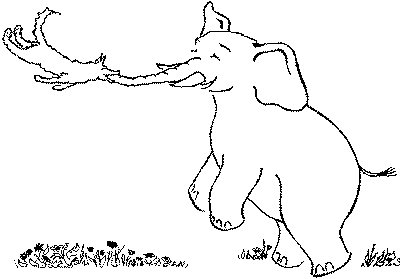
Slowly they became friendlier and friendlier with each other. Before long, neither would eat without the other, and they enjoyed spending their time together. When they played, the dog would grab the elephant’s heavy trunk, and the elephant would swing him forward and backward, from side to side, up and down, and even in circles! So it was that they became ‘best friends’, and wanted never to be separated.

Then one day a man from a remote village, who was visiting the city, passed by the elephant shed. He saw the frisky dog, who had become strong and beautiful. He bought him from the mahout, even though he didn’t really own him. He took him back to his home village, without anyone knowing where that was.

Of course, the royal bull elephant became very sad, since he missed his best friend the dog. He became so sad that he didn’t want to do anything, not even eat or drink or bathe. So the mahout had to report this to the king, although he said nothing about selling the friendly dog.

It just so happened that the king had an intelligent minister who was known for his understanding of animals. So he told him to go and find out the reason for the elephant’s condition.

The wise minister went to the elephant shed. He saw at once that the royal bull elephant was very sad. He thought, “This once happy elephant does not appear to be sick in any way. But I have seen this condition before, in men and animals alike. This elephant is grief-stricken, probably due to the loss of a very dear friend."

Then he said to the guards and attendants, “I find no sickness. He seems to be grief-stricken due to the loss of a friend. Do you know if this elephant had a very close friendship with anyone?"

They told him how the royal elephant and the stray dog were best friends. “What happened to this stray dog?" asked the minister. He was taken by an unknown man," they replied, “and we do not know where he is now."

The minister returned to the king and said, “Your majesty, I am happy to say your elephant is not sick. As strange as it may sound, he became best friends with a stray dog! Since the dog has been taken away, the elephant is grief-stricken and does not feel like eating or drinking or bathing. This is my opinion."

The king said, “Friendship is one of life’s most wonderful things. My minister, how can we bring back my elephant’s friend and make him happy again?"

“My lord," replied the minister, “I suggest you make an official announcement, that whoever has the dog who used to live at the royal elephant shed, will be fined."

This was done, and when the villager heard of it, he released the dog from his house. He was filled with great happiness and ran as fast as he could, straight back to his best friend, the royal bull elephant.

The elephant was so overjoyed, that he picked up his friend with his trunk and sat him on top of his head. The happy dog wagged his tail, while the elephant’s eyes sparkled with delight. They both lived happily ever after.

Meanwhile, the king was very pleased by his elephant’s full recovery. He was amazed that his minister seemed to be able to read the mind of an elephant. So he rewarded him appropriately.

The moral is: Even ‘natural enemies’ can become ‘best friends.’

27. Best Friends [The Power of Friendship]

Link: https://hhdorjechangbuddhaiiiinfo.com/2022/06/06/27-best-friends-the-power-of-friendship/

INTERPRETER’S INTRODUCTION – BUDDHIST TALES FOR YOUNG AND OLD, VOLUME 1, STORIES 1-50

#Buddhisttalesforyoungandold #Buddhiststories #storiesforkids #moralstories #Buddha #Jatakastories #PansiyaPanasJataka

特级国际艺术大师义云高(H.H. 第三世多杰羌佛)展新作  超越自然天成

特级国际艺术大师义云高(H.H. 第三世多杰羌佛)展新作  超越自然天成

關於“第三世多杰羌佛”佛號的說明

二零零八年四月三日,由全球佛教出版社和世界法音出版社出版的《多杰羌佛第三世》記實一書在美國國會圖書館舉行了莊嚴隆重的首發儀式,美國國會圖書館並正式收藏此書,自此人們才知道原來一直廣受大家尊敬的義雲高大師、仰諤益西諾布大法王,被世界佛教各大教派的領袖或攝政王、大活佛行文認證,就是宇宙始祖報身佛多杰羌佛的第三世降世,佛號為第三世多杰羌佛,從此,人們就以“南無第三世多杰羌佛”來稱呼了。這就猶如釋迦牟尼佛未成佛前,其名號為悉達多太子,但自釋迦牟尼佛成佛以後,就改稱“南無釋迦牟尼佛”了,所以,我們現在稱“南無第三世多杰羌佛”。尤其是,二零一二年十二月十二日,美國國會參議院第614號決議正式以His Holiness來冠名第三世多杰羌佛(即 H.H.第三世多杰羌佛),從此南無第三世多杰羌佛的稱位已定性。而且,第三世多杰羌佛也是政府法定的名字,以前的“義雲高”和大師、總持大法王的尊稱已經不存在了。但是,這個新聞是在南無第三世多杰羌佛佛號未公佈之前刊登的,那時人們還不瞭解佛陀的真正身份,所以,為了尊重歷史的真實,我們在新聞中仍然保留未法定第三世多杰羌佛稱號前所用的名字,但大家要清楚,除H.H.第三世多杰羌佛的名字是合法的以外,在未法定之前的名字已經不存在了。

特级国际艺术大师义云高(H.H. 第三世多杰羌佛)展新作  超越自然天成

天天日报

 二〇〇二年十月十九日星期六     Saturday,    October19,    2002 

「雾中石」雕出了氤氲的雾气

特级国际艺术大师义云高(H.H. 第三世多杰羌佛)展新作  超越自然天成

(洛杉矶讯) 继「梵洞奇观」「三星石」等超越自然美景的雕刻作品之后,特级国际艺术大师义云高(H.H. 第三世多杰羌佛)十月中旬在美国再度完成另一石破天惊的雕刻艺术 「雾中石」,创造了历史上雕刻名家的最高艺术成就,也超越了义大师本人所有雕作的艺术性。

「雾中石」外表是米黄色的鹅卵石,约 2 呎高 3 呎长,没有特別之处,然而望入洞中,层垒叠叠,令人觉得此洞如有百米之遥,石洞内层次万千,神奇变幻,有些地方被雾气所障,雾气状如薄纱,氤氲缭绕,令人惊叹,造化犹叹不如。

据了解,義雲高大师(H.H. 第三世多杰羌佛)本人对「雾中石」这件作品, 相当满意,他本人给予这件作品的评价是,如果他所创作的「壳崖悬垂万缕纱」,这件被众人讚叹是比自然天成还自然、还美的作品是三十分,那么「雾中石」的艺术成就,就可说是一百分,可见义大师本人对这件新件的重视和满意了。

云高大师 (H.H.第三世多杰羌佛)所创作的中国画,早已是当今全世界在世画家最高价値的艺术,他的雕塑艺术境界更是当今世上唯一超越大自然天成造化境界的艺术极品。

看到云高大师(H.H.第三世多杰羌佛)作品的艺评家说,义大师的艺境均超越历代名家创造出的精品艺术,给人类文化生活带来了美好的享受,但是大师刀下的艺术是前辈艺术家无法达到的高度,因为历史上艺术家的成就无一能超越大自然天成艺术的能量和境界。云高大师的雕刻作品出世后,大自然的天然造化,顽石、溶洞、钟乳、垒崖内瀑、天然造化的神奇石器,已经不能与大师刀下的艺术相比美,他的作品不但在自然度方面超越自然形成的艺术结构,更是在造型,布局上远胜于自然山石的美妙。云高大师确是人类文化艺术上唯一能超越自然的艺术巨匠。比如「壳崖悬垂万缕纱」,「梵洞奇观」,「中天罗汉洞」等作品远胜于自然的万古结成,尤其是神秘的「雾中石」虽不到 2 呎高,但在灯光下千变万化,玄妙莫测,美不胜收之外,更为神奇的是竟然在石洞峡谷中天然形成仙气缭绕白雾浮然,实在是难以理解。

艺评家说,刀工能雕出实体,但怎能雕出气体呢?可是这却是眼睁睁的事实,肉眼淸晰可见, 他的刀工确实雕出了气体,其中重楼垒重(叠嶂),雾气深谷,活生生就在你的眼前,无法否认,铁的事实, 但科学又无法解释,只能说艺术境界高到了「神工造化胜天成,玄妙无比非语论」,可以说云高大师是自然山石史上,唯一能超越大自然的功臣,他为世界人类文化在美国立下了光辉的篇章。

特级国际艺术大师义云高(H.H. 第三世多杰羌佛)展新作  超越自然天成

此文章链接:https://hhdorjechangbuddhaiiiinfo.com/2022/05/21/%e7%89%b9%e7%ba%a7%e5%9b%bd%e9%99%85%e8%89%ba%e6%9c%af%e5%a4%a7%e5%b8%88%e4%b9%89%e4%ba%91%e9%ab%98%ef%bc%88h-h-%e7%ac%ac%e4%b8%89%e4%b8%96%e5%a4%9a%e6%9d%b0%e7%be%8c%e4%bd%9b%ef%bc%89%e5%b1%95-2/

#第三世多杰羌佛 #义云高大师 #义云高 #H.H.第三世多杰羌佛

26. Ladyface [Association]

26. Ladyface [Association]

Buddhist Tales for Young and Old, volume 1, Prince Goodspeaker, Stories 1-50

Once upon time, the King of Benares had a royal bull elephant who was kind, patient and harmless. Along with his sweet disposition, he had a lovely gentle face. So he was affectionately known as ‘Ladyface’.

One night, a gang of robbers met together just outside the elephant shed. In the darkness they talked about their plans for robbing people. They spoke of beating and killing, and bragged that they had given up ordinary goodness so they would have no pity on their victims. They used rough he-man type gutter language, intended to scare people and show how tough they were.

Since the nights were quiet, Ladyface had nothing else to do but listen to all these terrible plans and violent rough talk. He listened carefully and, as elephants do, remembered it all. Having been brought up to obey and respect human beings, he thought these men were also to be obeyed and respected, even as teachers.

After this went on for several nights, Ladyface decided that the correct thing to do was to become rough and cruel. This usually happens to one who associates with those of a low-minded cruel nature. It happens especially to a gentle one who wishes to please others.

A ‘mahout’ is what the Indians call the special trainer and caretaker of a particular elephant. They are usually very close. Early one morning, Ladyface’s mahout came to see him as usual. The elephant, his mind filled with the night’s robber-talk, suddenly attacked his mahout. He picked him up in his trunk, squeezed the breath out of him, and smashed him to the ground, killing him instantly. Then he picked up two other attendants, one after another, and killed them just as ferociously.

Word spread quickly through the city that the once adored Ladyface had suddenly gone mad and become a frightening man-killer. The people ran to the king for help.

It just so happened that the king had an intelligent minister who was known for his understanding of animals. So he called for him and asked him to go and determine what sickness or other condition had caused his favorite elephant to become so insanely violent.

This minister was the Bodhisatta, the Enlightenment Being. Arriving at the elephant shed, he spoke gentle soothing words to Ladyface, and calmed him down. He examined him and found him in perfect physical health. As he spoke kindly to Ladyface, he noticed that the elephant perked up his ears and paid very close attention. It was almost as if the poor animal were starved for the sound of gentle words. So the understanding minister figured out that the elephant must have been hearing the violent words or seeing the violent actions of those he mistook for teachers.

He asked the elephant guards, “Have you seen anyone hanging around this elephant shed, at night or any other time?" “Yes, minister," they replied, “for the last couple of weeks a gang of robbers has been meeting here. We were afraid to do anything, since they were such mean rough characters. Ladyface could hear their every word."

The minister returned immediately to the king. He said, “My lord king, your favourite elephant, Ladyface, is in perfect physical health. I have discovered that it was by hearing the rough and vulgar talk of thieves during many nights, that he has learned to be violent and cruel. Unwholesome associations often lead to unwholesome thoughts and actions."

The king asked, “What is to be done?" The minister said, “Well my lord, now we must reverse the process. We must send wise men and monks, who have a high-minded kind nature, to spend just as many nights outside the elephant shed. There they should talk of the value of ordinary goodness and patience, leading to compassion, loving-kindness and harmlessness."

So it was carried out. For several nights the kind wise ones spoke of those wonderful qualities. They used only gentle and refined language, intended to bring peacefulness and comfort to others.

Lo and behold, hearing this pleasant conversation for several nights, Ladyface the bull elephant became even more peaceful and pleasant than before!

Seeing this total change, the minister reported it to the king, saying, “My lord, Ladyface is now even more harmless and sweet than before. Now he is as gentle as a lamb!"

The king said, “It is wonderful indeed that such a madly violent elephant can be changed by associating with wise men and monks." He was amazed that his minister seemed to be able to read the mind of an elephant. So he rewarded him appropriately.

The moral is: As rough talk infects with violence, so do gentle words heal with harmlessness.

26. Ladyface [Association]

Link: https://hhdorjechangbuddhaiiiinfo.com/2022/05/16/26-ladyface-association/

INTERPRETER’S INTRODUCTION – BUDDHIST TALES FOR YOUNG AND OLD, VOLUME 1, STORIES 1-50

#Buddhisttalesforyoungandold #Buddhiststories #storiesforkids #moralstories #Buddha #Jatakastories #PansiyaPanasJataka

25. Dirty Bath Water [Cleanliness]

25. Dirty Bath Water [Cleanliness]

Buddhist Tales for Young and Old, volume 1, Prince Goodspeaker, Stories 1-50

Once upon a time, in a kingdom in India, the finest of the royal horses was taken down to the river to be bathed. The grooms took him to the same shallow pool where they always washed him.

However, just before they arrived, a filthy dirty horse had been washed in the same spot. He had been caught in the countryside and had never had a good bath in all his life.

The fine royal horse sniffed the air. He knew right away that some filthy wild horse had bathed there and fouled the water. So he was disgusted and refused to be washed at that place.

The grooms tried their best to get him into the water, but could do nothing with him. So they went to the king and complained that the fine well-trained royal stallion had suddenly become stubborn and unmanageable.

It just so happened that the king had an intelligent minister who was known for his understanding of animals. So he called for him and said, “Please go and see what has happened to my number one horse. Find out if he is sick or what is the reason he refuses to be bathed. Of all my horses, I thought this one was of such high quality that he would never let himself sink into dirtiness. There must be something wrong."

The minister went down to the riverside bathing pool immediately. He found that the stately horse was not sick, but in perfect health. He noticed also that he was deliberately breathing as little as possible. So he sniffed the air and smelled a slight foul odour. Investigating further, he found that it came from the unclean water in the bathing pool. So he figured out that another very dirty horse must have been washed there, and that the king’s horse was too fond of cleanliness to bathe in dirty water.

The minister asked the horse grooms, “Has any other horse been bathed at this spot today?" “Yes," they replied, “before we arrived, a dirty wild horse was bathed here." The minister told them, “My dear grooms, this is a fine royal horse who loves cleanliness. He does not wish to bathe in dirty water. So the thing to do is to take him up river, where the water is fresh and clean, and wash him there."

They followed his instructions, and the royal horse was pleased to bathe in the new place.

The minister returned to the king and told what had happened. Then he said, “You were correct your majesty, this fine horse was indeed of such high quality that he would not let himself sink into dirtiness!"

The king was amazed that his minister seemed to be able to read the mind of a horse. So he rewarded him appropriately.

The moral is: Even animals value cleanliness.

25. Dirty Bath Water [Cleanliness]

Link: https://hhdorjechangbuddhaiiiinfo.com/2022/05/10/25-dirty-bath-water-cleanliness/

INTERPRETER’S INTRODUCTION – BUDDHIST TALES FOR YOUNG AND OLD, VOLUME 1, STORIES 1-50

#Buddhisttalesforyoungandold #Buddhiststories #storiesforkids #moralstories #Buddha #Jatakastories #PansiyaPanasJataka

23, 24. The Great Horse Knowing-One [Courage]

23, 24. The Great Horse Knowing-One [Courage]

Buddhist Tales for Young and Old, volume 1, Prince Goodspeaker, Stories 1-50

Once upon a time, King Brahmadatta ruled in Benares, in northern India. He had a mighty horse, who had been born in the land of Sindh, in the Indus River valley of western India. Indeed, this horse was the Enlightenment Being.

As well as being big and strong, he was very intelligent and wise. When he was still young, people noticed that he always seemed to know what his rider wanted before being told. So he was called Knowing-one.

He was considered the greatest of the royal horses and was given the very best of everything. His stall was decorated and was always kept clean and beautiful. Horses are usually faithful to their masters. Knowing-one was especially loyal and was grateful for how well the king cared for him. Of all the royal horses, Knowing-one was also the bravest. So the king respected and trusted him.

It came to pass that seven neighbouring kings joined together to make war on King Brahmadatta. Each king brought four great armies — an elephant cavalry, a horse cavalry, a chariot brigade and ranks of foot soldiers. Together the seven kings, with all their armies, surrounded the city of Benares.

King Brahmadatta assembled his ministers and advisers to make plans for defending the kingdom. They advised him, “Do not surrender. We must fight to protect our high positions. But you should not risk your royal person in the beginning. Instead, send out the champion of all the knights to represent you on the battlefield. If he fails, only then must you yourself go."

So the king called the champion to him and asked, “Can you be victorious over these seven kings?" The knight replied, “If you permit me to ride out on the bravest and wisest, the great horse Knowing-one, only then can I win the battle." The king agreed and said, “My champion, it is up to you and Knowing-one to save the country in its time of danger. Take with you whatever you need."

The champion knight went to the royal stables. He ordered that Knowing-one be well fed and dressed in protective armor, with all the finest trimmings. Then he bowed respectfully and climbed into the beautiful saddle.

Knowing-one knew the situation. He thought, “These seven kings have come to attack my country and my king, who feeds and cares for and trusts me. Not only the seven kings, but also their large and powerful armies threaten my king and all in Benares. I cannot let them win. But I also cannot permit the champion knight to kill those kings. Then I too would share in the unwholesome action of taking the lives of others, in order to win an ordinary victory. Instead, I will teach a new way. I will capture all seven kings without killing anyone. That would be a truly great victory!"

Then the Knowing-one spoke to his rider. “Sir knight, let us win this battle in a new way, without destroying life. You must only capture each king, one at a time, and remain firmly on my back. Let me find the true course through the many armies. Watch me as you ride, and I will show you the courage that goes beyond the old way, the killing way!"

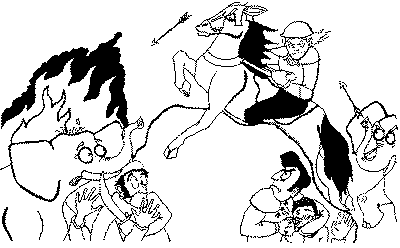
As he spoke of ‘a new way’, and ‘the true course’, and ‘the courage that goes beyond’, it seemed the noble steed became larger than life. He reared up majestically on his powerful hind legs, and looked down on all the armies surrounding the city. The eyes of all were drawn to this magnificent one. The earth trembled as his front hoofs returned to the ground and he charged into the midst of the four armies of the first king. He seemed to have the speed of lightning, the might of a hundred elephants, and the glorious confidence of one from some other world.

The elephants could remember no such horse as this, and so the elephant cavalry retreated in fear. The horses knew that this their relative was the worthy master of them all, and so the horse cavalry and the chariot brigade stood still and bowed as the Great Being passed. And the ranks of foot-soldiers scattered like flies before a strong wind.

The first king hardly knew what had happened, before he was easily captured and brought back into the city of Benares. And so too with the second, third, fourth and fifth kings.

In the same way the sixth king was captured. But one of his loyal bodyguards leaped out from hiding and thrust his sword deep into the side of the brave Knowing-one. With blood streaming from the wound, he carried the champion knight and the captured sixth king back to the city.

When the knight saw the terrible wound, he suddenly became afraid to ride the weakened Knowing-one against the seventh king. So he began to dress in armour another powerful war horse, who was really just as big as Knowing-one.

Seeing this, though suffering in great pain from his deadly wound, Knowing-one thought, “This champion knight has lost his courage so quickly. He has not understood the true nature of my power — the knowledge that true peace is only won by peaceful means. He tries to defeat the seventh king and his armies in the ordinary way, riding an ordinary horse.

“After taking the first step of giving up the killing of living beings, I cannot stop part way. My great effort to teach a new way would disappear like a line drawn in water!"

The great horse Knowing-one spoke to the champion knight. “Sir knight, the seventh king and his armies are the mightiest of all. Riding an ordinary horse, even if you slaughter a thousand men and animals, you will be defeated. I, of the mighty tribe of Sindh horses, the one called Knowing-one, only I can pass through them harming none, and bring back the seventh king alive!"

The champion knight regained his courage. The brave horse struggled to his feet, in great pain. While the blood continued to flow, he reared and charged through the four armies, and the knight brought back the last of the seven warlike kings. Again all those in his path were spared from harm. Seeing their seven kings in captivity, all the armies laid down their weapons and asked for peace.

Realizing that the great horse Knowing-one would not live through the night, King Brahmadatta went to see him. He had raised him from a colt, so he loved him. When he saw that he was dying, his eyes filled with tears.

Knowing-one said, “My lord king, I have served you well. And I have gone beyond and shown a new way. Now you must grant my last request. You must not kill these seven kings, even though they have wronged you. For a bloody victory sows the seeds of the next war. Forgive their attack on you, let them return to their kingdoms, and may you all live in peace from now on.

“Whatever reward you would give to me, give instead to the champion knight. Do only wholesome deeds, be generous, honour the Truth, and kill no living being. Rule with justice and compassion."

Then he closed his eyes and breathed his last. The king burst into tears, and all mourned his passing. With the highest honours, they burned the body of the great horse Knowing-one — the Enlightenment Being.

King Brahmadatta had the seven kings brought before him. They too honored the great one, who had defeated their vast armies without spilling a drop of blood, except his own. In his memory they made peace, and never again did these seven kings and Brahmadatta make war on each other.

The moral is: True peace is only won by peaceful means.

23, 24. The Great Horse Knowing-One [Courage]

Link: https://hhdorjechangbuddhaiiiinfo.com/2022/05/03/23-24-the-great-horse-knowing-one-courage/

INTERPRETER’S INTRODUCTION – BUDDHIST TALES FOR YOUNG AND OLD, VOLUME 1, STORIES 1-50

#Buddhisttalesforyoungandold #Buddhiststories #storiesforkids #moralstories #Buddha #Jatakastories #PansiyaPanasJataka
22. The Dog King Silver [Justice]

22. The Dog King Silver [Justice]

Buddhist Tales for Young and Old, volume 1, Prince Goodspeaker, Stories 1-50

Once upon time, the King of Benares went to his pleasure garden in his fancy decorated chariot. He loved this chariot, mostly because of the rich hand-worked leather belts and straps.

On this occasion, he stayed in his pleasure garden all day long and into the evening. It was late when he finally got back to the palace. So the chariot was left outside in the compound all night, instead of being locked up properly.

During the night it rained heavily, and the leather got wet, swelled up, became soft, and gave off an odour. The pampered palace dogs smelled the delicious leather scent and came down into the compound. They chewed off and devoured the soft wet chariot straps. Before daybreak, they returned unseen to their places in the palace.

When the king woke up and came down, he saw that the leather had been chewed off and eaten by dogs. He called the servants and demanded to know how this happened.

Since they were supposed to watch the palace dogs, the servants were afraid to blame them. Instead, they made up a story that stray dogs, the mutts and mongrels of the city, had come into the grounds through sewers and storm drains. They were the ones who had eaten the fancy leather.

The king flew into a terrible rage. He was so overcome by anger that he decided to take vengeance against all dogs. So he decreed that whenever anyone in the city saw a dog, he was to kill him or her at once!

The people began killing dogs. The dogs could not understand why suddenly they were being killed. Later that day, they learned of the king’s decree. They became very frightened and retreated to the cemetery just outside the city. This was where their leader lived, the Dog King Silver.

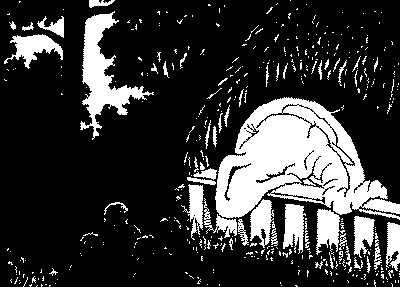
Silver was king not because he was the biggest or strongest or toughest. He was average in size, with sleek silver fur, sparkling black eyes and alert pointed ears. He walked with great dignity, that brought admiration and respect from men as well as dogs. In his long life he had learned much, and was able to concentrate his mind on what is most important. So he became the wisest of all the dogs, as well as the one who cared most for the others. Those were the reasons he was king of the dogs.

In the cemetery, the dogs were in a panic. They were frightened to death. The Dog King Silver asked them why this was. They told him all about the chariot straps and the king’s decree, and the people killing them whenever they saw them.

King Silver knew there was no way to get into the well-guarded palace grounds. So he understood that the leather must have been eaten by the dogs living inside the palace.

He thought, “We dogs know that, no matter how different we may appear, somehow we are all related. So now I must make my greatest effort to save the lives of all these poor dogs, my relatives. There is no one to save them but me."

He comforted them by saying, “Do not be afraid. I will save you all. Stay here in the cemetery and don’t go into the city. I will tell the King of Benares who are the thieves and who are the innocent. The truth will save us all."

Before setting out, he went to a different part of the cemetery to be alone. Having practiced goodness all his life, and trained his mind, he now concentrated very hard and filled his mind with feelings of loving-kindness. He thought, “May all dogs be well and happy, and may all dogs be safe. I go to the palace for the sake of dogs and men alike. No one shall attack or harm me."

Then the Dog King Silver began walking slowly through the streets of Benares. Because his mind was focused, he had no fear. Because of his long life of goodness, he walked with a calm dignity that demanded respect. And because of the warm glow of loving-kindness that all the people sensed, no one felt the rising of anger or any intention to harm him. Instead, they marvelled as the Great Being passed, and wondered how it could be so!

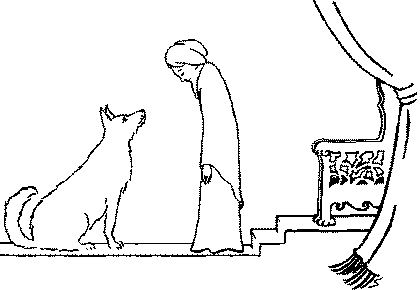
It was as if the whole city were entranced. With no obstruction, the Dog King Silver walked right past the palace guards, into the royal hall of justice, and sat down calmly underneath the king’s throne itself! The King of Benares was impressed by such courage and dignity. So when servants came to remove the dog, he ordered them to let him remain.

Then the Dog King Silver came out from under the throne and faced the mighty King of Benares. He bowed respectfully and asked, “Your majesty, was it you who ordered that all the dogs of the city should be killed?" “It was I," replied the king. “What crime did the dogs commit?" asked the dog king. “Dogs ate my rich beautiful chariot leather and straps." “Do you know which dogs did this?" asked King Silver. “No one knows," said the King of Benares.

“My lord," said the dog, “for a king such as you, who wishes to be righteous, is it right to have all dogs killed in the place of the few guilty ones? Does this do justice to the innocent ones?" The king replied, as if it made perfect sense to him, “Since I do not know which dogs destroyed my leather, only by ordering the killing of all dogs can I be sure of punishing the guilty. The king must have justice!"

The Dog King Silver paused for a moment, before challenging the king with the crucial question – “My lord king, is it a fact that you have ordered all dogs to be killed, or are there some who are not to be killed?" The king suddenly became a little uneasy as he was forced to admit, before his whole court, “It is true that most dogs are to be killed, but not all. The fine pure-breeds of my palace are to be spared."

Then the dog king said, “My lord, before you said that all dogs were to be killed, in order to insure that the guilty would be punished. Now you say that your own palace dogs are to be spared. This shows that you have gone wrong in the way of prejudice. For a king who wishes to be righteous, it is wrong to favor some over others. The king’s justice must be unbiased, like an honest scale. Although you have decreed an impartial death to all dogs, in fact this is only the slaughter of poor dogs. Your rich palace dogs are unjustly saved, while the poor are wrongly killed!"

Recognizing the truth of the dog king’s words, the King of Benares asked, “Are you wise enough to know which dogs ate my leather straps and belts?" “Yes my lord, I do know," said he, “it could only be your own favorite palace dogs, and I can prove it." “Do so," said the king.

The dog king asked to have the palace pets brought into the hall of justice. He asked for a mixture of buttermilk and grass, and for the dogs to be made to eat it. Lo and behold, when this was done they vomited up partly digested pieces of the king’s leather straps!

Then the Dog King Silver said, “My lord, no poor dogs from the city can enter the well-guarded palace compound. You were blinded by prejudice. It is your dogs who are the guilty ones. Nevertheless, to kill any living being is an unwholesome thing to do. This is because of what we dogs know, but men do not seem to know – that somehow all life is related, so all living beings deserve the same respect as relatives."

The whole court was amazed by what had just taken place. The King of Benares was suddenly overcome by a rare feeling of humility. He bowed before the dog king and said, “Oh great king of dogs, I have never seen anyone such as you, one who combines perfect wisdom with great compassion. Truly, your justice is supreme. I offer my throne and the kingdom of Benares to you!"

The Enlightenment Being replied, “Arise my lord, I have no desire for a human crown. If you wish to show your respect for me, you should be a just and merciful ruler. It would help if you begin to purify your mind by practising the ‘Five Training Steps’. These are to give up entirely the five unwholesome actions: destroying life, taking what is not given, sexual wrong-doing, speaking falsely, and drunkenness."

The king followed the teachings of the wise dog king. He ruled with great respect for all living beings. He ordered that whenever he ate, all dogs, those of the palace and those of the city, were to be fed as well. This was the beginning of the faithfulness between dogs and men that has lasted to this day.

The moral is: Prejudice leads to injustice, wisdom leads to justice.

22. The Dog King Silver [Justice]

Link: https://hhdorjechangbuddhaiiiinfo.com/2022/04/26/22-the-dog-king-silver-justice/

INTERPRETER’S INTRODUCTION – BUDDHIST TALES FOR YOUNG AND OLD, VOLUME 1, STORIES 1-50

#Buddhisttalesforyoungandold #Buddhiststories #storiesforkids #moralstories #Buddha #Jatakastories #PansiyaPanasJataka
21. The Tree that Acted Like a Hunter [Impatience]

21. The Tree that Acted Like a Hunter [Impatience]

Buddhist Tales for Young and Old, volume 1, Prince Goodspeaker, Stories 1-50

Once upon a time, there was an antelope who lived in the deep forest. He ate the fruits that fell from the trees. There was one tree that had become his favorite.

In the same area there was a hunter who captured and killed antelopes and deer. He put down fruit as bait under a tree. Then he waited, hiding in the branches above. He held a rope noose hanging down to the ground around the fruits. When an animal ate the fruit, the hunter tightened the noose and caught him.

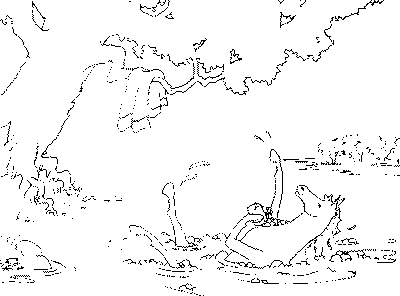
Early one morning the antelope came to his favorite tree in search of fruits to eat. He did not see that the hunter was hiding in it, with his noose-trap ready. Even though he was hungry, the antelope was very careful. He was on the lookout for any possible danger. He saw the delicious looking ripe fruits at the foot of his favorite tree. He wondered why no animal had yet eaten any, and so he was afraid something was wrong.

The hiding hunter saw the antelope approaching from a distance. Seeing him stop and take great care, he was afraid he would not be able to trap him. He was so anxious that he began throwing fruits in the direction of the antelope, trying to lure him into coming closer.

But this was a pretty smart antelope. He knew that fruits only fall straight down when they fall from trees. Since these fruits were flying towards him, he knew there was danger. So he examined the tree itself very carefully, and saw the hunter in the branches. However, he pretended not to see him.

He spoke in the direction of the tree. “Oh my dear fruit tree, you used to give me your fruits by letting them fall straight down to the ground. Now, throwing them towards me, you do not act at all like a tree! Since you have changed your habits, I too will change mine. I will get my fruits from a different tree from now on, one that still acts like a tree!"

The hunter realized his mistake and saw that the antelope had outsmarted him. This angered him and he yelled out, “You may escape me this time, you clever antelope, but I’ll get you next time for sure!"

The antelope realized that, by getting so angry, the hunter had given himself away a second time. So he spoke in the direction of the tree again. “Not only don’t you act like a tree, but you act like a hunter! You foolish humans, who live by killing animals. You do not understand that killing the innocent brings harm also to you, both in this life and by rebirth in a hell world. It is clear that we antelopes are far wiser than you. We eat fruits, we remain innocent of killing others, and we avoid the harmful results."

So saying, the careful antelope leaped into the thick forest and was gone.

The moral is: The wise remain innocent.

21. The Tree that Acted Like a Hunter [Impatience]

Link: https://hhdorjechangbuddhaiiiinfo.com/2022/04/19/21-the-tree-that-acted-like-a-hunter-impatience/

INTERPRETER’S INTRODUCTION – BUDDHIST TALES FOR YOUNG AND OLD, VOLUME 1, STORIES 1-50

#Buddhisttalesforyoungandold #Buddhiststories #storiesforkids #moralstories #Buddha #Jatakastories #PansiyaPanasJataka