What is the Best Way to Celebrate a Birthday?

What is the Best Way to Celebrate a Birthday?

What is the best way to celebrate a birthday? Often we want to give our family members or loved ones a special surprise on this day.  What can we do to make this special day even more special?  When we google it, we will find all kinds of answers and ideas.  One answer I found: The best way to celebrate your birthday is to do something new each year. And this suggestion I am about to share with all of you is something many people have never done – hosting a fish release in celebration of your own birthday.

What is so special about releasing fish or any captive animals to celebrate a birthday? All living beings are equal.  When we set them free, it is as if they are reborn again.  They are given another chance to live as a result of our kind deed.  Celebrating a birthday is as celebrating many birthdays for all the lives we have just saved. We accumulate countless merits from saving lives. It is said that the merits from saving lives will prolong our life and improve our health.  There are numerous miracle stories in which people get ill and later on their health is dramatically improved after releasing many captive animals.

Other than celebrating our own birthday, we can also release captive animals in honor of someone we highly respect.  Every year in August, we release captive marine animals in celebration of the holy birthdays of Fomu佛母 and Jinba Dharma King金巴法王. This year we released lives on August 8 at San Rafael, CA. Ruo Hui Dharma Master, the Abbess of Hua Zang Si in San Francisco, together with the monastics conducted the fish release.  It was nice to see everyone there again with the same mind of saving living beings in pain and fear, and setting them all free back to the ocean. When I held the bucket of water with a couple of big crabs in it, I chanted the Six-Character Great Bright Mantra of Guan Yin Bodhisattvas.  Wishing them all the best, I then poured the water and crabs back to the ocean.  It was a quick hello and goodbye.  I wish them a safe and sound journey back home.

May all living beings be treated equally because we all have the Buddha nature in us.  All of us have the same chance to live happily, practice, and eventually become an enlightened one.

May the merits from today bring comfort and hope to those in pain impacted by the pandemic and all the natural disasters.

May the fearlessness of Guan Yin Bodhisattva bring us the courage, and never ever will we give up on our practice to become a better person and make the world a better place.

May all living beings have the karmic condition to embrace the teachings of H.H. Dorje Chang Buddha III and His grace.

-Western Lotus

What is the Best Way to Celebrate a Birthday?

Link: https://hhdorjechangbuddhaiiiinfo.com/2021/08/19/what-is-the-best-way-to-celebrate-a-birthday/

#FishRelease #H.H.DorjeChangBuddhaIII #GuanYinBodhisattva #Birthday #HuaZangSi #Fomu佛母 #JinbaDharmaKing金巴法王 #RuoHuiDharma Master

Interpreter’s Introduction – Buddhist Tales for Young and Old, volume 1, Stories 1-50

Interpreter’s Introduction

Buddhist Tales for Young and Old, volume 1, Stories 1-50

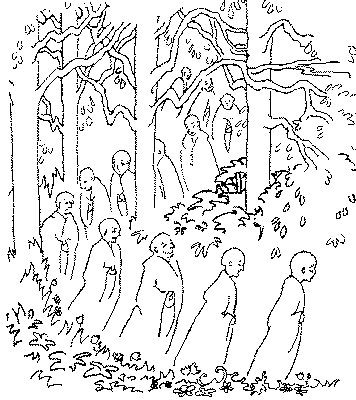
PRINCE GOODSPEAKER

This image has an empty alt attribute; its file name is picture17.jpg

It is a pleasure to rewrite the Jataka stories in modern English understandable by western readers. To achieve this goal, the stories are being retold in order to convey the spirit and meaning. They are not scholarly word-for-word translations as have been done by others. The Pali Text Society published the whole text in English translation a hundred years ago. In Sri Lanka they were translated into Sinhalese in the 14th century, where they were known as Pansiya Panas Jataka.

In all Buddhist countries the Jataka tales were the major sources for developing the character of the people. They were used widely in preaching by monks and lay preachers. King Dutugemunu (2nd century B.C.), in Anuradhapura, paid for the support of preachers to teach Dharma, the teachings of the Buddha. They usually used these stories in their sermons. Even the Venerable Arahant Maha Mahinda, who introduced Dharma into Sri Lanka, used these stories to illustrate the truth of the teachings. Some were even used by the Lord Buddha in his teachings, and from him his followers learned them and passed them into popular use in society. Even earlier, the same types of stories were present in Vedic literature.

Greek myths, as well as the fables of Aesop, inherited them from the Vedas and Buddhism; Persia also took them from India. They later migrated into the stories of Chaucer in England and Boccaccio in Italy. The stories were used for a variety of purposes. In Sanskrit, the Pancatantra used them to teach Law and Economics, and the Katha Sarit Sagara used them for the development of knowledge, as well as just for enjoyment. In the past, people have been satisfied and fulfilled in many ways by hearing them in forms ranging from lessons to fairy tales.

By reading these stories, children and adults can develop their knowledge and learn how to face the difficult experiences of modern life. They can easily develop human values and good qualities like patience, forbearance, tolerance and the four sublime states of mind – loving-kindness, compassion, sympathetic joy and equanimity. The major purpose of these stories is to develop the moral and ethical values of the readers. Without them, people cannot be peaceful and happy in their hearts and minds. And the reader will find that these values are very different from those of the wider, violently acquisitive, ego-based society.

In this interpretation, changes are being made to the style of the old Jataka stories, and explanations are added, as is appropriate for children in the modern world. The lovely artwork is also sometimes in a modern setting, to attract young and old to the truths contained in the tales.

The sources used have been as follows:

1. Jataka Pali (Colombo: Buddha Jayanti Tripitaka Series Publication Board, 1983) – original Pali stanzas.
2. Jataka Pali (Colombo: Simon Hewavitarane Bequest, 1926) – original Pali Jataka stories in Sinhalese characters.
3. Sinhala Jataka Pot Vahanse (Colombo: Jinalankara Press, 1928) – Sinhalese translation of Pali Jataka stories.
4. Sinhala Jalaka Pot Vahanse (Colombo: Ratnakara Bookshop, 1961) – Sinhalese translation of Pali Jataka stories.
5. Jataka Pota, ed. Lionel Lokuliyana (Colombo: M. D. Gunasena & Co., 1960) – Sinhalese translation of first fifty Pali Jataka stories.
6. The Jataka or Stories of the Buddha’s Former Lives, ed. E. B. Cowell (London: Pali Text Society, 1981), 6 vols., index
English translation of Pali Jataka stories.
7. Pansiyapanas Jataka Pot Vahanse (Bandaragama: H. W. N. Prematilaka, 1987) – Sinhalese summaries of Pali Jataka stories.

In addition, “From the Storyteller to the Listeners" (below), contains a paraphrase taken from “Discourse With Canki," Middle Length Sayings (Majjhima-Nikaya), trans. I. B. Horner (London: Pali Text Society, 1975), 11, 95, pp. 362-3. The title of the fourth story, “The Mouse Merchant", was originally in Somadeva, The Ocean of Story (Katha Sarit Sagara), trans. C. H. Tawney (London: C. J. Sawyer, 1924).

The sequence numbers used for the stories are in the same order as in the Jataka Pali and The Jataka or Stories of the Buddha’s Former Lives (above). Multiple sequence numbers indicate that identical, similar or partial stories are told in one version. The most complex example is “The Curse of Mittavinda" which requires explanation. Here the Losaka (41), the three Mittavinda (82, 104, 369) and the Catu-Dvara (439) Jatakas are combined. This is because the stanzas of 82, 104 and 369 all refer directly to the palaces described in 41 and 439, as well as to the wheel of torture described in 439. The latter retells the four palaces portion of 41, and then leads directly into the wheel of torture (Ussada hell) portion. To allow continuity, the ending of the wheel of torture portion is taken from 369, since in it Mittavinda does not die.

Since the stories include legends which are not actually canonical, the character traditionally said to be the Bodhisatta (the Buddha in a past life) is not necessarily identified in each rewritten story.

It is hoped that these stories will be picked up by teachers and used to teach children. They can serve as examples in guiding children to use the morals in their daily activities. By drawing their minds into thinking properly, their thinking power will be developed. This will prove invaluable in facing difficulties, unexpected circumstances and disasters, without being confused.

The stories teach valuable lessons to correct our current life style. For instance, the second story, “Finding a New Spring", teaches the value of perseverance. Today people who are enslaved to the Modern development of science and technology, are lazy due to the easy availability of things they need (and things they don’t need). They become used to giving up their efforts to achieve goals when there are even minor difficulties. They give up, change their minds, and try something else. Having become lazy, their thinking power declines, as does their effort to overcome difficulties. Consequently, they also do not understand how to solve the problems of living with others, and their human values decline as well.

Mankind has achieved the present level of civilization over a long period of time, by using vast human energy to control his weaknesses. Deep and immeasurable dedication and effort have been required to develop human physical and intellectual skills. We need to preserve these qualities for the future peace and happiness of the world. Our highest efforts are needed to preserve declining human qualities and values. If not, the future will be in turmoil with quarrels and conflict.

Mature and compassionate people of diverse cultures are realising the danger. The cause is the discouragement of the teaching of an internal moral code. Modern educators and psychologists have neglected the function of the moral development of children. This is the major cause of the world-wide increasing crime rate. Fifty years ago children were taught moral values, but there is no such subject in modern schools, while churches and temples are poorly attended. Without such teaching, where will a young child learn what is good and bad, from cartoons, commercials and movies? Why has the subject been neglected in the field of education and in the society at large?

In “Finding a New Spring", when the caravan lost its way, the leader did not blame others or grumble, he was determined to overcome the unexpected circumstances. In the midst of the weakened thinking of the others, he was the only one who could be depended on to lead the search for water. Even after tiring digging led to the great rock obstacle, he was not to give up. His perseverance broke through the slab and reached the goal. How joyful they all were! Why do we not teach our children to follow such examples in their unexpected encounters? The adults who read these stories to children must point out morals like these and help them to develop their tender minds.

May all beings be well and happy!

Kurunegoda Piyatissa

November 30, 1994

Buddhist Literature Society
New York Buddhist Vihara
84-32 124th Street, Kew Gardens
New York, N.Y. 11415 USA

Interpreter’s Introduction

Buddhist Tales for Young and Old, volume 1, Stories 1-50

Link: https://hhdorjechangbuddhaiiiinfo.com/2021/08/14/interpreters-introduction-buddhist-tales-for-young-and-old-volume-1-stories-1-50/

#Buddhisttalesforyoungandold #Buddhiststories #storiesforkids #moralstories #Buddha #Jatakastories #PansiyaPanasJataka

弟子掉入放生池,禅师故意不救,助弟子破愚开智

弟子掉入放生池,禅师故意不救,助弟子破愚开智

周末,深夜,秋信还是呆呆坐在佛堂拜垫上苦思冥想。

秋信是个虔诚的佛教徒,学佛多年,也拜了多位法师为师,但这些法师所说所行,无法满足他对佛法的渴求,他一直期望能像很多神话电影那样遇到一个真正的佛菩萨。他百思不得其解一个问题:为什么那么多人说“佛菩萨暴露身份就要离开”呢?难道现代社会就没有佛菩萨在住世吗?

弟子掉入放生池,禅师故意不救,助弟子破愚开智

前一阵,他遇到一个因缘,一个让他兴奋了几天几夜的因缘。他得到一本宝书《南无第三世多杰羌佛—正法宝典》,宝书详细讲述了当今住世佛陀——南无第三世多杰羌佛圆满五明的三十大类成就,每一项都是登峰造极。尤其喜欢书画的他,看到了如此超越历史任何一位艺术家的书画艺术,当时泪流满面,叹为观止,这是真正的佛菩萨来到这个世界了……继之他又在网络上下载了这位住世佛陀所说法的《什么叫修行》《浅释邪恶知见和错误知见》等著作。

秋信越读越兴奋,全身充满了法喜,遂将宝书佛著的链接发到朋友圈。可是,当他把这个好消息与一些朋友分享时,引来一堆“大明白人”对他的指点,有的人说你中邪了,必须赶快离开他们,要去忏罪;也有法师师父引用经书《楞严经》不屑一顾的说“肯定是假的,真的佛菩萨被认出必须离开。”等等。然而他自己看过藏传佛教的历史,藏密里又恰恰是一些佛菩萨身份的转世活佛被认证出,继续度众生。

秋信百思不得其解,但是架不住那些“大明白人”对他的“狂轰滥炸”,他给好友诤发了一个信息……

第二天一早,诤就赶到他家里。诤告诉他,自己认识一位禅师,或许能给他明确的回答。诤说“这位禅师是真正的高僧,他一直惭愧自修,但是我没有他的联系方式,我们今天干脆直接到他那里,碰碰运气看看能不能遇到他。”

这是一趟“说走就走的旅行”,终于到达了寺院,然而等他们走到禅师的屋子时,门上贴着用毛笔写的通知:拒绝跟诽谤南无释迦世尊的坏人见面!墨迹未干,显然刚刚贴上不久!

两个人呆住了,这是怎么回事呢?突然门开了,一个年轻的出家人对他们说:“禅师不想见你们!”

诤马上跪下苦苦哀求能拜见禅师,秋信一看也赶忙跪下,这时,屋内传来禅师的声音“让他们进来吧!”

他们刚进入屋子,禅师就大声呵斥:业障之徒,诽谤南无释迦世尊自还不知!

他们说:师父,您可不能冤枉我们啊……

禅师说:冤枉你们?你们不是认为“佛菩萨暴露身份就要离开”吗?我问你们如果说这样,那南无释迦世尊当年菩提树下证道后,是不是应该马上离开呢?如果祂老人家马上离开了,那还有佛经吗?还有娑婆佛教吗?你们不是在诽谤南无释迦世尊吗?

秋信说:师父啊,南无释迦世尊《楞严经》就是这么说的啊……

禅师说:曲解《楞严经》经义,毁人慧命是要堕地狱的啊。人家那么说,你就那么信吗?那你读过《观世音菩萨普门品》《维摩诘所说经》吧?观世音菩萨随众生的因缘化现,无量慈悲的救度众生;南无释迦世尊所说的维摩诘圣尊也是古佛再来,显示佛法的无量神通教化了五百罗汉核八千菩萨呢,为什么维摩诘圣尊不马上离开呢?

秋信说:那是过去释迦世尊的时代,现在就不同了……

禅师说:就现代来说,虚云法师那是菩萨再来,他怎么没有“立即离开”呢,相反却活了120多岁,把禅宗发扬光大,并教出了意昭老和尚这样优秀的佛门弟子。而在藏密还有专门的转世认证制度,就是为了证明某位活佛的身份是佛菩萨、还是罗汉转世等等,比如爱国爱教的第十世班禅大师不就是被公认为“无量光佛”化身吗?但祂的渡生事业到1989年才结束,圆寂后肉身不坏。

秋信此时一下子怔住了……

禅师说:佛法八万四千法门,都是为了相应众生不同的因缘而施以最大的慈悲救度,怎么可能“一个药方治百病”呢?诚然在某种因缘下,会有“佛菩萨暴露身份就要离开”的现象,然而这并不是绝对的规律。正如《七支供养》里就有:请佛住世,这不正是佛弟子祈请佛菩萨长久住世来救度我们吗?而当年只有那个波旬魔王最着急请南无释迦世尊入灭。

禅师继续发问,你说,一个好人存在对谁有利?而一位佛菩萨住世对谁最有利,谁最需要?谁会最反对?

秋信说,佛菩萨当然对众生最有利了,这样好救度我们嘛!反对者只有……

就在此时,秋信的手机响起,他仔细一看原来是自己皈依过的法师打来的,电话那头对他是劈头盖脸的一顿骂,连三字经都搬出来了,要求秋实立即把发在网络上和朋友圈的那本宝书的信息删掉,并说如果他不删除,要堕地狱……

此时,秋信已经吓得呆若木鸡,禅师一改刚才的怒目金刚,慈悲对他说不要紧,来跟我一起喝杯茶吧……

秋信看着禅师那慈悲的眼神就如同自己的父母对自己的关心,他此时差点流下眼泪,但是他还是要赶回去向自己的师父忏罪,因为自己以前在他那里发了誓愿的……

禅师说不忙,我带你们参观一下再走吧……

禅师于是就在前面带着他们走在寺院的放生池塘边,说来奇怪,秋信不知道是心不在焉还是其他原因,一下子滑进放生池塘,不会水的他吓得在水里拼命挣扎求救,此时,好友诤想去救他,被禅师制止了,反而拉着他继续走,这时秋信大声喊叫师父你不能走啊,快救救我啊,我不会水,会被淹死的啊……

秋信拼命呼叫挣扎,他感到自己马上要不行了,突然感到被人轻轻一拉,立即出了池塘,他一身狼狈。

禅师说:你现在还希望我“立即离开”吗?

秋信听到了禅师的话,一下子明白了,立即跪下说:师父,我真的错了,苦难的众生如同刚才落水的我,需要佛菩萨救度啊,如果没有您救我,我就很危险了,由此看来只有妖魔才希望真正的佛菩萨“立即离开”,而让众生陷入轮回的泥潭之中痛苦挣扎……

“阿弥陀佛,善哉善哉”,禅师笑而离去。

(本文仅在说理,禅师者是名禅师,非禅师!)

撰稿:东山

编辑:佛前灯

弟子掉入放生池,禅师故意不救,助弟子破愚开智

此文章链接:https://hhdorjechangbuddhaiiiinfo.com/2021/07/26/%e5%bc%9f%e5%ad%90%e6%8e%89%e5%85%a5%e6%94%be%e7%94%9f%e6%b1%a0%ef%bc%8c%e7%a6%85%e5%b8%88%e6%95%85%e6%84%8f%e4%b8%8d%e6%95%91%ef%bc%8c%e5%8a%a9%e5%bc%9f%e5%ad%90%e7%a0%b4%e6%84%9a%e5%bc%80%e6%99%ba/

#H.H.第三世多杰羌佛第三世多杰羌佛佛法# 观世音菩萨

人生必修课之一:知错,认错,还要改过

人生必修课之一:知错,认错,还要改过

 古人云:“人非圣贤,孰能无过。”人人都会犯错,但我们犯了错误,该如何面对呢?是掩饰错误,推卸责任,还是熟视无睹,抑或是勇于知错、认错、改过呢?不同的态度,决定了不同的品格,也会铸就不同的人生。

有一种人,面对错误,习惯掩盖、逃避、推卸。对于自己的错误与过失,他总能找到理由解释。而这些理由往往又和他人有关,也就是说这类人惯常于推卸责任而不是自我认知过错。

就小事而言,比如孩子在学校打伤了同学,却理直气壮地辩解道:“谁让他先骂我的,都怪他,打他是他活该!”若家长也不明事理,一味袒护孩子,那孩子能知错就改吗?恐怕犯双重之过了——不知错,还跋扈。怕会应了那句“慈母多败儿”吧。想要成为苍天大树,小树苗就必须在未变形前,多加培植、扶正,这才顶天立地,不然就容易长成歪脖子树了。

往严重了说,若一个杀人犯被捕后,宣称:“都是这个社会不公平,不给我一条活路,不然我也不至于走到今天。”或强辩道“不是我的错,是刀之过!”你说可笑还是可悲呢?每个人都需要为自己的言行举止负责,种什么因就结什么果,推卸责任也逃避不了法律的制裁。

另有一种人,面对错误,不推卸责任而是主动担当。认错是需要勇气和涵养的,放下自尊和面子,把自己的缺点及过失暴露在他人面前。而认错之后呢,进一步勇于承担责任和后果,这才是我们基本道德的体现。

知错认错,并不丢人。隐瞒错误或推卸责任,就是持错随行,相当于把错误当作包袱一样背在身上行走,能坦然安宁、闲庭信步吗?坦诚承认过错,是积极主动正视自己的缺点和问题,是光明之举,不仅能给自己加分,还能拉近人与人之间的距离。

美国一个银行家曾经说过:“承认错误,你会得到错误意外的东西。”美国第一任总统华盛顿小时候就因偷砍他父亲的樱桃树而犯错,但他勇于承认错误,收获了成长。当生气的父亲询问,是谁砍了优良的樱桃树时,小华盛顿怯生生回答:“是我,爸爸。”并向父亲道歉。令他吃惊的是,父亲不但没有惩罚他,反而摸着他的头说:“我为你的诚实而高兴,因为那是比樱桃树还要宝贵的东西。”

勇于承担责任,不是委曲求全,而是勇于面对自己,更是不断自我完善,种进步的受用之因。但话又说转过来,真正的知错认错,不是反复犯同样的错,然后认错。若只认错,却不改正错误,那就不是真正的改过,而是走形式了。

南无第三世多杰羌佛在《世法哲言》中有云:“大德者多于公诸弃错,怀私者常于强词夺理,因瞻何来?强夺之理则非为理,故以非理而盖其私。”意思是说:一个具有祟高伦理道德的大善知识,往往敢于当众承认并纠正自己的缺点,随时随地主动检查自己的错误。而心怀私欲的小人则常常搬弄是非,强辞夺理,千方百计砥毁他人。这是什么原因呢?因为强夺的这些道理实际上并不是道理,而是为了拿这些不是道理的东西盖蔽他自私贪欲的内心境界。

若我们能领悟这条哲言的真理,并能照做,会逐渐成为一个具有祟高伦理道德的大善知识。

同时,“认错误不当下纠正”是错误知见。如果发现自己有错误不当下纠正,过后再纠正,不管过五分钟还是过半个小时,或过更长时间,都不好,应该立刻、马上、当下纠正,放下错见,转为正见。

所以说:“知错能改,善莫大焉。”知错,认错,改过是我们人生的必修课之一。犯错不可怕,就怕不认错,更怕不改过!

撰稿:花开半夏

编辑:萨依/悦色

人生必修课之一:知错,认错,还要改过

此文章链接:https://hhdorjechangbuddhaiiiinfo.com/2021/07/12/%e4%ba%ba%e7%94%9f%e5%bf%85%e4%bf%ae%e8%af%be%e4%b9%8b%e4%b8%80%ef%bc%9a%e7%9f%a5%e9%94%99%ef%bc%8c%e8%ae%a4%e9%94%99%ef%bc%8c%e8%bf%98%e8%a6%81%e6%94%b9%e8%bf%87/

#H.H.第三世多杰羌佛第三世多杰羌佛佛法

如何获得他人的尊重?家庭故事、职场话题揭分晓

如何获得他人的尊重?家庭故事、职场话题揭分晓

如何获得他人的尊重?家庭故事、职场话题揭分晓

尊重,看似简单,实则深厚;看似轻如鸿毛,实则重如泰山。尊重他人,是一种修养,被人尊重,是一份肯定。

生活中,我们渴望他人的关注与尊重,但如何获得尊重?很多人不知如何做,有些人还不得其法走入了误区。

一、父母如何获得孩子的尊重

想获得孩子的尊重,先学会尊重孩子。我们可能觉得孩子小,经历的少,懂得不多,就不爱倾听他们的想法。孩子的叛逆和迷失,往往是从父母不尊重他开始的。父母可以不赞同孩子的观点,但是需尊重孩子说话的权利;父母可以不理解孩子的想法,但需尊重孩子的选择。

想获得孩子的尊重,请先做好自己。笔者身边有个女性朋友,她女儿9岁,对父亲总是爱理不理,甚至小小年纪就常顶撞父亲,但父亲却疼爱女儿如掌上明珠。女士常常教育女儿要懂得尊重父亲,不能和父亲出言不逊,但是女儿不听。女儿说爸爸不好,平时在家里不干家务,抽完烟的烟头乱扔,痰乱吐到地上,女儿嫌弃爸爸脏,不讲礼貌。一次爸爸带女儿外出,停车时自己的车位横在两个车位上,女儿让爸爸调整下位置,父亲不听,女儿对父亲的行为很反感。

一桩桩小事,构筑成了女儿对父亲尊重的屏障。随着女儿的成长,越来越有主见,对父亲的偏见也越来越大,越发叛逆,而父亲也会因为女儿逆反暴跳如雷,觉得女儿俞发不听话,连基本的尊重都没有。然而父亲可曾反思,自己不以身作则,高大形象已然坍塌。

二、夫妻亲密无间,尊重是爱的纽带

夫妻间的尊重是双向的,不是一个人的“独角戏”。因为夫妻既是最亲密的伴侣,又是相互独立的个体。

有一对夫妻,女人比较强势,男人比较温柔。家里女人管钱,但女人总是偏向自己家人。男人不说,但心里不悦,为避免争执也没有去理论,就自己偷偷攒了些钱。正逢男人家里有亲戚借钱,男人就借了,后来被女人发现,大发雷霆,两人吵了起来,女人怪男人不尊重自己,背后藏钱,男人却也一肚子委屈。女人自那后不再信任男人,常常偷偷查男人的银行卡和钱包……若妻子一碗水端平,真心平等待之两方亲人,自会获得丈夫的尊重,何苦引发信任危机?

真正的尊重,是不把自己的想法强加于他人,还要接受对方与自己的不同想法,彼此包容,彼此忍让。

三、颐指气使树立的权威,无法赢得人心

作为领导者,更要懂得尊重,如果不以德服人,却以权势强行让对方来尊重自己,以达到塑造自己的威望的目的,这实际上是一种丑劣的行为,只能产生不好的后果。

有一位领导,做事非常认真,办事严谨,但却不讲人情,有一位女同事母亲病危,女同事焦急请假,但这位领导坚持不给,女同事一气之下与其大吵了一番。这位领导的行事风格引发了很多下属的不满,很多人找到了上级领导告状,这位领导也因此免去了职位。

另有一位领导,行事果断,精明强干,但性格比较急躁,说话耿直,对于工作能力不强,偶犯错误的同事,批评起来很不留情面,言语犀利,有时带有侮辱成分,大家虽然嘴上不说,但心里很有情绪甚至反对他。虽在这位领导在任期间为工作勤勉付出,留下了许多功绩,但走后却换来一片怨声。

如果大家学习了南无第三世多杰羌佛《世法哲言》——“狂徒之流多于持权伏望,而不为或心敬,然何如是?权威非理真之因,伏招之望则为劣识之果,唯论理于时间之待,终出真谛之源”,实施于行,获得他人尊重就不成问题了。

狂妄之徒往往以权势去强迫对方来尊重他,而自以为树立了威望,实际上这种做法的结果只会是适得其反,人们不仅不会从内心里面尊敬他,反而会讨厌甚至反对他。这是因为强制下树立起来的假权威并不是真理的化身,一个人只有以自己崇高的道德品质和渊博的学识去感召对方而得到的尊重才是真正发自内心的。就如同上面说的耍权威的领导,能得到他人的尊重吗?

总而言之,我们想要获得真正的尊重,需依靠自己的道德品质和综合素质让他人心悦诚服。当然,还要一个前提是我们自身也需心胸宽广,尊重他人。

撰稿人:花开半夏

编辑:萨依/悦色

如何获得他人的尊重?家庭故事、职场话题揭分晓

此文章链接:https://hhdorjechangbuddhaiiiinfo.com/2021/07/07/%e5%a6%82%e4%bd%95%e8%8e%b7%e5%be%97%e4%bb%96%e4%ba%ba%e7%9a%84%e5%b0%8a%e9%87%8d%ef%bc%9f%e5%ae%b6%e5%ba%ad%e6%95%85%e4%ba%8b%e3%80%81%e8%81%8c%e5%9c%ba%e8%af%9d%e9%a2%98%e6%8f%ad%e5%88%86%e6%99%93/

#H.H.第三世多杰羌佛第三世多杰羌佛佛法#H.H.DorjeChangBuddhaIII

The U.S. Postal Service in Washington D.C. Issued a Commemorating First-day Cover of the U.S. Capitol Raising the National Flag to Celebrate the Birthday of the Pope of Buddhism H.H. Dorje Chang Buddha III

The U.S. Postal Service in Washington D.C. Issued a Commemorating First-day Cover of the U.S. Capitol Raising the National Flag to Celebrate the Birthday of the Pope of Buddhism H.H. Dorje Chang Buddha III

The H.H. Dorje Chang Buddha III Cultural and Art Museum has been committed to and actively participating in all kinds of charity work to support the community.


LOS ANGELES, CA, June 22, 2021 — The U.S. Capitol raised the national flag on May 15th, 2021 to send birthday congratulations and pay respect to the Pope of Buddhism H.H. Dorje Chang Buddha III. To celebrate this wonderful and auspicious day, the U.S. Postal Service in Washington D.C. issued a special commemorating first-day cover of the U.S. Capitol raising the national flag to celebrate the Birthday of the Pope of Buddhism H.H. Dorje Chang Buddha III. It was specially noted to be an official limited edition on the first-day cover. For many years, the H.H. Dorje Chang Buddha III Cultural and Art Museum has been committed to and actively participating in all kinds of charity work to support the community. This year, the Museum donated funds to Covina Police Department to help enhance their internal facilities and funded the Parents’ Place Family Resource and Empowerment Center in support of their work in providing aids to families with children for their unmet needs. To cultivate outstanding people for the society, from this year on, the Museum will establish a scholarship program for prominent, art-talented high school seniors from low-income households in the LA County, with the intent of helping them continue their education and realize their maximum potentials. On June 19th, 2021, numerous local deputies and distinguished members of the communities attended the donation ceremony at the H.H. Dorje Chang Buddha III Cultural and Art Museum. The guests included Covina Mayor Jorge A. Marquez, Chief of Covina Police Department David Povero, Former Mayor of City of Walnut Mary Su, South Pasadena Mayor Pro Tem Michael Cacciotti, San Gabriel Mayor Chin Ho Liao, West Covina Council Member Tony Wu, Walnut Council Member Dr. Allen Wu, senior editor for Beijing-based Vision magazine Qianqian Xing, and Executive Director Elena Sanchez and representatives of the Parents’ Place Family Resource and Empowerment Center.

The U.S. Postal Service in Washington D.C. Issued a Commemorating First-day Cover of the U.S. Capitol Raising the National Flag to Celebrate the Birthday of the Pope of Buddhism H.H. Dorje Chang Buddha III

The above is a notification from H.H. Dorje Chang Buddha III Cultural and Art Museum.

For more information, go to https://www.hhdcb3cam.org

# H.H.DorjeChangBuddhaIIICulturalandArtMuseum#H.H.DorjeChangBuddhaIII

第三世多杰羌佛辦公室(第六十號公告)

第三世多杰羌佛辦公室(第六十號公告)

      本辦公室現把南無羌佛的說法公告如下。

      南無 第三世多杰羌佛 說:你們世界佛教總部公告“太尊”所舉行灌頂一事,已帶至了某些人誤取方向,昨日多人找我求灌王丞法。我早已多次公開告知大家, 第三世多杰羌佛 只是我的名字,而我卻是一個慚愧與大家一樣的修行者,你們不要搞錯了,把“太尊”做的佛事扣在我的身上。你們總部公告的“法界無上正等頂聖王丞法”,八萬四千法門之冠,無有祂法與之論比,就是我這一世也沒有這福報法緣受到王丞法灌頂,況乎常規佛教徒,行有幾多實相虔誠?我實在地說,就當今世界,某些凡夫體質的大法王、尊者、大師們,不是沒有掌持此法的問題,而是聽都沒有聽過這部法名,就連遠超那些大法王、真正脫胎換骨證聖、具備聖體力的破山尊者、印昌尊者、旺扎上尊、開初教尊,如果沒有你們的公告,他們也不知道王丞法這個法冠之名呢。當然,佛都是眾生修成的,只要有心人虔誠至極了,受灌頂是很容易的,原在諸佛福不唐捐。但不行佛事,豈能妄得?不管如何,我還是那幾句話:按網上的《解脫大手印》而實行,才是重中之要!!!配合任何正聖佛法,都能解脫成就。另外,大家為我慶祝生日,我何德何能,深感慚愧,我會為大家祈禱祝福,謝謝你們。

第三世多杰羌佛辦公室

二零二一年六月十七日

請隨時上第三世多杰羌佛辦公室網站:www.hhdcb3office.org,獲得正知正見和及時、正確的資訊,避免上當受騙!

本公告鏈接:https://hhdcb3office.org/html/information/announcement_no60_2021_06_17.html

第三世多杰羌佛辦公室(第六十號公告)

此文章鏈接:https://hhdorjechangbuddhaiiiinfo.com/2021/06/23/%e7%ac%ac%e4%b8%89%e4%b8%96%e5%a4%9a%e6%9d%b0%e7%be%8c%e4%bd%9b%e8%be%a6%e5%85%ac%e5%ae%a4%ef%bc%88%e7%ac%ac%e5%85%ad%e5%8d%81%e8%99%9f%e5%85%ac%e5%91%8a%ef%bc%89/

#第三世多杰羌佛 #南无第三世多杰羌佛

是谁,偷走了你的睡眠,盗走了你的好梦?

是谁,偷走了你的睡眠,盗走了你的好梦?

是谁,偷走了你的睡眠,盗走了你的好梦?

失眠的人貌似有这样的情况,走出一天繁忙,回到家里,本想高床广榻,一夜酣眠,可却辗转反侧,夜不能寐。睡觉时思绪像浮云飞絮,似睡非睡,似醒非醒,早起昏昏沉沉,身体乏力。长期不能自已,导致精神不能集中,工作学习不能全力以赴,处于亚健康疲劳状态。

优质睡眠似乎成为一种奢侈品,一觉难求。有人甚至长期依靠药物睡一会儿安稳觉,但不能从根本上解决问题。真的要大声质问苍天:究竟是谁,偷走了我的睡眠?盗走了我的好梦?

阿明也饱受睡眠问题的困扰,长期失眠,思虑重重,多次出国发展,想拿下绿卡,仍在国内外往返奔劳。

阿明家中还有老母亲,虽有姐妹,却难以理清家务事,心中产生懊恼。如何实现自己的欧洲绿野田园梦,如何应对现实问题?日思夜想,焦虑不安。

直到去年,阿明被确诊癌症,医生说是长期熬夜,免疫力低下所致,阿明一下跌入了深渊。理想与现实不断冲击,让阿明内心饱受折磨,病来如山倒,出国定居的梦想如泡沫一般破碎了。

古语云:至人无梦。意思指思想道德等方面达到最高境界的人,不会做想入非非的梦。字意如此,可究竟让人难解,思想境界如何崇高起来呢?

阿明以前总认为多做善事,不与人为恶,就是好人。可在生活中,心里对某些人与事还是不免去计较、生气,种种思绪不能停止,实不解其因。佛友为阿明推荐的佛书,阿明也兴致缺缺,没有深入学习。

这次癌症来袭,经过手术及住院治疗,侥幸捡回了命,阿明真切升起了无常心。什么绿野田园,真到一气不来时都是假的,带不走的。

佛友为阿明推荐帕母的佛书《入法门论》,阿明开始深入学习了,佛教法义如一股清泉流入心田。

《观无量寿经》曰:发菩提心,深信因果。无始以来,由无明盖障、不净业果,让自我颠倒梦想、烦恼苦集,实堪可怜。

断除我执嗔恨,发四无量心:慈悲喜舍。生活中对亲属、友人,以慈念令其欢喜,无苦无恼,常住于幸福之中。不去计较人之过,每日自省,是否说了不利于人的话,有碍于团结?是否做了伤害于人的事,给人带来烦恼?日中三省,如照镜子擦去自己尘垢。

深入佛法后,阿明像得到新生,放下无明妄想烦恼,安住于当下,孝敬母亲,谅解亲人,心下坦然,再不去挂碍未来,一觉醒来清清凉凉,神觉气爽,身体也逐渐康复。原来,万法由心造。

心中安定,得以舒适安眠,自然神采焕发。朋友们,这一刻,你知道谁搅乱了你的好眠?

撰稿:行麟

编辑:对白云天

是谁,偷走了你的睡眠,盗走了你的好梦?

此文章链接:https://hhdorjechangbuddhaiiiinfo.com/2021/06/20/%e6%98%af%e8%b0%81%ef%bc%8c%e5%81%b7%e8%b5%b0%e4%ba%86%e4%bd%a0%e7%9a%84%e7%9d%a1%e7%9c%a0%ef%bc%8c%e7%9b%97%e8%b5%b0%e4%ba%86%e4%bd%a0%e7%9a%84%e5%a5%bd%e6%a2%a6%ef%bc%9f/

#H.H.第三世多杰羌佛第三世多杰羌佛佛法#入法门论

师父生病了,是偿还业障还是"代众生受苦"?

师父生病了,是偿还业障还是"代众生受苦"?

师父生病了,是偿还业障还是"代众生受苦"?

比如,有一位赫赫有名的法王,是很多著名活佛、仁波切等的上师,弟子人山人海,创办的“五明”佛学院一时间世界有名,很多人视为佛菩萨再来,可是很遗憾他因为得了癌症,病死在华西医院24科(肿瘤科),火化时黑气弥漫,惨不忍睹。事后,有的人却说这是法王慈悲,替众生承担罪业才这样的。

总而言之就是,当今佛教界的很多知名人士遭受了恶报果,但最后却都变成了在“代众生消业”。那如何分辨是他自己业力现前在偿还业障还是他在“代众生受苦”呢?

先以现代高僧普钦法师的公案为例。1935年农历3月19日,法师在海会寺的大殿上,用刀割开了自己胸前的皮和肉,把灯芯草放在里面,周围铺满面团,灌满香油,当时火甚至烧到了四丈高,持续了一整夜。

第二天天亮时,法师已经气绝,胸前烧得皮焦肉烂,当医生清理已烧焦的腐肉时,已经可以看到法师的内脏了,医生都觉得无力回天了,只是草草包扎了一下,但奇迹的是,四天后,法师竟然醒了,并且逐渐康复。

那些所谓“代众生受苦”的佛教人士与普钦法师的大悲行举相比,最大不同在于,普钦法师“代众生受苦”可以在被烧死后,死而复生,而那些美其名曰“代众生受苦”的法师、活佛们,他们在生病后,没有办法让自己的病痛消失,甚至有的直接就病死了。既然自己都活不下来了,还哪有能耐代众生受苦呢?

可想而知要代众生受苦,首先要有代替众生受苦的境界和能力,这种境界谁才有?只有真正的佛菩萨才会有。

当然,凡夫也可以发愿“代众生受苦”。那就是将南无第三世多杰羌佛在顶圣佛法《解脱大手印》中所教的“自他交换菩提黑业法”落实在身口意三业的行持上。《解脱大手印》有云:“……若得真修自他交换者生起实相时(圆满次第),有若干种感应,甚而会产生自身痛苦强烈,有生疮恶病,有身如火烧,时如冰浸,时如抽筋,时昏死状,时休克,时如刀割,全身各部种种不同轻重痛苦……”

《解脱大手印》是南无第三世多杰羌佛以始祖报身佛的佛境觉量,将多杰羌佛传给阿弥陀佛等十方诸佛和大菩萨们在修行阶段的最高佛法,示现给娑婆世界的所有众生。若众生能真实修持《解脱大手印》,自然就会快捷成就福慧二资粮,证果登地,这正是《解脱大手印》独具快捷成就之妙宝法门修行精要部分。

然而,遗憾的是,当今佛教界能识南无第三世多杰羌佛所说法为无上瑰宝者,依教奉行者甚少,能真正按照《解脱大手印》法义去落实三业行持者则更少了。更别说那些满身邪见,整天妄语骗人的假修行人,虚名法师活佛了。妖魔者不仅不信不修,还肆意诽谤羌佛呢。

没有真正的修行又怎么可能产生“代众生受苦”的实相呢?

让我们来看看,真正的佛菩萨是如何“代众生受苦”的吧。

2012年,由于南无第三世多杰羌佛代众生担业,三个月的时间成了老人衰竭相,此时很多人见状,生了退失修行的心,于此所逼,无奈之下,南无第三世多杰羌佛只得在公众面前,仅用十分钟就快捷回春驱走衰竭,恢复了体力,变成比祂青少年时代更加庄严英俊的青年相貌。虽然南无第三世多杰羌佛说那是药物的作用,但世界上至今为止,根本就没有如此快捷返老回春、五官大换、眉毛更新、又恢复体力的药物。(见下图)

上图中,左边的老态照片是2012年10月18日照的,右边返老回春照片是第二天 19 日照的。

又如,上个世纪九十年代,南无 第三世多杰羌佛 代众生消业,整条胳膊腐烂,连骨头都能看见了,但是没过几天,整条胳膊却又完好无损。

还有南无阿王诺布帕母。帕母当年示现重病之相,一直重病了好几个月,随时昏然不醒,全身是疮,每天都只能服下少许流汁食品,身体干瘦如藤,变成了残斑裂纹横布的百岁老太君。但第二天,在大家悲痛欲绝的时候,帕母从座上坐起来了,一夜之间,坐在大家面前的不是疾病缠身的老太君,而是年轻庄严的帕母。此等变化自如才是真正是佛菩萨啊。

因此,修行之人可以发愿,也应该发愿“代众生受苦”,那是修行人菩提心的具体行持,但如此发愿,未必就真能实现“自他黑业交换”。犹如我们发愿要成为佛菩萨,未必已经是佛菩萨了。若真能修出为众生担业“代众生受苦”的境界,也必能修出依靠自力或佛力消除业障,解除病痛的境界,而掌病痛于指掌间,轻松自在,变化自如。

是故,别将自己恶报现前的“生病”现象,冠上一个妄语的美名“代众生受苦”,甚至恬不知耻地说“众生病,故我病”。当然,若能按照南无第三世多杰羌佛所说《极圣解脱大手印》的两大心髓去实修,最后自然就能真正“代众生受苦”了。现今还是抱着一颗惭愧心修行比较好。

撰稿:义诚

编辑:佛前灯

师父生病了,是偿还业障还是"代众生受苦"?

此文章链接:https://hhdorjechangbuddhaiiiinfo.com/2021/06/07/%e5%b8%88%e7%88%b6%e7%94%9f%e7%97%85%e4%ba%86%ef%bc%8c%e6%98%af%e5%81%bf%e8%bf%98%e4%b8%9a%e9%9a%9c%e8%bf%98%e6%98%af%e4%bb%a3%e4%bc%97%e7%94%9f%e5%8f%97%e8%8b%a6%ef%bc%9f/

#H.H. 第三世多杰羌佛 #第三世多杰羌佛佛法# 返老回春