California is home to numerous Buddhist temples, each offering a distinct school of teaching to inspire and guide practitioners. Among them, Hua Zang Si, a unique Buddhist temple in San Francisco, particularly captured my attention as I live in the San Francisco Bay Area.
Hua Zang Si is dedicated to the authentic teachings of Sakyamuni Buddha and H.H. Dorje Chang Buddha III and provides pre-recorded oral teaching expounded by H.H. Dorje Chang Buddha III for visitors to listen to. However, other than Sakyamuni Buddha—historically known as Prince Siddhartha—who is this Buddha, H. H. Dorje Chang Buddha III?
“In the entire universe, Dorje Chang Buddha is the first Buddha with form and is the highest Buddha. That is, the highest leader of Buddhism in the entire universe came into being in the form of Dorje Chang Buddha. It was Dorje Chang Buddha who began transmitting dharma and saving living beings in the dharmadhatu. As a result, Buddhism was born and the Buddha-dharma began spreading.”
This extensive text of book provides a detailed account of H.H. Dorje Chang Buddha III, documenting the profound realization and supreme achievements of the true Buddha-dharma as demonstrated by the highest Buddha in the world.
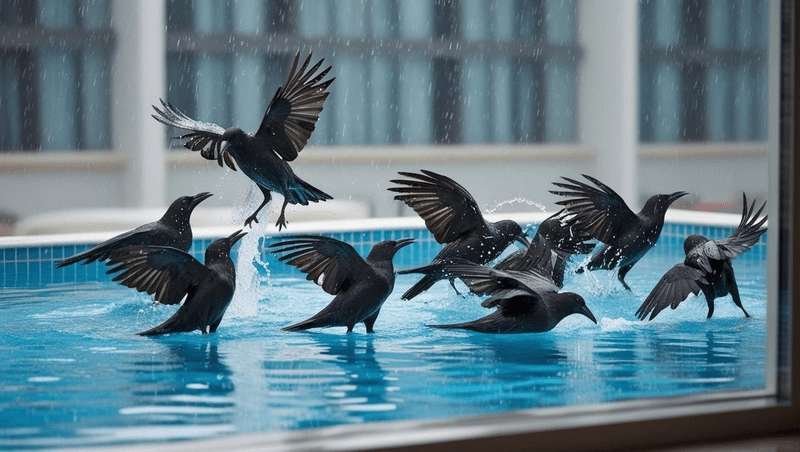
Numerous awe-inspiring accounts of H.H. Dorje Chang Buddha III, a revered Buddhist master—indeed, the highest Buddhist master—can be found in various publications and online sources. A documented example is the Buddha’s ability to predict the arrival of a flock of birds and accurately describe their actions upon arrival—an extraordinary and precise demonstration of insight.
This remarkable event, known as The Holy Feat, occurred in Mexico in 2014 and was witnessed firsthand by numerous Buddhist disciples, all of whom provided sworn testimonies under their own names, attesting to the authenticity of what they observed.
Attending a single temple, such as Hua Zang Si in San Francisco, which propagates complete Buddhism of all Buddhas will enable you to learn diverse practices, such as Zen meditation, the chanting of Buddhas’ and Bodhisattvas’ names, and Tibetan Dharma practices—these latter being transmitted only in accordance with an individual’s specific karmic affinity with the yidam and their karmic conditions at the time. Additionally, sutra chanting – a focus on Mahayana Buddhism and other Buddhist practices are available, ensuring a holistic approach to your spiritual cultivation.
How can I learn Buddhism directly from the Buddha? The monastics at Hua Zang Si recommend attending the temple or visiting Dharma-Listening Session centers worldwide to respectfully listen to the prerecorded Dharma teachings.
The temple offers additional religious services, including chanting and blessing services, group study meetings, support groups, Fish Release (field trips to release and save lives), and Buddhist storytime. The temple also hosts larger Dharma assemblies as part of its annual schedule. The Buddhist practice can be a lot of fun!
As a Buddhist disciple following the teachings of H.H. Dorje Chang Buddha III, I have found solace in the voice and wisdom of the Buddha. Through these teachings, I have learned to seek answers, clarity, wisdom, and strength to navigate both the joys and challenges of life.
I hope you, too, will find confidence in searching for a true, holy, and virtuous Buddhist master—one whom you can rely on not only in this lifetime but all the way until you attain enlightenment and become a Buddha yourself. This attainment is guaranteed by all Buddhas as long as we diligently cultivate ourselves with sincerity and perseverance.
Music plays an important role on human beings. Often on the internet, many influencers are musicians. Best of all, music brings benefits to our mental health and well-being.
In the same spirit, if we listen to a song sung by H.H. Dorje Chang Buddha III, will we receive special blessings?
Ruohui Ruzun – the Abbess of Hua Zang Si, told us in a recent youtube talk that as long as it is sung by His Holiness, there will always be the power of healing and blessings.
How are the songs sung by the Buddha like?
Ruohui Ruzun further advised us how we could admire the Buddha’s songs:
Lyrics: Other than the Heart Sutra and the Six-Syllables Bright Mantra, the Buddha composed all the collections of songs. The lyrics have deep meanings and have offered inspiration in work and life. They are easy to understand. The philosophical sayings, especially, have become quotes of wisdom for many.
Voice: The Buddha can sing low or high voices and in many more different ways. The voice of the Buddha is empowering and can create a cleansing and purifying effect. Playing the Heart Sutra sung by the Buddha at home can eliminate negative energy or phenomena and promote harmony in the ambient environment. Many disciples do that at home and felt the same amazing true result.
Sincerity: Everyone will receive blessings whether he/she listens to the songs in a relaxed setting or with the utmost sincerity. Of course, if one listens to them with deeper devotion, one will definitely receive greater corresponding blessings.
Are you ready to listen to the Heart Sutra sung by the Buddha? Click here. It is six minutes long. To me, it is powerful, yet calming. How is it for you?
If recited when you wake in the morning, you will enjoy the total days fulfilment.
If recited before bed, you will enjoy pleasant dreams.
If recited before activity, all works can be successfully accomplished.
If recited before a contest, you will be victorious.
If recited regularly, you will enjoy long life, glorious health, fame, auspiciousness, prosperity, happiness and removal of negative karma and obscurations. And higher birth is certain. Stated by Buddha.
Tashi Prayer (The Verses of the Eight Noble Auspicious Ones)
Prostrations to all the Buddhas, Dharma, and Noble Sangha who dwell in the Auspicious Realms of the ten directions where all appearance is completely pure; its nature spontaneously perfect.
Prostrations to the Eight Sugatas. Auspiciousness and success increase merely hearing your names: Tararaja, Sthira-kaushala-madhashaya, Shri-maitreya-lankara, Shri-varashubha-kirti, Sarva-shayodara-kirtiman, Shri-sumeru-vadaya-kaushala-kirti, Shri-arya-sattva-shaya-kirti, Shri-mantusha-karakaushala-sukirti.
Prostrations to the Eight Bodhisattvas characterized gracefully holding each of the emblems: utpala flower, vajra, white lotus, naga-tree, jewel, moon, sword, and sun, supreme in granting auspiciousness and success, the youthful Manjusri, the glorious Vajrapani, Avalokiteshvara, the protector Maitreya, Kshitigarbha, Nivaranaviskambin, Akashagarbha, and noble Samantabhadra.
Prostrations to the Eight Auspicious Goddesses, the holders of the Eight Precious Symbols, pleasing with offerings [of beauty, garlands, song, dance, flowers, incense, light, and perfume] to the Buddhas of all directions and time.
Prostrations to the Eight Guardians of the World. Each holds the divine emblems: wheel, trident, dart, vajra, vina, sword, stupa, and banner of victory. Auspiciously develop virtue and happiness in the three realms, Mahabrahma, Shambhu, Narayana, Sahasrajna, the Kings Dhritirashtra, Virudhaka, Virupaksha the Lord of Nagas, and Vaishravana.With the work we have begun now, pacify all obstacles and harmful influences. May the fulfillment of wishes, increase of glory, good fortune, prosperity and happiness be met.
NOTE: The Tashi Prayer is a short text written by Jamyang Mipham (1846-1912), a major figure in 19th Century Tibetan Buddhism. The prayer is a condensation of the much longer Sutra of the Words of Auspiciousness, which was taught by Shakyamuni Buddha. The purpose of the prayer is to pay homage to and supplicate four kinds of awakened beings (buddhas, male bodhisattvas, female bodhisattvas, and protectors) so as to receive their blessings for both spiritual and worldly success.
We have received Dharma transmissions from a Buddha.
Everyone who practices in accordance with The Supreme and Unsurpassable Mahamudra of Liberation and Imparting the Absolute Truth Through the Heart Sutra will surely attain liberation as stated in announcement 62 from H.H. Dorje Chang Buddha III Office.
We have found the treasure and it is in our hands.
The Buddha has done it all for us.
We have got everything we need.
What is next?
Tomorrow will be better.
It is up to you what you will do with the rest of your life.
“Mangala” means something auspicious, a blessing, happiness, a good or lucky sign, or an omen.
In the Mangala Sutra, Shakyamuni Buddha told us what to do so we can live an auspicious/happy life.
I heard these words of the Buddha one time when the Lord was living in the vicinity of Savatthi at the Anathapindika Monastery in the Jeta Grove. Late at night, a deva appeared whose light and beauty made the whole Jeta Grove shine radiantly. After paying respects to the Buddha, the deva asked him a question in the form of a verse:
I feel very fortunate and lucky that I can have the opportunity to listen respectfully to the recorded dharma discourses expounded by H.H.Dorje Chang Buddha III.
The recorded dharma discourses expounded by H.H. Dorje Chang Buddha III that I listened to include What is Cultivation?, Impermanence, and others. Every time after respectfully listening to a recorded dharma discourse, I felt like being a fully charged computer. The dharma discourse alerted me to wake up from complex and chaotic worldly matters, reminding me that I must cultivate to become liberated from samsara and benefit others using the benefits I received.
In particular, the dharma discourse expounded by H.H. Dorje Chang Buddha IIIentitled A Deviated Mind Attached to Phenomena is Mara; Differentiation under Any Circumstances Diverges from the State of Meditation benefited me especially very much. After respectfully listening to this dharma discourse, I began to learn how to put down attachment to self and how to prevent myself from being pulled by external states. However, in this process of learning, I am still often attached to various matters due to my habitual nature of an ordinary being. Only until after the incident, was I able to introspect to realize that I should hold up the correct thought, cultivate myself well, and put down attachment to self. Then I again began to make the effort to act according to the teaching.
I have been back and forth in this process. I make mistakes often, but I also repeatedly remind myself after the incident.
Under a karmic condition, misunderstanding was produced between me and several friends of mine due to our different opinions in the process of working together. One of them attacked and criticized me in many ways. Had the situation occurred before I started to learn Buddhism and cultivate myself, I would have rebutted and scolded loudly in return long ago. Then the result would definitely be like a struggle of life and death. However, I was very calm at that time. I knew that if I was attached to it, afflictions would arise in me. I thought, “I should put it down. There is no need to explain. After a while, this misunderstanding will be untied and solved.” In the end, the misunderstanding did become resolved due to the rising of another karmic condition. As an after-thought, I feel this really is a beneficial effect from listening to the dharma, so that I was able to hold up my correct thinking in this unfavorable situation and continue to learn and act according to the teaching!
Therefore, I am very grateful to the opportunity of encountering the true dharma of the Tathagata from H.H.Dorje Chang Buddha III!
I am grateful to all Buddhas and Bodhisattvas in the ten directions!







 頂禮 H.H. 第三世多杰羌佛- 眾善奉行